Arches National Park
Updated
Overview
Arches delivers on the iconic promise—over 2,000 natural stone arches carved into red sandstone, including the state symbol Delicate Arch. The concentration of arches is unmatched globally, and the compact layout means you can photograph half a dozen famous formations in a single day. The catch: congestion index of 8.7/10 means summer crowds turn Delicate Arch Trail into a conga line. June sees peak visitation with 200,000+ visitors cramming into 119 square miles. November offers the best balance of comfortable temps and elbow room.
Skip the 3-mile Delicate Arch slog and drive to the Upper Viewpoint instead—you'll get an unobstructed telephoto view without the crowds. Best light hits between 4-5pm in fall/winter when the arch glows orange against blue sky. Bring a 200mm+ lens to compress the perspective.
When to Go
The sweet spot is April — good weather meets manageable crowds. Peak season hits in June.
Peak conditions: 70s, no heat danger, moderate crowds. Delicate Arch at sunset without the summer mob. Book campsites early.
Monthly crowd levels — click a month for details
How Busy Is It?
How Arches compares to all 62 national parks
Busier than 92% of national parks
Very BusyMore crowded trails than 87% of parks
Very BusyHigher campsite pressure than 85% of parks
Very BusyNotable Trails
Arches has more trail mileage than 27% of national parks, with 45 miles across 19 maintained trails.
The difficulty split leans moderate to strenuous — only 42% of trails are rated easy.
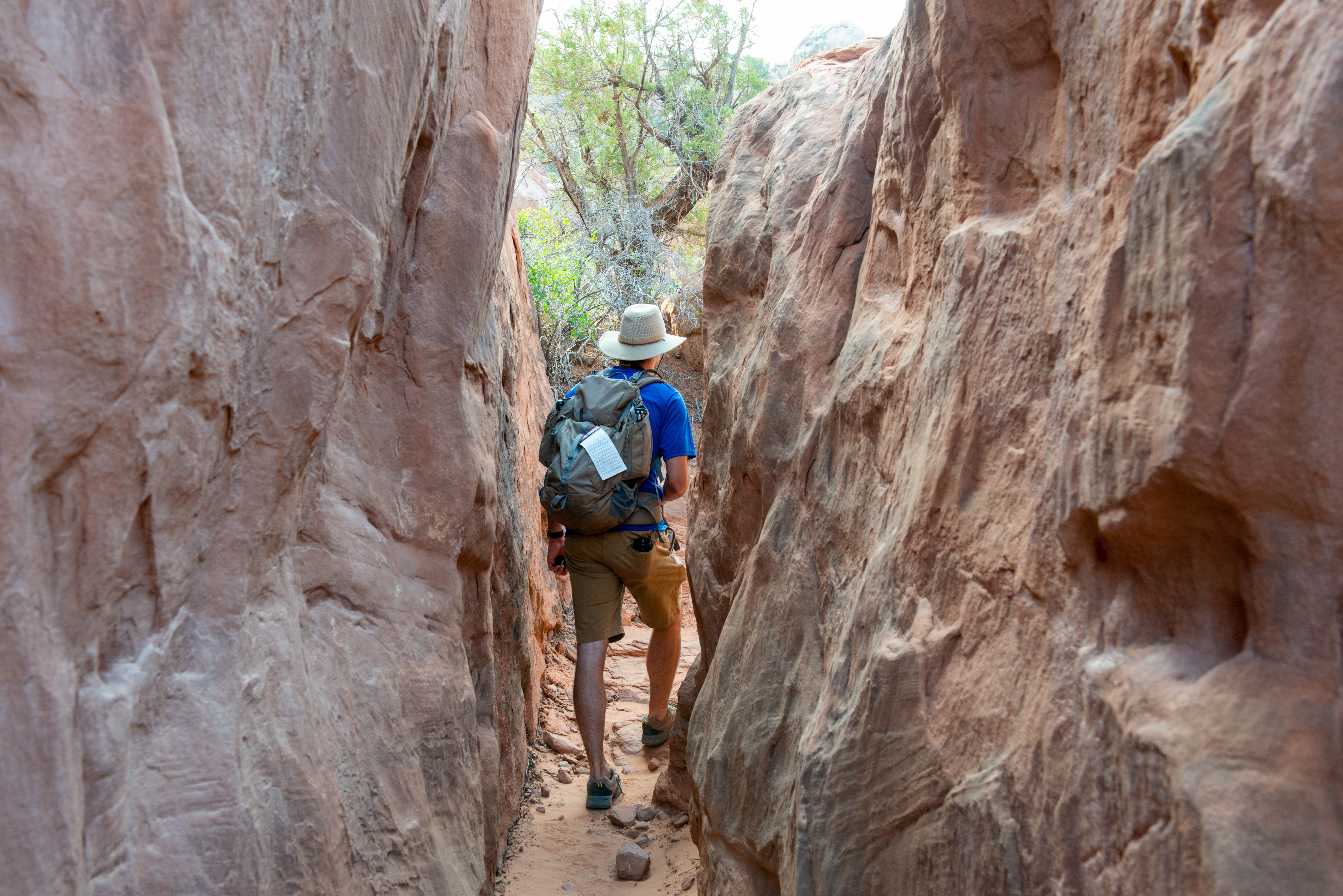
Explore the Fiery Furnace
Delicate Arch Trail
Devils Garden Trail
Balanced Rock Trail
Start early — Arches's most popular trailheads fill up by mid-morning in peak season.
Camping
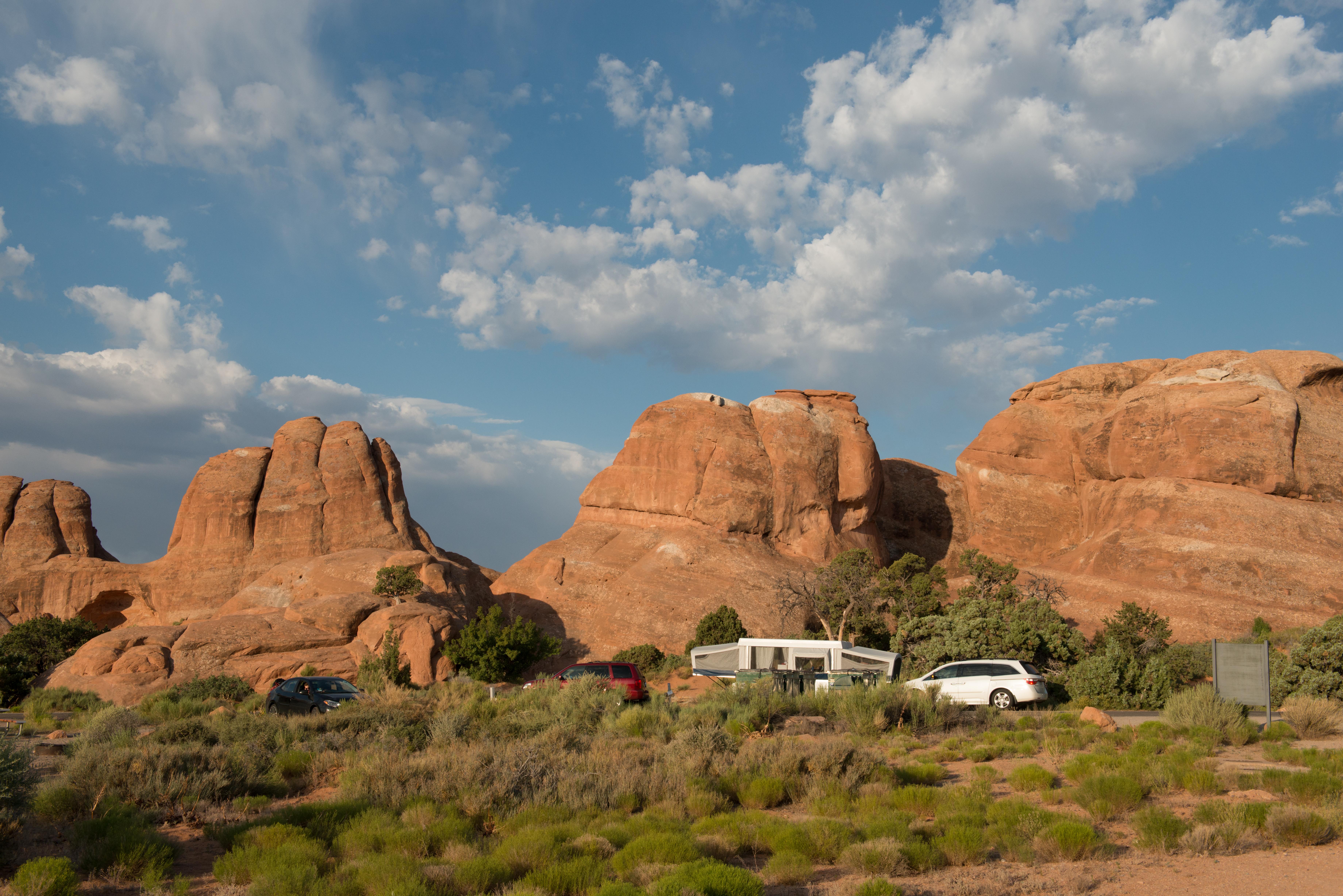
1 campgrounds with 51 total sites. All sites require reservations.
Top Activities
Arches excels at 9 of 17 activity types — here are the standouts rated 7/10 or higher.
Scenic Driving
10/1013-mile Devils Garden scenic drive with multiple pullouts and viewpoints
Photography
10/10World-renowned location for landscape and desert photography
Hiking
9/10Excellent range from easy scenic walks to strenuous backcountry hikes with over 45 miles of trails
Stargazing
9/10Excellent dark skies with minimal light pollution; designated International Dark Sky Park
Rock Climbing
8/10World-class desert rock climbing on sandstone; permits required for climbing
Canyoneering
8/10Multiple slot canyons and narrow canyon hikes offering technical challenges
Biking
7/10Bikes allowed on designated trails; Slickrock Bike Trail is world-famous nearby
Horseback Riding
7/10Horses allowed on designated trails; commercial outfitters available in Moab
Ranger Programs
7/10Ranger-led programs including morning hikes, evening programs, and guided canyoneering tours
Who It's For
Planning Your Trip
Getting There
Nearest city: Salt Lake City, UT (240 mi). Fly into CNY.
In-Park Services
No gas in park · No lodging in park · Cell: limited
Gateway Town
Moab, UT — full amenities
Featured In ?Rankings based on data-driven scoring across all 62 national parks.
Stories
Gateway Cities
Road Trips
Arches is a stop on these road trips:
Compare Arches
See how Arches stacks up against other national parks — crowds, trails, and more.
Compare ArchesFrequently Asked Questions
When is the best time to visit Arches National Park?
The best month to visit Arches is April, based on a balance of weather, crowds, and accessibility. Peak visitation is in June. The park has 5 comfortable months for visiting.
How crowded is Arches National Park?
Arches is very crowded, with a congestion index of 8.7/10. The park receives 1.5M visitors annually across 119.6 square miles.
How many trails does Arches National Park have?
Arches has 45 miles of trails across 8 easy, 8 moderate, and 3 strenuous routes. Popular trails include Delicate Arch Trail, Devils Garden Trail, Balanced Rock Trail.
Can you camp at Arches National Park?
Yes, Arches has 1 campground with 51 total sites. Some sites are available first-come, first-served.
Is Arches National Park open year-round?
Yes, Arches is open year-round, though some roads and facilities may close seasonally. The park's climate is classified as desert.