Pacific Crest Trail
What to Expect
Safety Advisory
Snow covers significant portions of the trail through late June and sometimes into mid-July. Navigation becomes genuinely difficult on the pumice flats where the trail disappears under snowpack — carry a GPS device or downloaded maps, not just a paper trail guide.
This is bear country and you're in the backcountry, not the developed rim area. Bear canisters are strongly recommended for overnight trips, and proper food storage is essential at camp.
Lightning storms roll in fast during July and August afternoons. The exposed sections along the rim and pumice flats offer zero shelter — plan to be through high-exposure areas before early afternoon.
Trail Details
Pro Tips
Section-hike it by using the Rim Drive crossings at Dutton Creek and Lightning Spring — you can park a shuttle car and knock out manageable 10-15 mile days instead of committing to the full 33.
Water sources are scarce along the PCT here, especially in late summer. Fill up at every creek crossing — Dutton Creek and Bybee Creek are your most reliable sources, but carry a filter and at least three liters between fills.
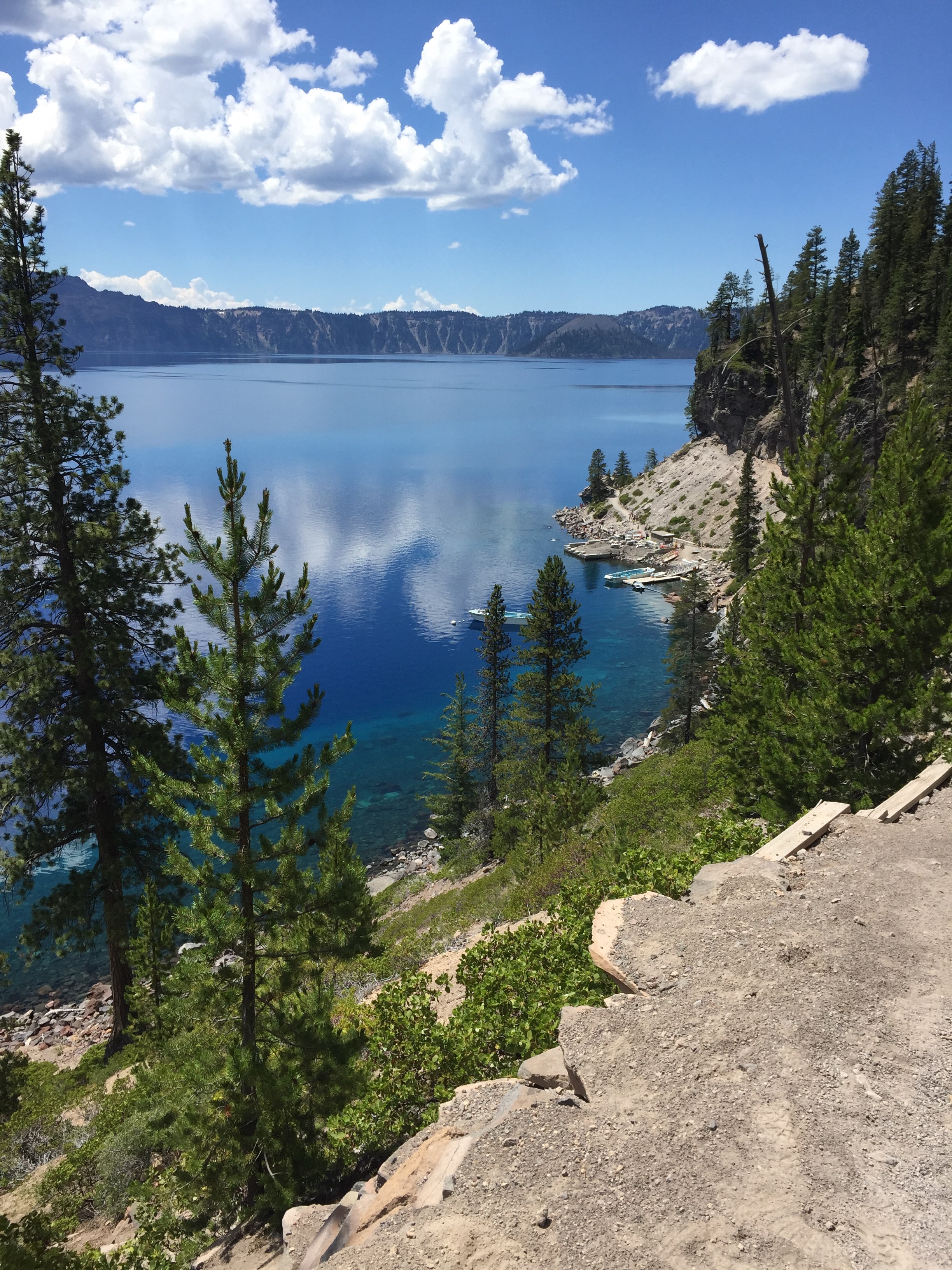
The stretch near the western rim between Dutton Creek and the north junction offers the most dramatic lake views on the entire route, but they're easy to miss if you're head-down grinding miles. Watch for unmarked spur paths on your right heading east — some lead to jaw-dropping overlooks with zero company.