Overview
Dry Tortugas delivers what most national parks can't: crystal-clear snorkeling among vibrant coral reefs, a massive 19th-century fort you can explore room by room, and some of the darkest skies in Florida. The catch? Getting here costs $200-$400 roundtrip via ferry or seaplane from Key West, and there's no food service once you arrive. With only 85,000 annual visitors spread across 100 square miles of mostly water, you'll have the snorkel trails nearly to yourself—if you can afford the boat ride.
Book the Yankee Freedom ferry's first departure (8am) and stay until the last pickup (5:15pm) to maximize your nine hours on the island. Bring twice as much water as you think you need—the sun reflecting off white sand and fort walls is brutal, and the only shade is inside Fort Jefferson's narrow corridors.
When to Go
The sweet spot is January — good weather meets manageable crowds. Peak season hits in June.
Perfect 76° days for snorkeling Garden Key's reefs. Moderate crowds, calm seas, and Fort Jefferson in clear light.
Monthly crowd levels — click a month for details
How Busy Is It?
How Dry Tortugas compares to all 62 national parks
Busier than 66% of national parks
Above AverageMore crowded trails than 89% of parks
Very BusyHigher campsite pressure than 55% of parks
Above AverageNotable Trails
Dry Tortugas has more trail mileage than 3% of national parks, with 2.5 miles across 3 maintained trails.
The difficulty split leans easy — only 100% of trails are rated easy.
Fort Jefferson Trail
Garden Key Beach Trail
Snorkel Reef Trail
Start early — Dry Tortugas's most popular trailheads fill up by mid-morning in peak season.
Camping
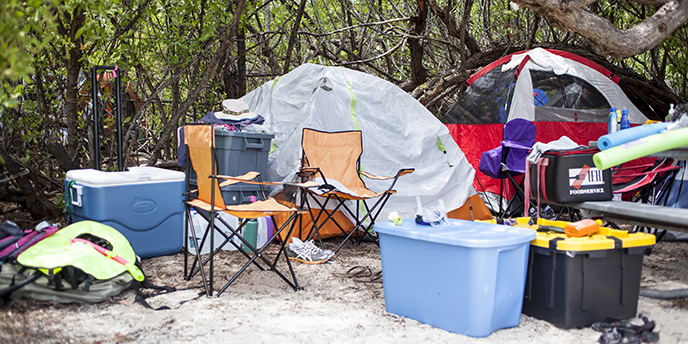
1 campgrounds with 8 total sites. About 100% are first-come, first-served.
Top Activities
Dry Tortugas excels at 8 of 17 activity types — here are the standouts rated 7/10 or higher.
Wildlife Viewing
9/10Sea turtles, tropical fish, sharks, and diverse marine life
Bird Watching
9/10Over 250 bird species; important migration stopover
Photography
9/10Fort Jefferson, marine life, and pristine tropical seascapes
Stargazing
9/10Exceptional stargazing in remote location far from light pollution
Kayaking Canoeing
8/10Sea kayaking around islands and in shallow waters
Fishing
8/10Excellent saltwater fishing for tarpon, permit, and tropical fish
Swimming
8/10Beach swimming and ocean water access
Ranger Programs
7/10Fort tours, snorkel programs, and ranger talks
Who It's For
Planning Your Trip
Getting There
Nearest city: Key West, FL (70 mi). Fly into EYW.
In-Park Services
No gas in park · No lodging in park · Cell: none
Gateway Town
Key West, FL — full amenities
Featured In ?Rankings based on data-driven scoring across all 62 national parks.
Stories
Gateway Cities
Road Trips
Dry Tortugas is a stop on this road trip:
Compare Dry Tortugas
See how Dry Tortugas stacks up against other national parks — crowds, trails, and more.
Compare Dry TortugasFrequently Asked Questions
When is the best time to visit Dry Tortugas National Park?
The best month to visit Dry Tortugas is January, based on a balance of weather, crowds, and accessibility. Peak visitation is in June. The park has 8 comfortable months for visiting.
How crowded is Dry Tortugas National Park?
Dry Tortugas is crowded, with a congestion index of 6.1/10. The park receives 84,873 visitors annually across 101.1 square miles.
How many trails does Dry Tortugas National Park have?
Dry Tortugas has 3 miles of trails across 3 easy, 0 moderate, and 0 strenuous routes. Popular trails include Fort Jefferson Trail, Garden Key Beach Trail, Snorkel Reef Trail.
Can you camp at Dry Tortugas National Park?
Yes, Dry Tortugas has 1 campground with 8 total sites. Some sites are available first-come, first-served.
Is Dry Tortugas National Park open year-round?
Yes, Dry Tortugas is open year-round, though some roads and facilities may close seasonally. The park's climate is classified as tropical_marine.