High Dune Trail
What to Expect
Safety Advisory
Lightning is the most serious hazard here — you are the tallest object on an exposed dune field. Check forecasts carefully and plan to be off the dunes before afternoon thunderstorms build, which happen almost daily from July through mid-September.
Dehydration and heat exhaustion are real risks on summer afternoons. There is zero shade on the dunes, the sand radiates heat from below, and the effort required is roughly double what the distance suggests. Carry at least a liter per person even for this short hike.
Trail Details
Pro Tips
Go early morning or late afternoon — by midday in summer, sand surface temperatures can exceed 150 degrees and will blister bare feet. Dawn also gives you the best light and firmest sand after overnight moisture.
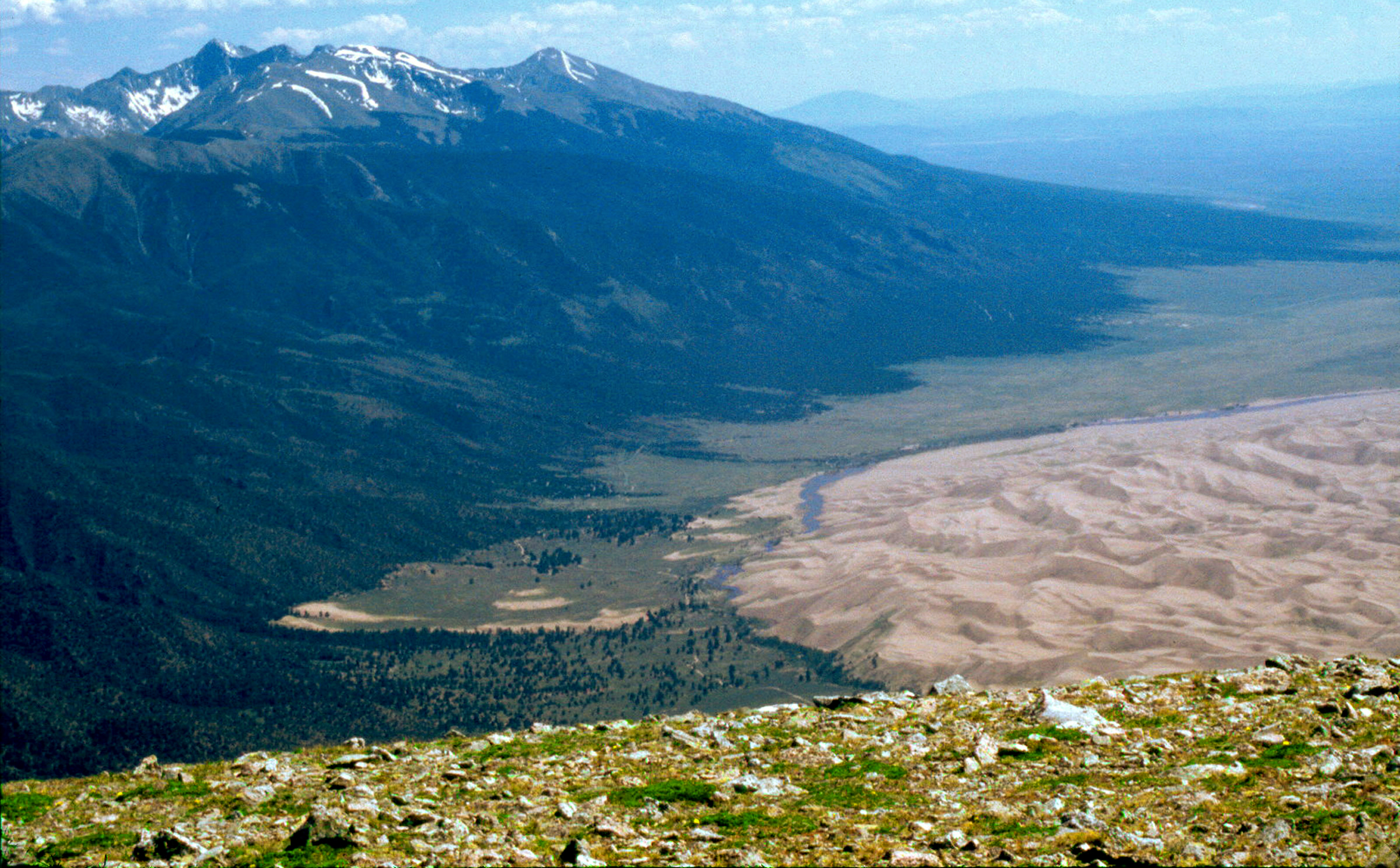
Follow the ridgelines rather than going straight up the dune faces. The compacted sand along the crests gives you far better footing and saves an enormous amount of energy compared to the loose faces.
Bring gaiters or wear tall socks over your pant cuffs. Sand will infiltrate every opening in your footwear, and the grit against skin on the descent is miserable without protection.