Star Dune Trail
What to Expect
Safety Advisory
Dehydration and heat exhaustion are serious risks from late spring through early fall. The sand reflects heat from below while the sun hammers from above, creating temperatures far hotter than the posted forecast. Turn back if you feel dizzy or stop sweating.
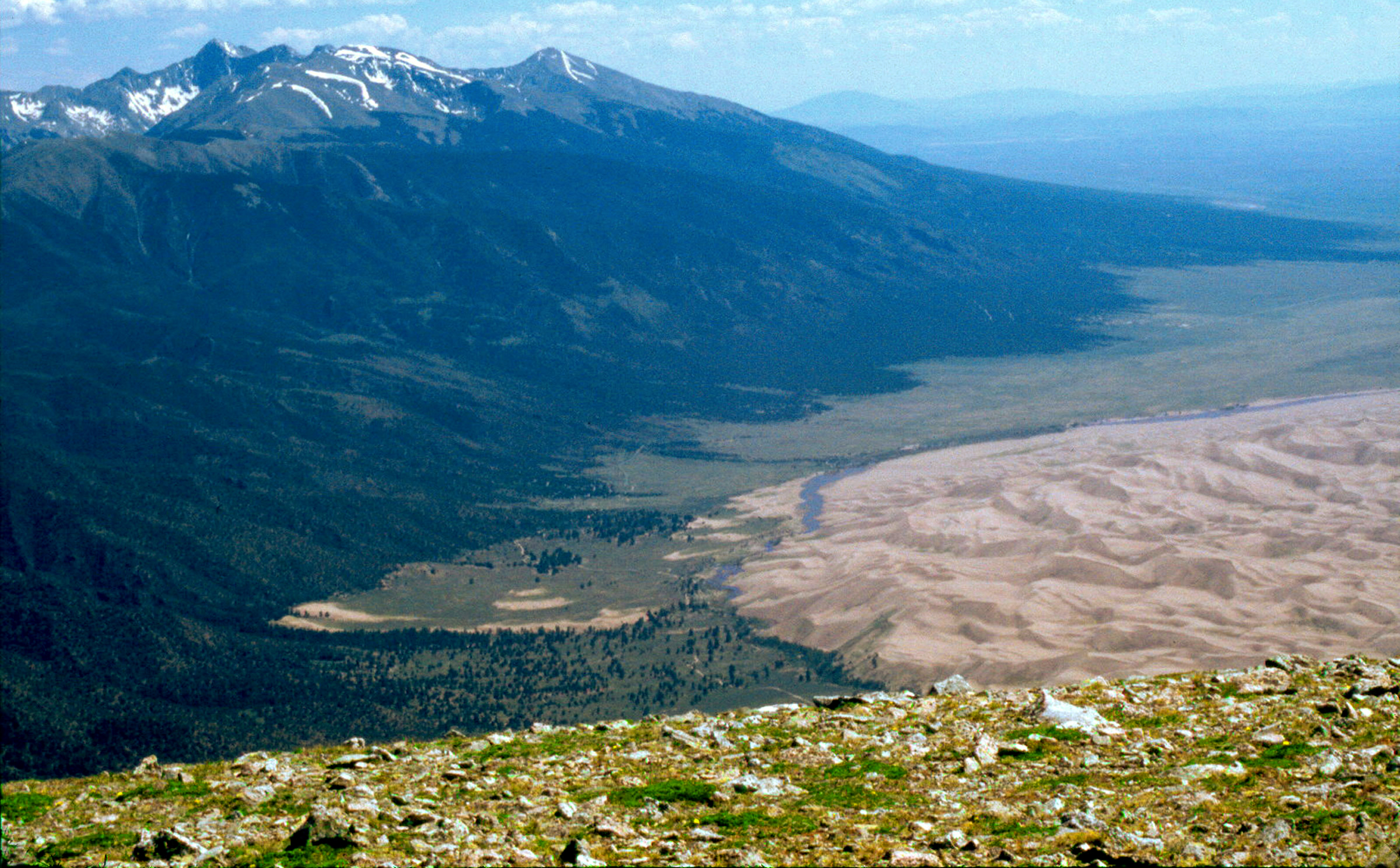
Lightning is a lethal threat on the open dunefield — you are the tallest object for miles. Check the forecast obsessively and plan to be off the dunes by noon during monsoon season (July through September). If a storm rolls in, descend immediately and stay low.
Trail Details
Pro Tips
Start at first light — the sand temperature can exceed 150 degrees by midday in summer, and morning shadows create dramatic dune textures. You'll also benefit from firmer, cooler sand that hasn't been baked loose yet.
Bring at least three liters of water per person and wear gaiters or tall socks over your shoes. Sand in your boots turns a tough hike into a miserable one. Trekking poles help enormously on the steep dune faces where footing is unreliable.
Navigate by aiming for the tallest formation on the horizon rather than following any specific route — there are no markers. Use the Sangre de Cristos as your compass on the return. The northwest ridge of Star Dune offers the firmest footing and the best views for photos.