Moderate Hike into Haleakalā's Crater
What to Expect
Safety Advisory
You're hiking at ten thousand feet — altitude sickness is real here, especially if you flew into Maui from sea level the same day. Shortness of breath, headaches, and nausea are common. Take the descent slowly and give yourself extra rest on the climb back up.
UV exposure at this elevation is extreme, even on overcast days. The thin atmosphere and reflective volcanic surface mean you can burn in under fifteen minutes. Sunscreen, sunglasses, and a hat are non-negotiable.
Weather shifts rapidly — fog can roll in within minutes and reduce visibility to near zero inside the crater. If conditions deteriorate, turn around immediately rather than pushing deeper into the basin.
Trail Details
Pro Tips
Time your hike for mid-morning after the sunrise crowds clear out — the parking lot at the summit empties dramatically by 9 AM, and the light on the crater floor is actually better for photography once the sun is higher and illuminating the cinder cones.
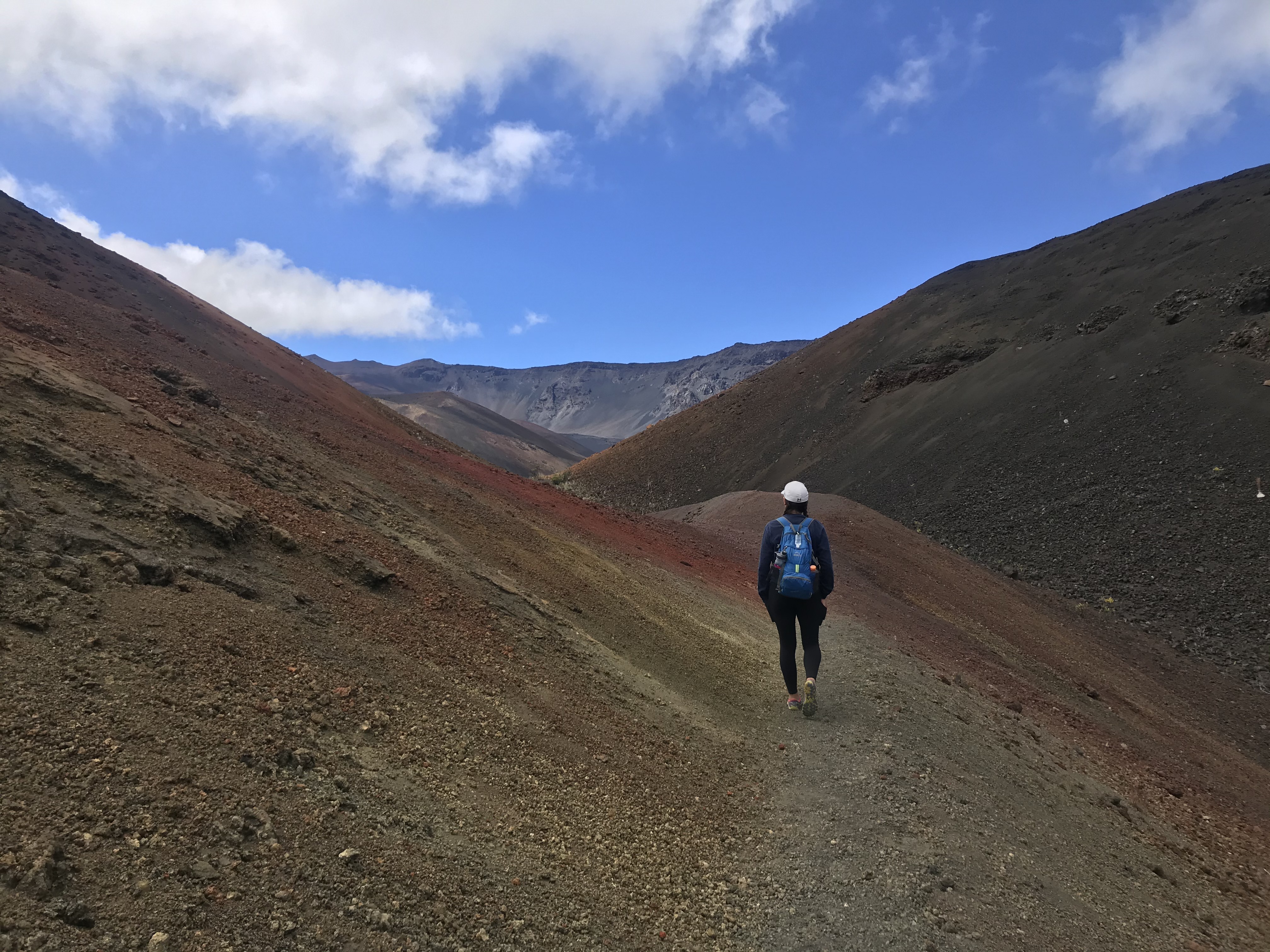
Wear shoes with aggressive tread and bring trekking poles if you have them — the loose cinder sand is like walking on a beach made of gravel, and coming back uphill at altitude will have your calves screaming without pole support.
Layer aggressively. It can be near freezing at the trailhead and forty degrees warmer inside the crater once you're out of the wind. A packable windbreaker and a warm mid-layer you can strip off are essential — conditions change faster than you'd expect for a one-mile hike.
Photos
 NPS Photo