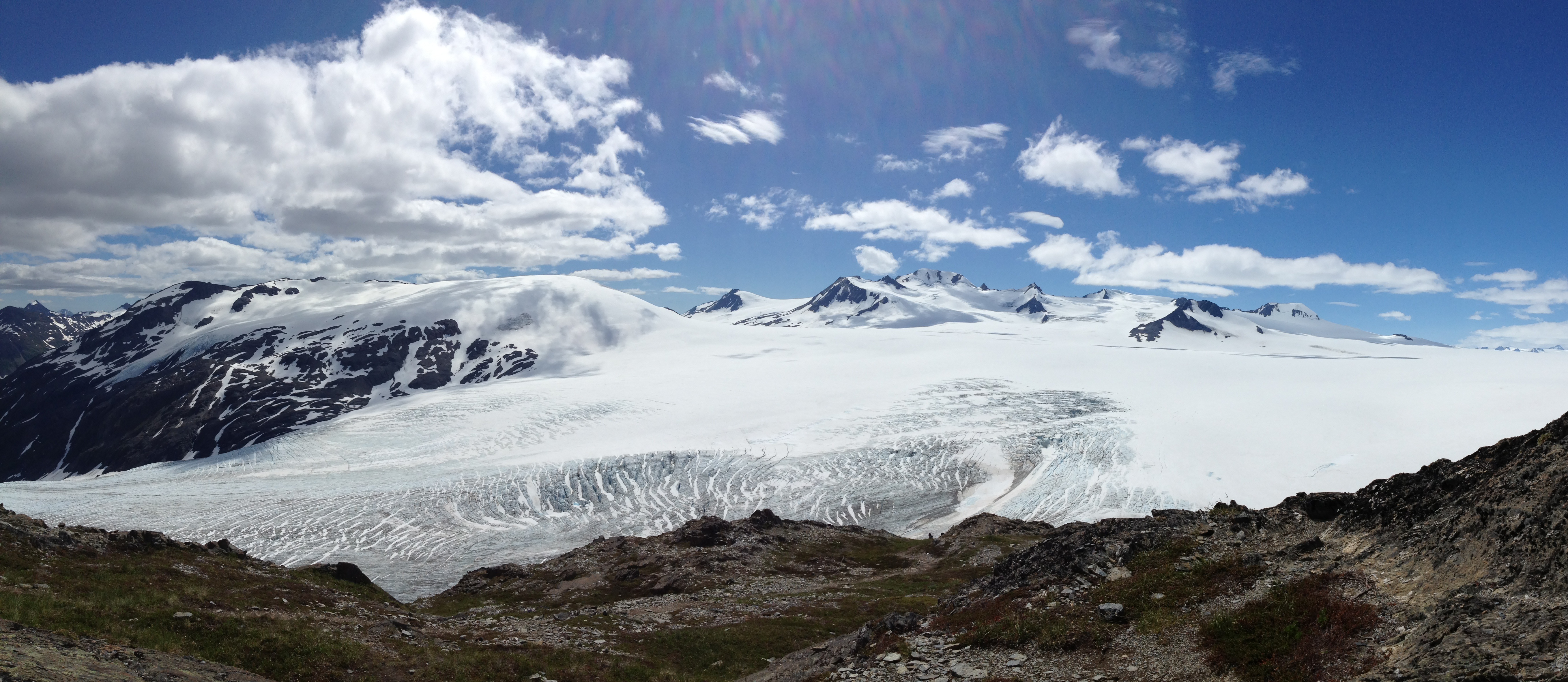
Grewingk Glacier
What to Expect
Safety Advisory
Glacial terrain is inherently unstable — stay well back from the glacier terminus, as ice calving events can send house-sized chunks crashing without warning, and the resulting waves on the lake can swamp the shoreline.
Stream crossings change dramatically throughout the day and season. What was a gentle ankle-deep ford in the morning can become a knee-deep torrent by mid-afternoon. If a crossing looks sketchy, it is — wait or find an alternative.
Bears are active throughout this corridor, particularly near salmon streams in late summer. Carry bear spray accessible on your chest strap, not buried in your pack, and make noise on blind corners through the forested sections.
Trail Details
Pro Tips
Book your water taxi from Homer Spit well in advance — operators like Mako's and True North fill up fast in peak season, and you'll need to coordinate pickup timing since there's no cell service once you're across the bay.
Bring trekking poles and gaiters. The glacial moraine sections are ankle-rolling loose rock, and you'll cross several braided meltwater streams that can be shin-deep by afternoon as temperatures rise.
The best vantage for glacier photography is from the lateral moraine on the north side of the lake, not the shoreline. Climb up for a wider perspective that captures the full ice face and its reflection — morning light hits the glacier face cleanly before cloud cover typically rolls in.