Hike Lassen Peak
What to Expect
Safety Advisory
Altitude is no joke here — you're hiking between 8,500 and 10,457 feet, and many visitors are coming from sea level. Headaches, nausea, and dizziness are common. Take breaks, hydrate aggressively, and turn around if symptoms worsen.
Afternoon thunderstorms are frequent from July through September. The summit is the highest point for miles with zero shelter — if you hear thunder or see dark clouds building, descend immediately. Lightning strikes on Lassen Peak are well-documented.
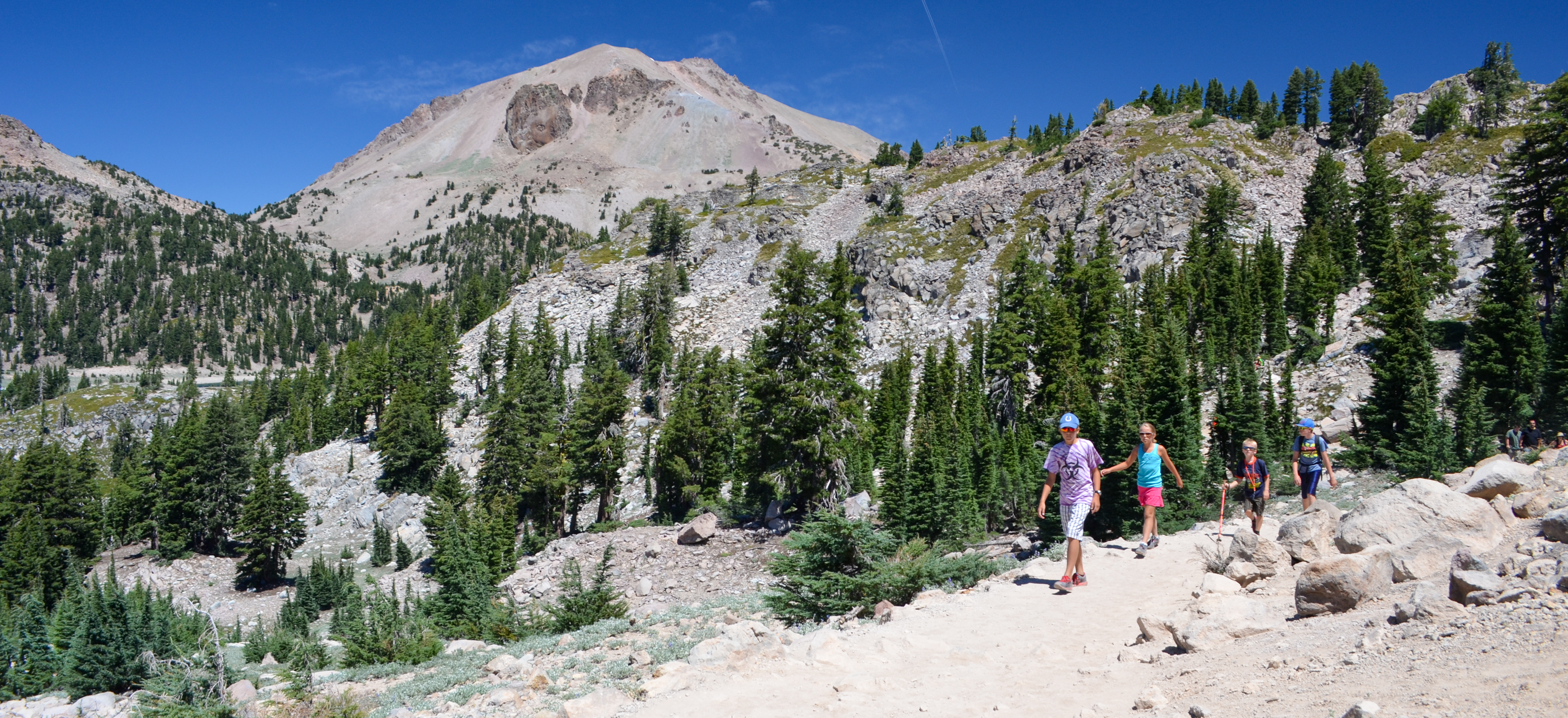
The upper trail crosses loose volcanic scree that shifts underfoot. Ankle-supporting boots with good tread are essential — trail runners and sandals are a recipe for a twisted ankle or a long slide on sharp rock.
Trail Details
Pro Tips
Start before 9 AM — the parking lot at the trailhead fills completely by mid-morning on summer weekends, and afternoon thunderstorms roll in fast above treeline. Early starts also mean calmer winds at the summit.
Bring a wind shell even on warm days. The summit is nearly 10,500 feet and fully exposed — temperatures can drop 20-plus degrees from the trailhead, and wind gusts regularly top 40 mph up top.
The most dramatic photos come from the summit's south rim, where you can frame the devastated area from the 1915 eruption with Bumpass Hell's steaming vents in the background. Golden hour light from the west side is spectacular if you time a late-afternoon descent.
Photos
 NPS
NPS