Mount Harkness
What to Expect
Safety Advisory
Post-Dixie Fire hazard trees (snags) line portions of the trail and can fall without warning, especially in wind. Stay alert and avoid lingering in dense snag zones.
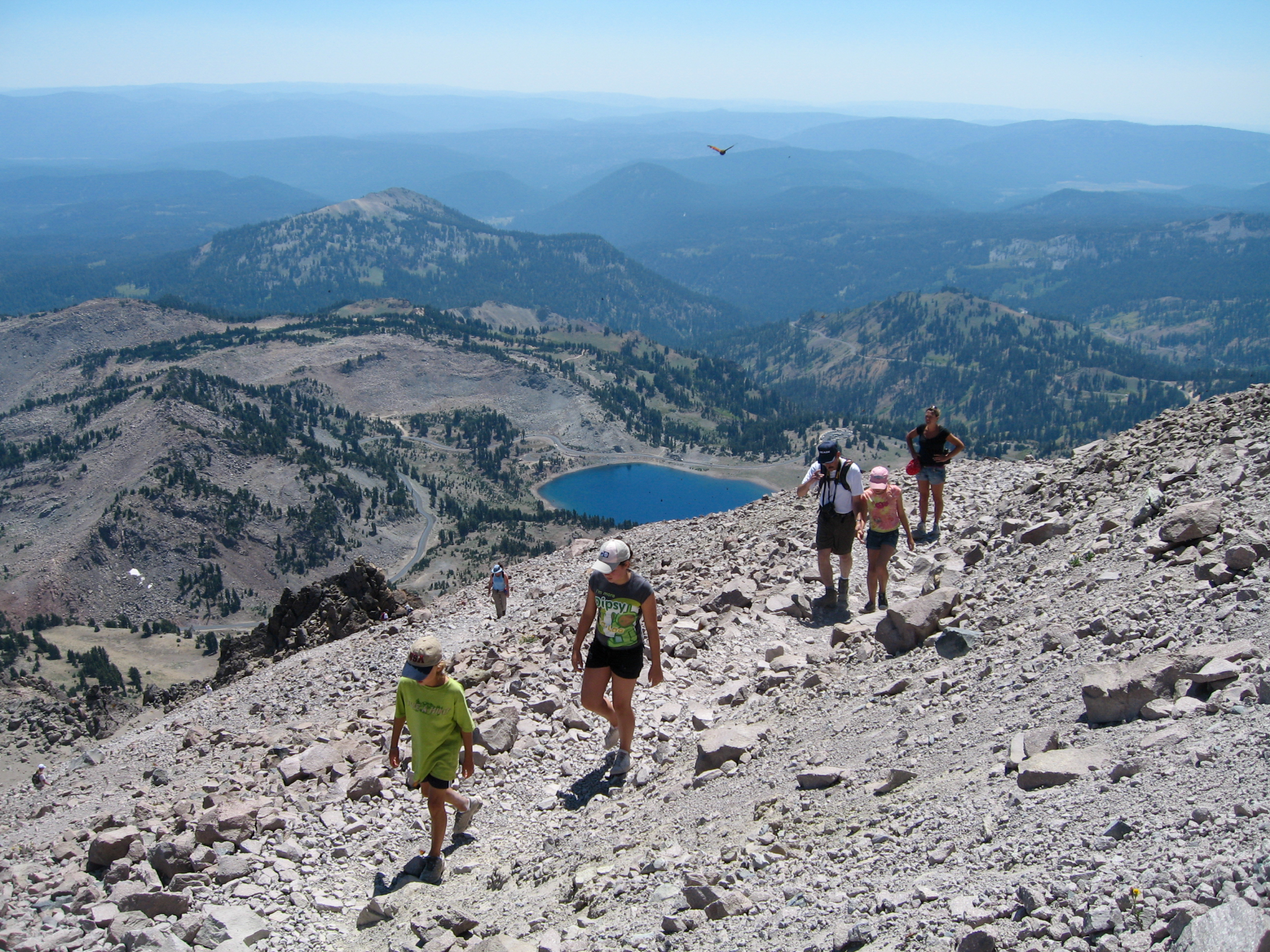
The loose volcanic cinder near the summit is ankle-twisting terrain — trekking poles make a real difference on the descent when tired legs meet unstable footing.
Check current trail status before heading out. Post-fire erosion and downed trees may close or reroute sections without much notice, and Juniper Lake road openings vary year to year.
Trail Details
Pro Tips
Start from the Juniper Lake area, which is already at elevation and cuts the total climb significantly — but note that the access road is unpaved and rough, so plan extra driving time and skip the low-clearance rental car.
Carry more water than you think you need. Post-fire landscapes offer almost zero shade, and the exposed volcanic terrain radiates heat on warm days. There are no reliable water sources on the trail itself.
Bring a wind layer for the summit even on calm days below — the exposed peak catches gusts that can drop the felt temperature dramatically, and you'll want to linger for the views.
Photos
 NPS
NPS