Hike the Alpine Ridge Trail
What to Expect
Safety Advisory
Altitude sickness is a real concern here, not a suggestion. You're starting above 11,700 feet — headaches, nausea, and dizziness can hit anyone regardless of fitness. If you drove up from lower elevation that morning, take it especially slow and turn back if symptoms worsen.
Lightning is the most dangerous threat on this trail. The exposed ridge offers zero shelter, and afternoon thunderstorms roll in fast during summer. Check the forecast and plan to be off the ridge by noon — getting caught above treeline in a storm is genuinely life-threatening.
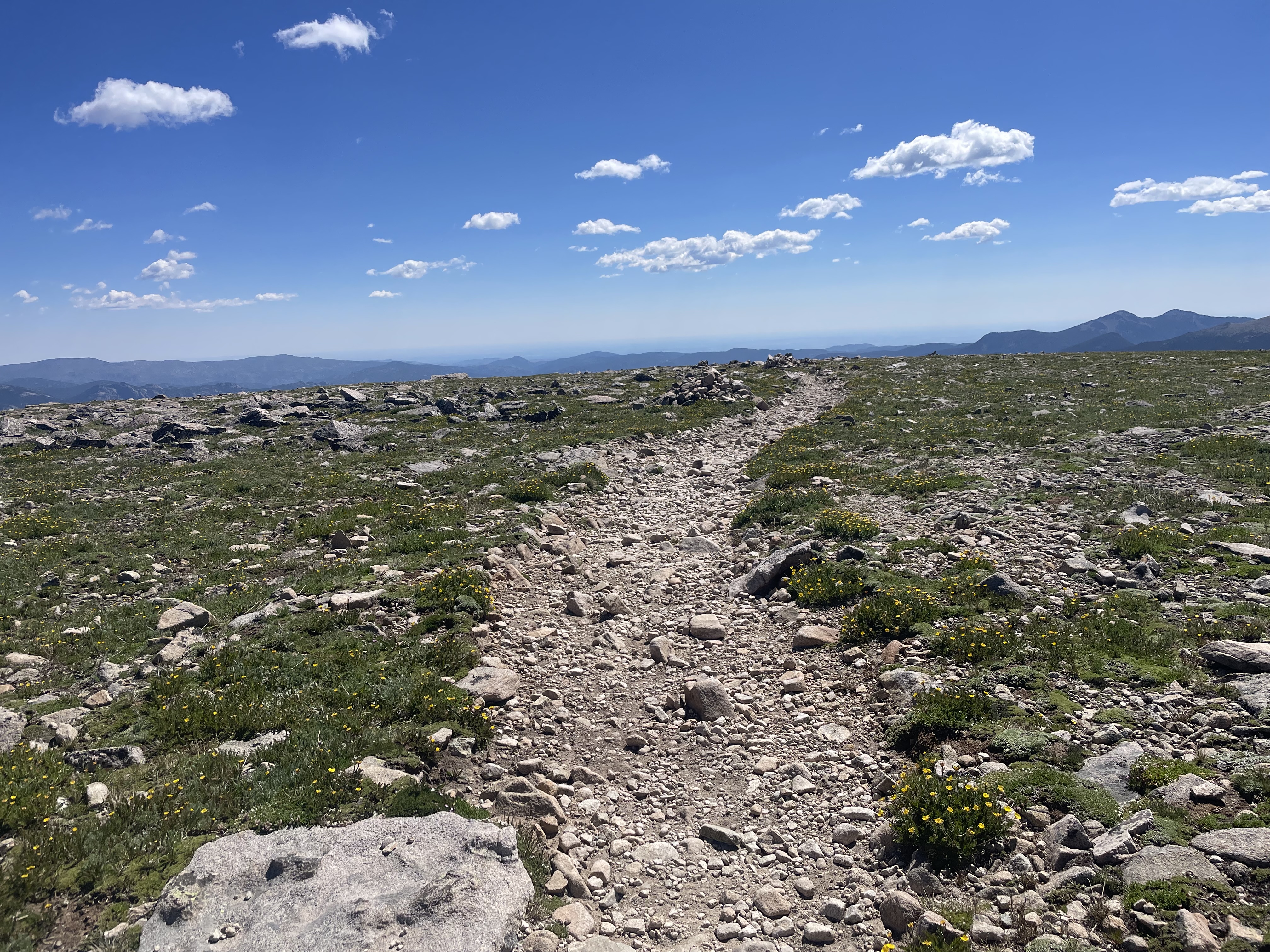
Stay on the paved path. The alpine tundra beside the trail is extraordinarily fragile — a single footprint can destroy plants that took decades to grow, and there are no trees or landmarks to guide you back if clouds roll in.
Trail Details
Pro Tips
Arrive before 9 AM to beat the timed-entry crowds and snag parking at the Alpine Visitor Center — the small lot fills fast, and once it does, you're driving laps on Trail Ridge Road hoping someone leaves.
Bring a wind shell even on bluebird days. At this elevation, a calm morning can turn into a 40-mph wind tunnel in minutes, and the temperature at the ridge is routinely 20 degrees colder than Estes Park.
Walk slowly and stop often — not just because the altitude demands it, but because the tundra cushion plants along the trail are some of the oldest living things in the park, and the tiny wildflowers that bloom in July are easy to miss if you're power-walking to the top.
Photos
 NPS/Schonlau