Hike the Ute Trail
What to Expect
Safety Advisory
You're starting above 11,700 feet — altitude sickness is a real concern, not a suggestion. If you drove up from Denver that morning, your body hasn't adjusted. Watch for headaches, nausea, and dizziness, and turn around without ego if symptoms appear.
Afternoon thunderstorms are nearly guaranteed in July and August, and you're the tallest thing on the tundra. Lightning above treeline is genuinely dangerous — plan to be off the exposed ridge by noon.
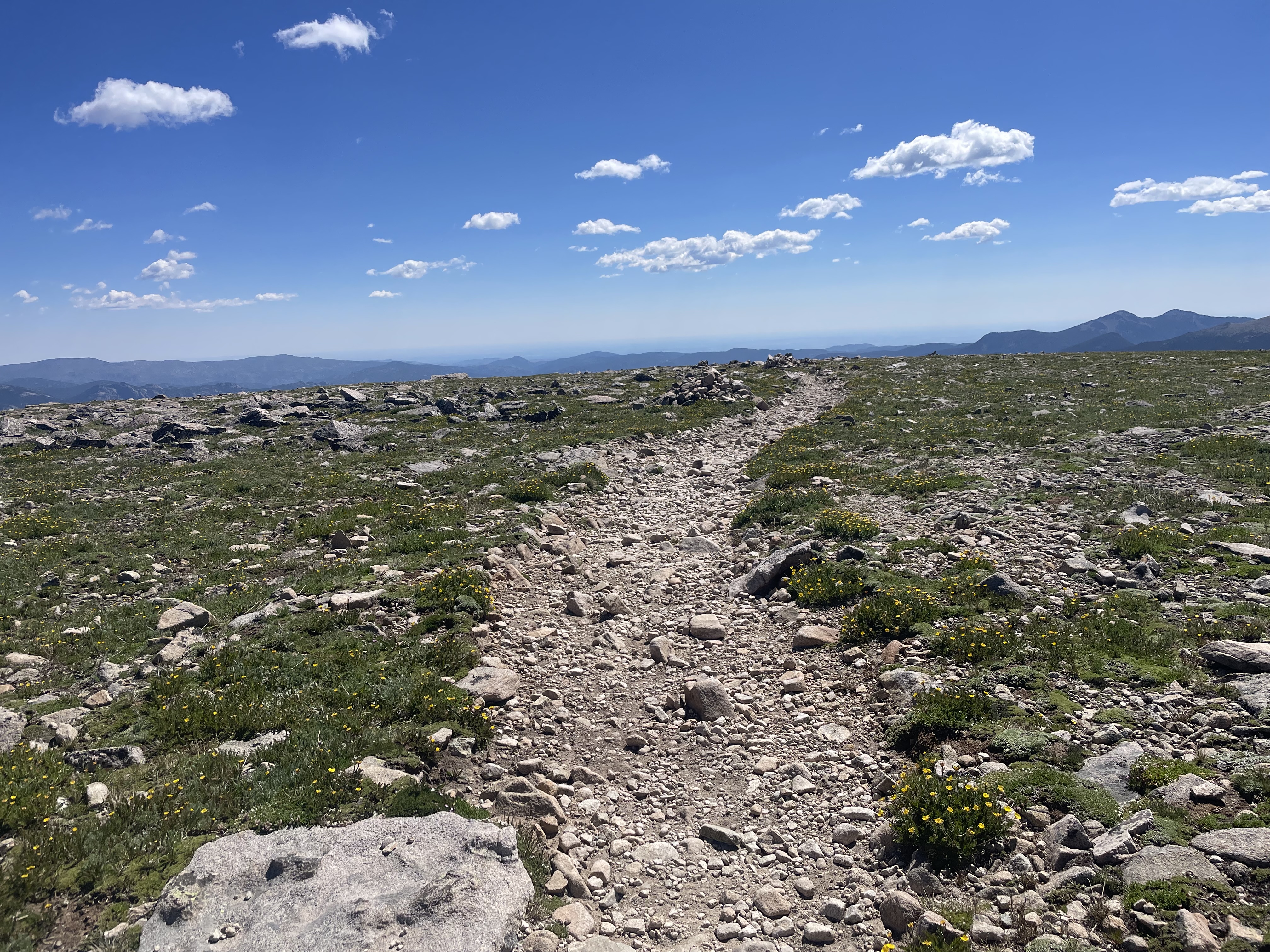
Stay on the established trail. Alpine tundra plants take decades to recover from a single footstep. Those tiny wildflowers you're tempted to walk through for a photo may be older than you are.
Trail Details
Pro Tips
Start early from the Alpine Visitor Center lot — it fills completely by mid-morning in summer, and you'll need a timed entry permit for Trail Ridge Road. Arriving before 9 a.m. sidesteps both problems.
Bring wind layers even on warm days. The exposed tundra above 11,000 feet generates its own weather, and temperatures can drop twenty degrees in minutes when clouds roll in. A lightweight shell weighs nothing and saves everything.
Set up a car shuttle at Milner Pass to make this a one-way downhill cruise instead of an out-and-back. Have someone drop a vehicle at the Milner Pass trailhead before you start — it turns an eight-mile slog into a four-mile victory lap.
Photos
 NPS Photo / Ann Schonlau