Tundra Communities Trail
What to Expect
Safety Advisory
Altitude is the real hazard here. At 12,000+ feet, even fit hikers can experience headaches, dizziness, and nausea. If you just drove up from Denver, give yourself at least 30 minutes at the trailhead before walking. Descend immediately if symptoms worsen.
Lightning above treeline is life-threatening, and there is zero shelter on this trail. If you see dark clouds building or hear distant thunder, turn around immediately — do not wait for rain to start. Afternoon storms roll in fast, often by 1 p.m. in summer.
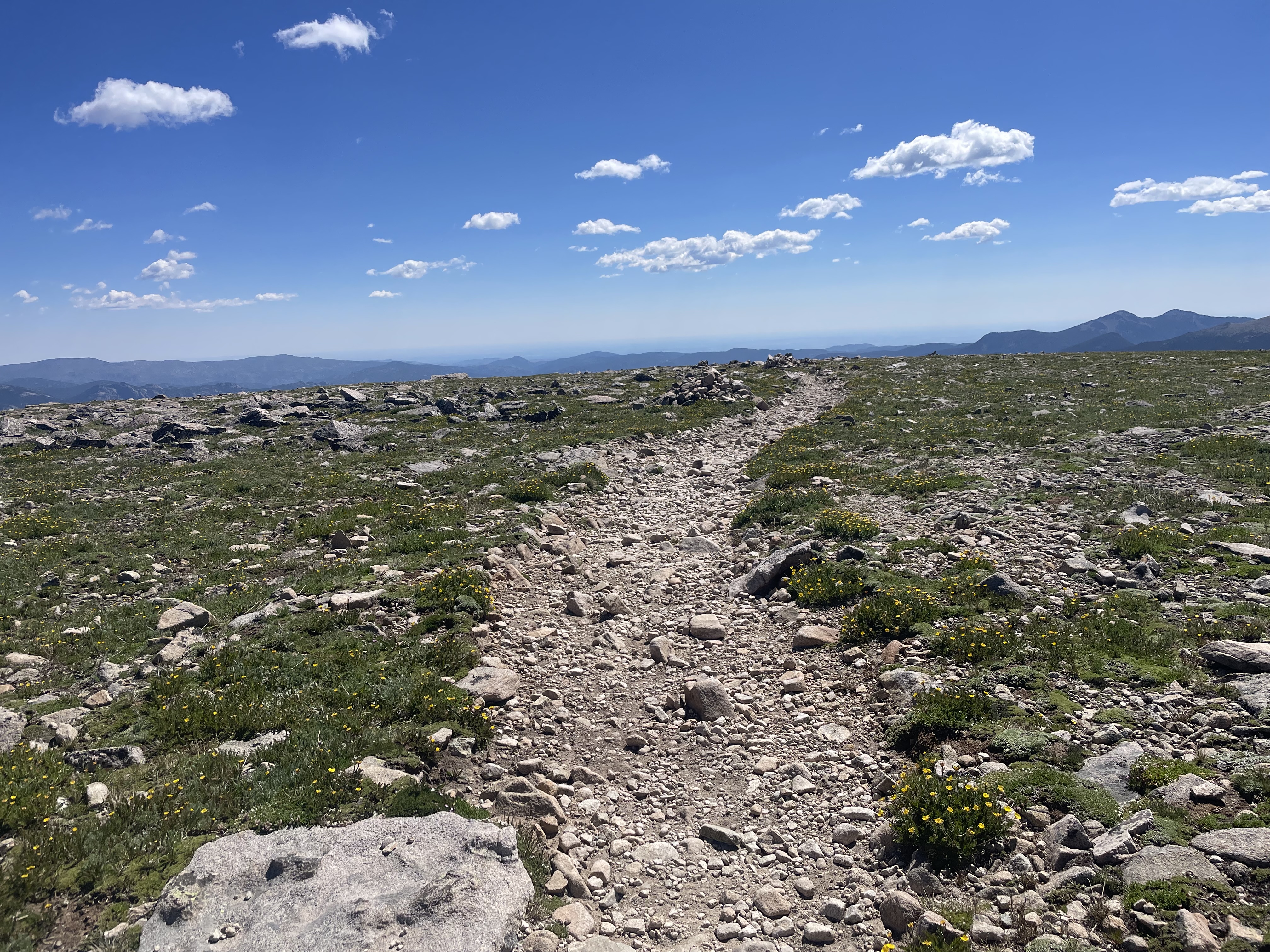
Stay on the paved path. The tundra plants are extraordinarily fragile — a single footprint can kill vegetation that took decades to grow, and the alpine soil erodes quickly once disturbed.
Trail Details
Pro Tips
Arrive before 9 a.m. to dodge both the timed entry reservation requirement and the afternoon thunderstorms that build like clockwork over the peaks — you'll also snag parking at the trailhead pulloff, which fills fast by mid-morning.
The air up here has roughly 40% less oxygen than sea level. Walk at half your normal pace for the first ten minutes, even if you feel fine — altitude sickness announces itself after the fact, not during. Bring a windbreaker even on sunny days, because 50-mph gusts are routine.
The best photography happens in the first and last hour of sunlight, when the tundra grasses glow gold and the distant peaks turn pink. Crouch low to capture the miniature wildflowers against the massive mountain backdrop — the scale contrast is stunning and most visitors walk right past it.
Photos
 NPS
NPS