10 Best Lake Hikes in the National Parks
Glacier National Park dominates this ranking for a reason: glacier-carved basins, alpine lakes, and water so cold it hurts to touch
Glacier National Park claims nine spots on this list, and that's not a fluke. When you're ranking the best lake hikes in the national parks, you're essentially ranking Montana's alpine valleys against everyone else — and Montana wins nearly every time. The park's combination of accessible trailheads, glacier-carved basins, and water so cold it'll numb your hand in seconds creates the kind of scenery that makes people quit their jobs and move west.
These ten trails represent the full spectrum of lake hiking: from family-friendly strolls to full-day epics that'll leave you limping back to the car. What they share is a payoff measured in shoreline views, reflections, and the kind of blue water that doesn't look real in photos.
Grinnell Glacier Trail, Glacier National Park
10.6 miles through three alpine lakes to a vanishing glacier / The trail that launches a thousand road trips
This is the trail that makes people fall in love with Montana. You'll start from the Many Glacier area and spend the first couple miles winding along the shores of Swiftcurrent Lake and Lake Josephine — flat, easy, and deceptively pleasant. Then the real work begins. The trail climbs steadily up a series of switchbacks, gaining about as much elevation as a 150-story building, while the views shift from pretty to unforgettable. Grinnell Lake appears below in a shade of turquoise that seems Photoshopped, and if you're hiking in late July, the wildflowers turn the upper meadows into something out of a seed catalog.
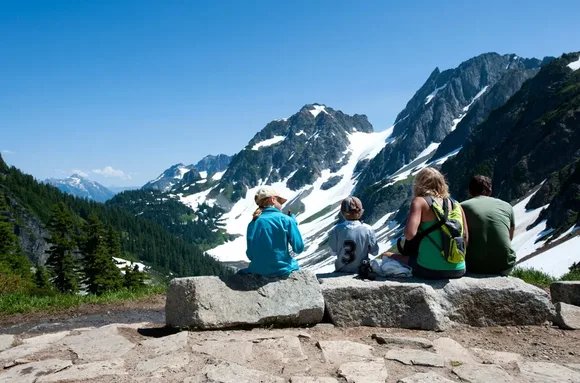
At the top, you'll stand at the edge of Grinnell Glacier — smaller every year, visibly retreating — with Upper Grinnell Lake pooled at its base like a jar of spilled paint.
The glacier has lost most of its mass since the park was established, and you're watching climate change in real time. But the amphitheater of cliffs, the waterfalls threading down from snowfields, and the sheer drama of the setting make this one of the most rewarding day hikes in the national park system. You'll pass other hikers — this is not a secret — but the trail's length and elevation gain keep it from feeling like a parade.
Mount Jackson, Glacier National Park
10.6 miles and a 400-story climb to Glacier's fifth-highest summit / Not for the faint of heart
Mount Jackson doesn't ease you into anything. From the Gunsight Pass trailhead, you'll follow the valley floor past wildflower meadows and through stands of subalpine fir before the trail turns upward with a vengeance — nearly four thousand feet of elevation gain that stacks up like climbing a 400-story building. The route to the summit is a Class 2 scramble over loose rock and talus, which means you'll use your hands as much as your legs, and every step requires deliberate thought.
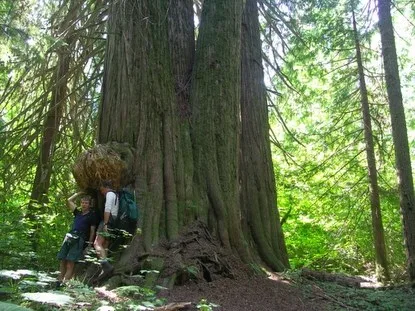
From the summit, you'll see Blackfoot Glacier sprawled below and a horizon crowded with peaks that look close enough to touch.
Jackson Glacier Overlook sits below on the Going-to-the-Sun Road, where tourists pull over to snap photos of the glacier from a mile away. You'll stand above it, breathing hard, with a view that makes the roadside pullout look like a postcard. The descent is punishing on the knees, and the talus field requires the same careful footwork on the way down. This is a full-day commitment for experienced hikers who don't mind scrambling, and it's not a trail you do casually.
Iceberg Lake, Glacier National Park
9.8 miles to a cirque filled with floating ice / Wildflowers, waterfalls, and grizzlies
Starting from the Iceberg/Ptarmigan trailhead near Swiftcurrent Motor Inn, you'll climb gradually through dense subalpine forest before the trees thin out and the valley opens up in a way that makes you stop mid-stride. The trail winds through wildflower meadows that peak in late July, with Ptarmigan Falls crashing down the cliffs to your left and bighorn sheep occasionally visible on the high ridges. The elevation gain is gentle enough that kids can manage it, but the distance means you'll be out for most of the day.
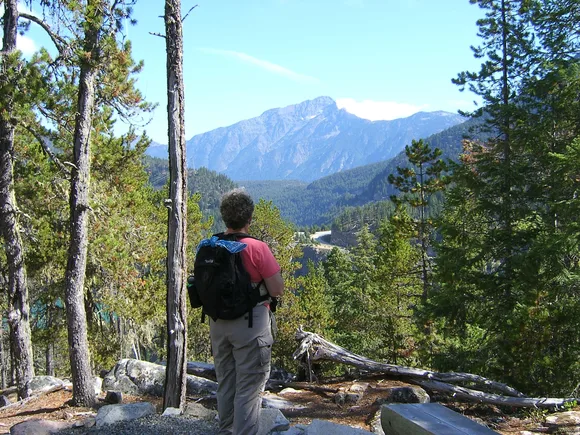
The lake sits in a bowl carved by ice, surrounded by cliffs that rise nearly half a mile straight up, with chunks of ice floating in water so cold it hurts to touch.
Even in August, icebergs calve off the snowfields and drift across the surface like miniature glaciers. The scene is absurdly photogenic, and you'll share it with other hikers who had the same idea. Grizzlies frequent this trail — the berry bushes along the lower stretches are prime feeding habitat — so make noise and carry bear spray. The return hike feels longer than the way in, as return hikes always do, but the memory of that frozen lake will carry you through the last mile.
Hidden Lake Overlook, Glacier National Park
3 miles from Logan Pass to an alpine overlook / Mountain goats and wildflowers
Starting from the Logan Pass visitor center — already one of the most spectacular trailheads in the country — you'll climb a well-maintained boardwalk through alpine meadow before the path turns to packed dirt and loose rock. The elevation gain is steady but never cruel, more of a persistent nudge than a lung-burner. In late July, the meadows explode with beargrass, lupine, and Indian paintbrush, and mountain goats wander across the trail like they own the place.
The overlook drops away to reveal Hidden Lake sitting in its cirque like a gemstone, with Reynolds Mountain rising behind it in a wall of stone and ice.
You can continue down to the lakeshore if you're feeling ambitious, but the overlook delivers the view without the extra knee-pounding descent and climb back up. This trail draws crowds because it's short, accessible, and gorgeous, but the boardwalk and elevation mean it never feels as packed as the parking lot suggests. Go early or go late, and you'll have pockets of solitude among the wildflowers.
Gunsight Pass to Jackson Glacier, Glacier National Park
15 miles through alpine meadows to a glacier overlook / A permit-required epic
This is one of Glacier's great epics — a full-day march through some of the most dramatic alpine scenery in the Lower 48. You'll start from the Jackson Glacier Overlook trailhead and drop into the Saint Mary Valley before the real work begins: a relentless climb through subalpine meadows and increasingly sparse forest until you crest Gunsight Pass. The pass itself sits above 6,900 feet, with views that stretch across the Continental Divide and down into valleys most visitors will never see.
Jackson Glacier spreads out below, one of the park's largest remaining ice masses, with crevasses and seracs visible even from a distance.
The trail requires a backcountry permit even for day hiking, which keeps traffic lighter than the park's more accessible routes. You'll cover 15 miles round trip with enough elevation change to feel it in your legs for days afterward. This is not a casual outing — bring layers, plenty of water, and the fitness to handle a long day above treeline. But if you're chasing big views and willing to work for them, this trail delivers.
Belly River Trail to Poia Lake, Glacier National Park
12.8 miles into Glacier's remote northeast corner / More grizzlies than people
This is Glacier's quiet side — the kind of trail where you might see more grizzlies than people, and that's not an exaggeration. Starting from the Belly River trailhead near the Chief Mountain border crossing, you'll drop into a broad, glacier-carved valley that feels genuinely remote within the first mile. The trail follows the Belly River through meadows and stands of spruce before climbing gently to Poia Lake, a deep-blue cirque lake backed by the cliffs of Seward Mountain.
The shoreline is quiet, the water is cold, and the sense of solitude is something you won't find on the park's more famous trails.
The distance and trailhead location — nearly an hour's drive from anywhere — filter out casual hikers, and the permit requirement keeps numbers low. You'll need to be comfortable in grizzly country, carry bear spray, and make noise in the tighter sections of forest. The payoff is a lake that feels like your own private discovery, even though it's been on maps for a century.
Apgar Bike Path, Glacier National Park
1.5 miles of paved lakeshore through the forest / Zero effort, maximum charm
This is Glacier's most mellow outing — a paved path that rolls south from the Apgar area through a corridor of lodgepole pine and western larch, with occasional glimpses of Lake McDonald's impossibly blue water filtering through the trees. The asphalt surface is smooth and mostly flat, making it friendly for strollers, wheelchairs, and anyone who just drove 10 hours and needs to stretch their legs without gasping for air.
It's the kind of walk where you notice the details: the way light filters through the canopy, the sound of the lake lapping against the shore, the faint smell of pine needles warming in the sun.
You won't earn bragging rights for completing this trail, but that's not the point. It's an evening stroll with a beer in hand, a warm-up for the big hikes ahead, or the perfect reset after days of climbing mountains. The path connects to other trails if you're feeling ambitious, but it's just as good as a short loop back to Apgar.
Apgar Lookout, Glacier National Park
3.6 miles straight uphill to a fire lookout / Your quads will confirm the grade
This trail wastes no time with pleasantries. From the trailhead just north of Glacier's West Entrance, you're climbing immediately through dense forest on a relentless grade that gains nearly 2,000 feet over just 3.6 miles — do the math and your quads will confirm it's steep the entire way. The lower sections wind through lodgepole and Douglas fir, offering little in the way of views to distract from the burn in your legs.
The fire lookout at the summit sits above the trees with a panoramic view of Lake McDonald, the Livingston Range, and the kind of big-sky Montana vista that makes you forget how much you suffered to get here.
This trail filters out casual hikers within the first half mile, so you'll likely have the lookout to yourself or share it with one or two other masochists who enjoy vertical slogs. The descent is quick and punishing on the knees, but at least gravity is working with you. If you're looking for a workout with a view and don't mind earning every foot of elevation, Apgar Lookout delivers.
Avalanche Lake, Glacier National Park
2.3 miles through old-growth forest to a waterfall-ringed lake / Glacier's most rewarding short hike
This is one of the most rewarding short hikes in Glacier — a 2.3-mile walk through old-growth cedar and hemlock forest that feels like stepping into the Pacific Northwest's cathedral. The trail follows Avalanche Creek through a moss-draped gorge before climbing a gentle but steady grade to the lake, which sits in a cirque with waterfalls pouring down the headwall in white ribbons.
On calm mornings, the lake reflects Bearhat Mountain so perfectly you can't tell where the water ends and the sky begins.
The trail is popular for good reason — it's short enough for families with young kids but scenic enough to satisfy experienced hikers looking for a mellow day. You'll share the lakeshore with other visitors, but the setting is big enough to absorb the crowds. The return hike is downhill and shaded, making this one of the few trails where the walk back feels easier than the walk in.
Fish Creek Bike Path, Glacier National Park
1.2 miles of paved creek-side wandering / Dappled light and zero effort
This is about as mellow as Glacier gets — a paved bike path that follows the edge of Lower McDonald Creek, winding through cedar and hemlock forest with the kind of dappled light that makes everything look like a screensaver. Starting near the Camas Road bridge, the path rolls along with barely enough elevation change to notice, making it perfect for rest-day recovery or anyone who just wants to walk without huffing.
The creek burbles alongside the path, and in the quiet stretches, you'll hear nothing but water and wind through the trees.
It's not a destination hike — you won't post photos of Fish Creek Bike Path and get a hundred likes — but it's exactly the kind of low-key outing that fills the gaps between big climbs. Families with toddlers, cyclists looking for a warm-up, and hikers nursing blisters all find something to appreciate here. Sometimes the best trail is the one that doesn't ask anything of you.