10 Best Loop Trails in the National Parks
The finest loop hikes in the national parks, from Bryce Canyon's hoodoo amphitheaters to backcountry routes most visitors skip
Loop trails are the gold standard of hiking: no backtracking, no shuttle logistics, no leaving a car at a distant trailhead. Just you, a circular route, and the satisfaction of returning to where you started after seeing everything the landscape has to offer. Bryce Canyon dominates this list because its amphitheater geography and rim-to-canyon architecture create some of the finest loop hiking in the West.
These ten trails represent the best loop experiences in the national parks — routes that justify the effort, deliver varied scenery, and make you feel like you've traveled through multiple ecosystems without ever retracing your steps.
Under-the-Rim Trail, Bryce Canyon
Nearly 23 miles beneath the rim / Bryce's backcountry escape from hoodoo crowds
Most visitors never leave the rim, which means the Under-the-Rim Trail runs through a version of Bryce Canyon that feels like a different park entirely. This point-to-point route from Rainbow Point to Bryce Point can be walked as an overnight loop by adding the Agua Canyon Connector, and the scenery shifts from ponderosa forests to open meadows blooming with wildflowers in early summer. You'll camp beneath cliffs instead of among them, and the solitude rivals any backcountry trail in the Southwest.
This is Bryce Canyon without the crowds, without the guardrails, and without the safety net of a parking lot five minutes away.
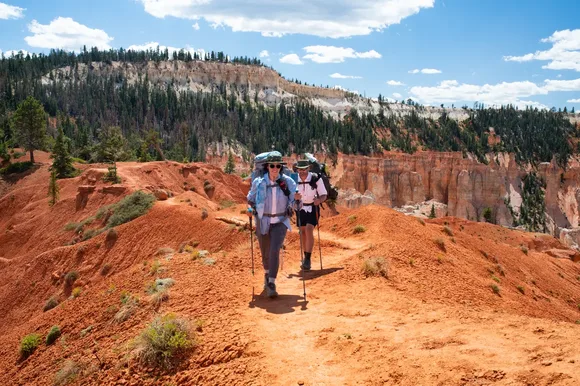
The trail requires a backcountry permit and enough planning to manage water caches at the few reliable springs along the route. Most backpackers tackle it in two or three days, though trail runners occasionally knock it out in one brutal push. You'll finish with a deeper appreciation for Bryce's ecosystem beyond the famous hoodoos — and sore feet that prove you earned it.
Riggs Spring Loop, Bryce Canyon
8.6 miles starting from Yovimpa Point / Ancient bristlecones and zero crowds
The southern end of Bryce Canyon feels like a different park — fewer visitors, older trees, and terrain that trades the hoodoo amphitheater for something quieter and more forested. The Riggs Spring Loop drops off the rim through bristlecone pines that were already ancient when Columbus sailed, descending into a landscape of mixed forest and meadow that feels more like the Rockies than the Colorado Plateau. You'll pass Riggs Spring itself, one of the few reliable water sources in the park's backcountry, before climbing back to the rim through golden aspens that light up the canyon in mid-September.
Some of these bristlecone pines have been growing for more than 1,600 years — older than most European cities.
The loop earns its strenuous rating through relentless elevation changes rather than sheer distance. You'll descend into drainages and climb back out repeatedly, and the final push to Yovimpa Point feels steeper than the map suggests. But the solitude alone makes it worthwhile — on a weekday in September, you might not see another hiker the entire day.
Fairyland Loop, Bryce Canyon
8 miles of hoodoos without the crowds / Bryce's best-kept secret
The Fairyland Loop delivers everything people come to Bryce Canyon to see — towering hoodoos, narrow corridors between orange and white spires, and ridgeline views that stretch across the Paunsaugunt Plateau — but most visitors never walk it because the trailhead sits a mile north of the main amphitheater. That oversight is your gain. You'll drop off the rim into a maze of rock formations that rival anything on the Navajo Loop, but you'll hike most of it in solitude.
This is the hoodoo experience you imagined when you planned your Bryce trip, minus the shoulder-to-shoulder crowds at every switchback.
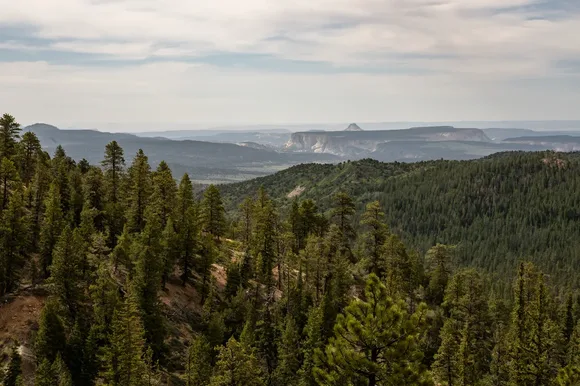
The loop connects Fairyland Point and Sunrise Point through eight miles of continuous scenery changes — tight slots between hoodoos, open ridges with panoramic views, and forested sections that offer shade when the sun gets high. Photographers love the low-angle light on the formations in early morning, and experienced hikers appreciate the varied terrain that never feels repetitive despite the constant presence of hoodoos.
Figure-8 Combination, Bryce Canyon
6.4 miles stitching together every amphitheater / The grand tour in a single hike
This is the trail that combines Queen's Garden, Navajo Loop, and Peekaboo into one continuous figure-eight through Bryce's most famous terrain. You'll start at Sunrise Point and descend into Queen's Garden, where hoodoos cluster like sandcastle cities built by giants. From there, the trail threads through narrow corridors on the Navajo Loop before connecting to Peekaboo's more remote sections. By the time you climb back to the rim, you'll have seen every type of hoodoo formation the park has to offer.
If you only have one day in Bryce Canyon and the stamina for a strenuous hike, this is the trail that delivers the most return on effort.
The combination earns its four-to-five-hour estimate through constant elevation changes and rocky footing that demands attention on every step. You'll climb out of the amphitheater multiple times, and the final ascent back to Sunrise Point feels longer than the map suggests. But the variety keeps things interesting — no two miles look the same, and the changing light throughout the day transforms the hoodoos from orange to pink to deep red.
The Rim Trail, Bryce Canyon
5.5 miles connecting every overlook / The amphitheater without the descent
The Rim Trail is Bryce Canyon for people who want the views without the punishment. Starting from Bryce Point and running north to Fairyland Point, this mostly paved path connects every major overlook along the amphitheater's edge. You'll walk along the rim with hoodoos sprawling below, stopping at Inspiration Point, Sunset Point, and Sunrise Point before continuing to less-crowded viewpoints beyond. Sections are wheelchair accessible, and you can break the trail into shorter walks by using the shuttle to hop between overlooks.
This is the rare trail where families with strollers and experienced hikers both find exactly what they're looking for — just at different paces.
Early morning offers the best light on the hoodoos and far fewer crowds than midday. The trail alternates between paved sections near the main overlooks and dirt paths through ponderosa pine forests where you'll lose the crowds entirely. By the time you reach Fairyland Point at the northern end, you'll have seen the entire amphitheater from every angle without ever dropping below the rim.
Peekaboo Loop, Bryce Canyon
5.5 miles plunging into the amphitheater / Tunnels and hoodoos without the crowds
From Bryce Point, the Peekaboo Loop drops off the rim like an elevator shaft and immediately deposits you into the heart of the amphitheater. You'll descend through switchbacks between towering orange and white hoodoos, pass through tunnels carved into the rock, and cross exposed ridges where the trail feels more like scrambling than walking. The loop winds through some of Bryce's most dramatic terrain, and because it requires more effort than the Navajo Loop, you'll hike most of it without the crowds.
The tunnels alone make this loop worth the effort — walking through solid rock with hoodoos towering overhead feels like exploring a cathedral designed by erosion.
The trail is shared with horses, which means dusty conditions and occasional traffic jams when pack trains pass through narrow sections. But the scenery more than compensates — you'll see formations that rival anything in the park, and the constant elevation changes keep the views fresh around every switchback. Photographers love the sidelight on the hoodoos in early morning, and trail runners appreciate the challenging terrain that demands attention on every step.
Navajo/Peekaboo Combination Loop, Bryce Canyon
4.9 miles of Bryce's greatest hits / Tight slots and towering hoodoos
This figure-eight loop combines the Navajo Loop's famous switchbacks through Wall Street with Peekaboo's more remote sections, creating a four-to-five-hour tour through Bryce's most iconic terrain. You'll drop off the rim at Sunset Point and immediately descend through a narrow slot between towering hoodoos — the kind of tight, switchbacking trail where you can touch both walls at once. From there, the loop connects to Peekaboo's tunnels and ridgelines before climbing back to the rim through exposed sections that deliver panoramic views across the amphitheater.
Wall Street's narrow corridor between 200-foot walls feels more like canyoneering than hiking — and that's exactly why people love it.
The loop earns its strenuous rating through constant elevation changes and rocky footing that demands attention on every step. You'll climb out of drainages multiple times, and the final ascent back to Sunset Point feels steeper than the descent. But the variety keeps things interesting — no two miles look the same, and the changing light throughout the day transforms the hoodoos from orange to pink to deep red.
Bryce Amphitheater Traverse, Bryce Canyon
4.7 miles from Bryce Point to Sunrise Point / The greatest hits reel in one walk
This point-to-point traverse drops you into the amphitheater at Bryce Point and threads through Peekaboo Loop, Navajo Loop, and Queen's Garden before climbing back to the rim at Sunrise Point. You'll see every type of hoodoo formation the park has to offer — towering spires, narrow corridors, exposed ridges, and forested sections that offer shade when the sun gets high. The shuttle makes getting back to your car effortless, and the one-way route means you never backtrack over the same terrain twice.
This is Bryce Canyon's greatest hits reel crammed into a single walk — and every mile delivers scenery that justifies the strenuous rating.
The traverse earns its three-to-four-hour estimate through constant elevation changes and rocky footing that demands attention on every step. You'll climb out of the amphitheater multiple times, and the final ascent to Sunrise Point feels longer than the map suggests. But the variety keeps things interesting — no two miles look the same, and photographers will burn through memory cards trying to capture the constantly changing light on the hoodoos.
Swamp Canyon Loop, Bryce Canyon
4 miles into terrain most visitors never see / Backcountry feel without the permit
The Swamp Canyon Loop starts from an overlook along the main park road and drops you into a side of Bryce Canyon that trades hoodoos for ponderosa forests and open meadows. The first mile descends through a narrow drainage lined with orange spires, but the scenery quickly shifts into something greener and quieter. You'll hike through forests, cross a bridge over Swamp Canyon Creek, and climb back to the rim through terrain that feels more like the Rockies than the Colorado Plateau.
This is the loop for people who want the satisfaction of descending into Bryce Canyon without the crowds that pack the Navajo and Queen's Garden trails.
The loop earns its moderate rating through a 1,000-foot elevation gain spread across four miles — enough to feel like exercise without punishing your knees. You'll finish with a backcountry experience that most Bryce visitors never see, and the solitude alone makes it worthwhile. On a weekday in September, you might not see another hiker the entire loop.
Hat Shop, Bryce Canyon
4 miles to hoodoos wearing capstones / Raw backcountry below the rim
Most Bryce Canyon hikers stick to the amphitheater trails, which means the Hat Shop sees a fraction of the traffic despite delivering some of the park's most unusual formations. The trail drops like an elevator shaft from Bryce Point — nearly 1,400 feet in just two miles — switchbacking down through ponderosa pine into the raw, sun-blasted badlands below the rim. At the bottom, you'll find hoodoos topped with flat capstones that look like hats perched on weathered pedestals — formations that rival anything in the amphitheater but feel wilder and more remote.
The Hat Shop hoodoos look like someone balanced boulders on top of sandstone spires as a geology experiment, then walked away and never came back.
The descent is manageable, but the return climb will test your lungs and patience. You'll gain back every foot of elevation you lost, and the switchbacks feel longer on the way up than they did on the way down. But the solitude and unusual formations make it worthwhile — this is Bryce Canyon without guardrails, without crowds, and without the safety net of a parking lot five minutes away.