10 Best Waterfall Hikes in the National Parks
Crater Lake's waterfalls and water features deliver what postcard views can't: solitude, old-growth forests, and geological oddities worth the walk
Here's the uncomfortable truth about waterfall hikes in the national parks: most of them involve a lot of walking for a trickle that barely clears your ankles by August. Crater Lake National Park flips that equation. While the park built its reputation on that impossible blue caldera, its waterfalls and water features offer something rarer than postcard views — they deliver genuine solitude, old-growth forests thick enough to block cell service, and the kind of geological oddities that make you stop and stare.
This ranking measures trails by payoff per mile, accessibility for different skill levels, and whether the destination justifies the effort. Some of these hikes lead to actual waterfalls. Others take you to springs bubbling from volcanic rock or overlooks above canyon spires carved by superheated gas. All of them involve water doing something worth photographing.
Stuart Falls Trail, Crater Lake
A forested ramble trading rim drama for old-growth shade and moving water
Stuart Falls Trail is one of Crater Lake's quieter escapes, and that alone makes it worth the drive to the trailhead. The path drops gradually through a thick corridor of mountain hemlock and Shasta red fir, the kind of soft, needle-carpeted tread that muffles every footstep. You'll lose most casual tourists within the first half mile — they came for the lake, not for a forest walk that requires actual effort.
The falls themselves aren't towering curtains of whitewater, but they tumble through moss-covered rock with enough volume to justify the detour from Rim Drive.
This trail rewards patience. The sound of water grows louder as you descend, and the forest opens just enough to let filtered light play across the creek. By the time you reach the falls, you've traded elevation for shade and crowds for solitude. The return climb reminds you that gravity works both ways, but nothing about this hike requires suffering.
Plaikni Falls, Crater Lake
Nearly flat mile through old-growth forest to a waterfall framed by wildflowers
Plaikni Falls is the kind of trail that makes you wonder why anyone bothers suffering on longer hikes. From the trailhead, you amble through dense old-growth forest where the canopy filters light into soft green columns. The path stays nearly flat the entire way, well-groomed enough for trail runners but quiet enough that you'll mostly hear birdsong and the crunch of volcanic gravel under your boots.
The falls drop through a natural amphitheater ringed by wildflowers in July and August, the kind of scene that looks Photoshopped until you're standing in front of it.
Most visitors to Crater Lake never hear about Plaikni Falls because it sits on the east side of the park, away from Rim Village and the famous viewpoints. That geographic isolation works in your favor. Even on busy summer weekends, you'll likely have the falls to yourself by mid-morning. The return walk feels even easier than the approach, which tells you everything about the trail's gentle grade.
Boundary Springs, Crater Lake
Five miles through conifer forest to the actual birthplace of the Rogue River
This trail rewards you with something genuinely rare: the Rogue River's headwaters, bubbling up from the earth in a clearing you might walk past if you weren't looking. The path winds through mixed conifer forest that stays mercifully shaded for most of the journey, trading volcanic drama for the kind of quiet, cathedral-like woods that make you forget you're in a national park at all.
The springs themselves emerge from the ground with surprising force, cold and clear enough to see every pebble on the bottom before the water gathers strength and becomes a river.
Most of the elevation change happens early, then the trail settles into an easy rhythm that lets you focus on the wildflowers carpeting the forest floor. By late July, lupine and paintbrush turn the meadow near the springs into a color wheel that photographers circle like moths. The return trip climbs gradually, nothing that requires heroics, just steady walking back through forest that feels older than the park designation.
Crater Peak, Crater Lake
Rolling grasslands and steady climbing to panoramic summit views
Crater Peak sneaks up on you. The first mile lulls you through quiet mixed-conifer forest, the kind of easy walking that makes you wonder what the fuss is about. Then the trail opens into rolling grasslands and starts climbing in earnest, nothing brutal but a steady push that reminds you why the difficulty rating includes the word strenuous.
The summit delivers what every mountain climb promises but few actually provide: a 360-degree panorama that includes Crater Lake, Mount Shasta, and enough wilderness to make you feel genuinely small.
This trail sees a fraction of the traffic that concentrates around Rim Drive, which means you'll likely have the summit to yourself if you start early. The wildflower display in June and July rivals anything in the Cascades, carpeting the grasslands in lupine, paintbrush, and species you won't identify without a field guide. The descent offers better views than the climb, proof that sometimes the best part of a hike is looking back at where you've been.
Cleetwood Cove Trail, Crater Lake
A staircase disguised as a trail dropping to the only lake access in the park
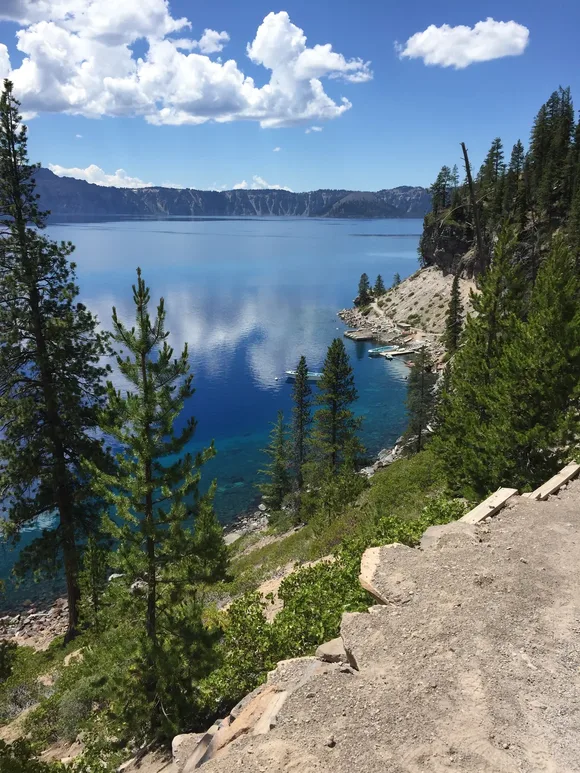
Don't let the short distance fool you. Cleetwood Cove is basically a staircase in reverse, dropping you through loose volcanic switchbacks with increasingly jaw-dropping views of Crater Lake's impossible blue water. The trail is fully exposed, which means you'll bake on the way down and suffer on the way back up.
At the bottom, you can touch the deepest lake in America and immediately understand why people torture themselves on this trail — the water is so clear and cold it feels like something from another planet.
This is also the only trail that grants lake access, which means you'll share it with boat tour passengers and anyone desperate enough to swim in water that averages a bracing fifty-five degrees. The climb back out is exactly as brutal as you imagine, gaining elevation you forgot you lost in roughly a mile of relentless switchbacks. But you came to Crater Lake to experience the lake itself, and this trail is the only way to do it without a boat.
Watchman Trail, Crater Lake
Short climb through wildflower meadows to a historic lookout perched on the rim
The Watchman Trail packs a ridiculous reward into a short walk. From the trailhead on the west rim, you climb a gentle, well-maintained path through wildflower meadows and scattered mountain hemlock before the trail switchbacks up to the historic Watchman Lookout Station perched on the rim. The elevation gain is modest enough that families with young kids tackle it regularly, but steep enough that you'll feel it in your thighs by the top.
The lookout offers what might be the park's best view of Wizard Island, that perfect volcanic cone rising from the lake like something a child would draw.
Late afternoon light transforms this hike from good to spectacular, painting the lake in deeper shades of blue and casting long shadows across Wizard Island. The lookout itself is staffed during fire season, and rangers occasionally tolerate questions between radio checks. Most people arrive, snap photos, and leave within twenty minutes. Stay longer and watch the light change. That's when the lake reveals why people drive across the country to stare at it.
Discovery Point Trail, Crater Lake
Rim walk through volcanic rock to the spot where explorers first saw the lake
Starting from the west end of Rim Village, this out-and-back follows the crater rim through a mix of mountain hemlock forest and open volcanic rock. The trail rolls gently at first before hitting a modest climb, nothing brutal but enough to get your heart rate up on a warm afternoon. The path is wide enough for two people to walk side by side, which makes this a good choice for hikers who want conversation with their views.
Discovery Point marks the spot where John Wesley Hillman's prospecting party first laid eyes on the lake in 1853, and the view hasn't diminished in the century and a half since.
The trail delivers multiple rim viewpoints, each offering a slightly different angle on the caldera and Wizard Island. You'll share this path with casual walkers from Rim Village, but foot traffic thins noticeably after the first quarter mile. The return walk offers better light in late afternoon, when the western sun illuminates the far rim and deepens the lake's famous blue. This isn't a destination hike, but it's a solid way to stretch your legs between longer adventures.
The Pinnacles, Crater Lake
Flat walk through forest to volcanic spires carved by superheated gas
This is barely a hike and entirely a spectacle. A flat, well-maintained path through dense forest delivers you to an overlook above Wheeler Creek Canyon, where dozens of volcanic spires rise from the gorge like a pipe organ carved by geology. Some of these pinnacles top one hundred feet, formed when superheated gas vents hardened the surrounding ash into resistant columns that erosion later exposed.
The pinnacles look like something from a fantasy novel, all jagged points and impossible angles, proof that volcanic eruptions create more than just craters and lava flows.
Most visitors to Crater Lake never make it here because the access road requires a detour from the main loop. That isolation works in your favor — even in peak summer, you'll often have the overlook to yourself. The light improves dramatically in late afternoon when the western sun illuminates the spires and creates shadows that emphasize their sculptural quality. This is the kind of stop that takes fifteen minutes but delivers photos you'll actually look at later.
Crater Lake Lodge Loop, Crater Lake
Paved stroll behind the historic lodge to a rim-edge viewpoint
This is the kind of walk you take when you want maximum payoff for minimum effort, and at Crater Lake, the payoff is staggering. The paved loop wraps behind the historic Crater Lake Lodge, delivering you to a rim-edge viewpoint where the deepest lake in America drops away beneath your feet in impossible shades of blue.
The lodge itself deserves a look — built in 1915, it's the kind of stone-and-timber palace that makes modern architecture look disposable.
This trail is accessible enough for wheelchairs and strollers, which makes it the park's most democratic hike. You'll share the viewpoint with lodge guests sipping coffee and tourists who drove straight to Rim Village without lacing up hiking boots. But the view doesn't care about your effort level. The lake stretches out below with the same intensity whether you walked thirty miles or three hundred feet. Stay for sunset and watch the water shift through every shade of blue on the spectrum.
Rim Trail (Full Loop), Crater Lake
Thirty-three miles circumnavigating the most photogenic hole in the ground on Earth
This is the full enchilada: a thirty-three-mile circumnavigation of the caldera that most people cherry-pick in sections. Tackling the entire rim in one push is a dawn-to-well-past-dark sufferfest with thousands of feet of cumulative elevation gain that guidebooks conveniently understate. The trail alternates between forested sections that offer shade and exposed rim walks that deliver views so relentless they stop feeling special around mile twenty.
By mile fifteen, you'll understand why most hikers split this into two days — your knees will file complaints, your water bottles will run dry, and the lake will still look exactly as blue as it did at sunrise.
But if you're a completionist or an endurance junkie, this loop offers something rare: the chance to see every angle of Crater Lake in a single push. You'll traverse wildflower meadows, volcanic pumice fields, and old-growth forests thick enough to block cell service. You'll climb to viewpoints that tour buses can't reach and walk sections where you won't see another human for hours. The final miles back to your starting point feel endless, but finishing gives you bragging rights that casual hikers can't claim.