10 Short National Park Trails That Pack Serious Elevation
Ten trails that deliver serious elevation in small packages, from Denali climbs to vertical shortcuts you'll pay for on the way back
When you think about short trails, you probably imagine flat, easy loops perfect for killing an hour before dinner. These hikes defy that assumption. Each one is a vertical gut punch wrapped in a manageable distance, the kind of trail where your watch says you've only gone a mile, but your calves tell you otherwise. They're proof that difficulty per mile matters more than total mileage when you're climbing at angles that test your cardiovascular system and your grip on trail etiquette.
What follows are ten trails that deliver serious elevation in small packages. Some are legitimate training climbs. Others are steep connectors or punchy descents you'll regret underestimating. None of them will take all day, but all of them will remind you that vertical feet matter more than horizontal miles.
Mount Healy Overlook Trail, Denali National Park & Preserve
Five miles and seventeen hundred feet of climb / Dense boreal forest to alpine tundra
Starting from the Denali Visitor Center, this trail wastes no time getting vertical. You're climbing from the first step, winding through a dark corridor of mossy spruce forest that feels borrowed from the Pacific Northwest rather than interior Alaska. Around the halfway point, the trees thin out and you break into open tundra, where the views stretch across the Nenana River valley and toward the Alaska Range. On clear days, you'll spot Denali itself, though those days are rarer than the park brochure suggests.
The climb is relentless enough that you'll question your cardiovascular fitness, even if you hike regularly back home at sea level.
Most first-time Denali visitors tackle this trail because it's accessible without a shuttle bus ticket and delivers the kind of expansive Alaska views they came for. The descent hammers your knees on loose gravel, and you'll pass plenty of hikers taking frequent breaks on the way up. Late June through mid-August offers the longest daylight and clearest skies, though early morning starts give you the best chance of actually seeing the mountain before afternoon clouds roll in.
Bison Gulch Trail, Denali National Park & Preserve
Six miles through open tundra with eleven hundred feet of elevation / No warm-up miles
Bison Gulch doesn't ease you into anything. You're exposed from the trailhead, climbing steadily through dwarf willow and blueberry scrub while the Alaska Range dominates the skyline. The trail gains roughly the height of the Empire State Building over three miles, but there are no switchbacks to soften the pitch. You're just walking uphill through tundra, trying not to stumble on uneven ground while scanning the horizon for caribou and grizzlies.
This is the kind of hike where you feel small in the best possible way, surrounded by tundra that stretches farther than your legs can carry you in a day.
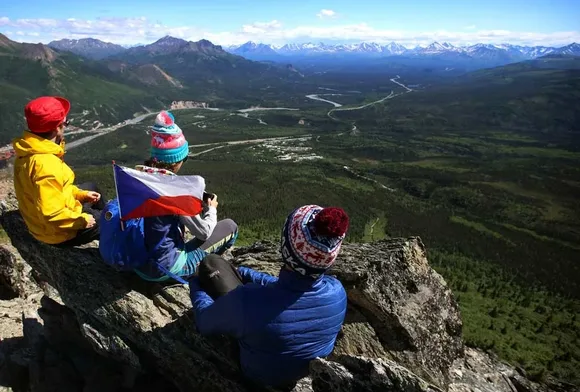
The lack of trees means you're visible to wildlife from miles away, which cuts both ways depending on whether you're hoping to photograph a bear or avoid one. Late June through mid-August offers the longest daylight and most active wildlife, with early morning starts providing softer light and better odds of spotting animals before they bed down for the afternoon. Bring layers, because the wind on exposed tundra can drop the temperature twenty degrees in minutes.
Tattler Creek Trail, Denali National Park & Preserve
Four miles up a creek drainage with six hundred fifty feet of climb / Willow thickets to alpine views
Tattler Creek trades Denali's notorious bushwhacking for a relatively clear drainage leading into open tundra. You'll start near the Denali Park Road and follow the creek upstream through willow thickets before breaking out into the kind of vast, rolling landscape that defines interior Alaska. The elevation gain is moderate but steady, climbing the height of a sixty-story building over two miles. It's enough to get your heart rate up without destroying your knees.
This is backcountry rambling that feels accessible, a middle ground between maintained trails and full off-trail exploration.
You'll encounter fewer hikers here than on the more popular trails near the visitor center, which means better odds of spotting caribou, bears, and ground squirrels without a crowd. Mid-June through mid-August offers the longest daylight and driest conditions, with early morning starts providing the best wildlife viewing before animals retreat from the midday sun. The creek can be tricky to cross in early season when snowmelt is high, so plan accordingly if you're visiting in June.
Early Morning Hike to Horseshoe Lake, Denali National Park & Preserve
Two miles to a subarctic lake / Steep descent you'll pay for on the way back
The trail begins on a bluff above Horseshoe Lake, where a bench lets you take in the view before committing to the descent. And you should commit, because the steep drop to the lakeshore is the only real challenge here. It's a brief but attention-grabbing pitch that demands careful footing, and you'll earn every vertical foot again on the way back up. The lake itself sits calm and clear in summer, reflecting the surrounding spruce forest and offering the kind of quiet you don't find near the visitor center.
Hit the trail at dawn in June or July for the calmest water, the best wildlife activity, and subarctic daylight that makes a six o'clock start feel practically civilized.
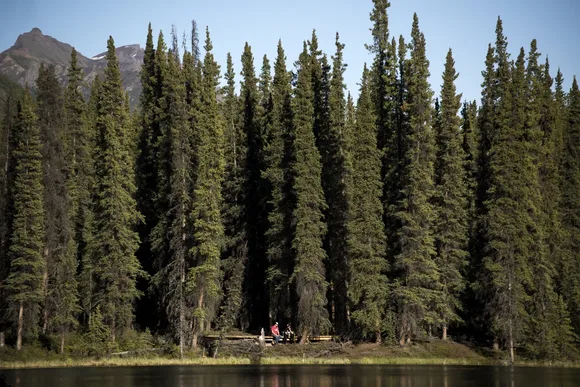
Most families handle this trail fine on the way down, then regret not bringing snacks for the climb back up. Birders love the lakeshore for waterfowl and songbirds, and photographers appreciate the still water for reflections. The trail is short enough that you can hike it before breakfast and still make the first shuttle bus into the park. Just don't underestimate the climb out, especially if you're hiking with kids who will inevitably slow down once the novelty of descending wears off.
Savage River Loop Trail, Denali National Park & Preserve
Under two miles with three hundred fifty feet of elevation / Braided river and open tundra
This is Denali's welcome mat, a short loop along the Savage River that delivers outsized Alaska scenery for minimal effort. The trail drops gently from the parking area down to the river's gravel bars, where the water runs milky with glacial silt in summer. You'll cross open tundra with views toward the Alaska Range, and if you're lucky, you'll spot caribou or Dall sheep on the surrounding ridges. The elevation change is modest but noticeable, just enough to remind you that even easy trails in Alaska require more effort than their mileage suggests.
Late June through mid-July offers peak wildflowers and the longest daylight, but September brings fall tundra colors and fewer crowds if you can handle cooler temperatures.
Most first-time visitors hike this loop because it's the farthest point on the Denali Park Road you can reach by private vehicle without a shuttle reservation. It's popular but rarely crowded, and the open landscape absorbs people better than forested trails. Photographers love the braided river channels and tundra colors, and families appreciate the relatively short distance. The trail is well-maintained and accessible, though the gravel bars can be slippery after rain.
Jonesville Trail, Denali National Park & Preserve
A third of a mile and fifteen stories of elevation / Vertical shortcut from campground to town
Jonesville Trail is less a hike and more a vertical shortcut, a brief connector that climbs from Riley Creek Campground up to the Canyon business district just outside the park boundary. In roughly five minutes of walking, you'll gain the height of a fifteen-story building on a steep, well-worn path. It's the kind of trail that exists purely for utility, not scenery, though the boreal forest on either side is pleasant enough if you're paying attention instead of watching your feet on the steep pitch.
This is a leg burner disguised as a convenience, the kind of connector that makes you reconsider whether you really needed that restaurant meal after all.
Most campers use this trail in the evening when they want to walk into town for dinner without bothering with the car. It's steep enough that you'll feel it in your calves, but short enough that even kids can handle it with a few rest breaks. The trail is well-maintained but can be muddy after rain, so watch your footing on the descent. Late afternoon or early evening offers the best light through the trees, though in summer, daylight lasts until nearly midnight anyway.
McKinley Station Trail, Denali National Park & Preserve
One and a half miles downhill / Gentle stroll to a creek confluence
This is Denali's easiest introduction, a gentle downhill walk on compacted gravel that drops you from the visitor center down to the confluence of Hines and Riley Creeks. The elevation loss is barely noticeable, more like walking down a long driveway than actual hiking. The highlight comes when you pass beneath the Alaska Railroad trestle, where you can catch the evening train if your timing is right. The trail is wide, smooth, and accessible, the kind of path you can walk while carrying on a conversation without watching your feet.
Late afternoon in June or July offers soft golden light and hours before sunset, with the chance to spot the evening train crossing the trestle overhead.
Most families walk this trail on their first day in the park, when they're still getting oriented and not ready for anything strenuous. Train spotters love the trestle crossing, and photographers appreciate the creek views. The return trip gains about ten stories of elevation, but it's gradual enough that you'll barely notice unless you're sprinting to catch the last shuttle bus. The trail connects to other paths in the entrance area, making it a useful connector for exploring without driving.
Meadow View Trail, Denali National Park & Preserve
A third of a mile through subarctic meadow / Flat connector between two trails
This is barely a trail and more of a pleasant excuse to stretch your legs, a quick connector path that links Rock Creek Trail to Roadside Trail through a pocket of subarctic meadow. At just a third of a mile one way, you can walk it in ten minutes without breaking a sweat. The narrow tread weaves through wildflowers and low shrubs, with occasional views across the meadow toward the surrounding boreal forest. It's flat, easy, and forgettable unless you happen to catch a moose browsing in the willows or a ptarmigan flushing from the grass.
Early morning in late June through July offers the best combination of wildflowers, long daylight, and wildlife activity in the meadow.
Most hikers use this trail as a connector rather than a destination, which means you'll often have it to yourself. It's pleasant enough if you're killing time before a shuttle bus or looking for a short nature walk with kids. The meadow holds morning dew longer than open trails, so expect wet grass if you're hiking early. The trail is well-marked and easy to follow, though the vegetation can grow in by late summer.
Morino Trail, Denali National Park & Preserve
Two-tenths of a mile through spruce forest / Wooded intermission between bus connections
The Morino Trail is barely a hike, more of a wooded intermission between bus connections at the Denali Visitor Center area. This short out-and-back wanders through a quiet stand of white spruce, the kind of boreal forest that blankets interior Alaska. The path is flat and soft underfoot, winding through moss and low shrubs with just enough distance to clear your head between transit stops. It's pleasant enough if you're stuck with an hour to kill, but there's nothing remarkable here beyond the forest itself.
Late morning through early afternoon in June or July offers fully leafed-out forest and daylight that stretches past ten at night, though any time during summer works fine.
Most visitors walk this trail when they're waiting for a shuttle bus or stretching their legs after a long drive. It's short enough that you'll be back at the visitor center in twenty minutes, including time to stop and read the interpretive signs about boreal ecology. The trail is accessible and well-maintained, with benches along the way for anyone who needs to sit. It's not a destination, but it's a decent way to kill time if you're stuck in the entrance area anyway.
Roadside Bike Trail, Denali National Park & Preserve
Under two miles along the Park Road / Flat gravel path parallel to traffic
This is Denali's warm-up act, a flat, well-packed gravel path that parallels the Park Road from the visitor center back toward the park entrance. Don't expect wilderness solitude here. This is a connector trail that runs alongside the road, offering views of the surrounding boreal forest and, on clear days, glimpses toward the Alaska Range. The path is wide enough for bikes and pedestrians, with enough room to pass without awkward shuffling. It's perfectly pleasant if you need to walk somewhere, but it's not the kind of trail you'll remember or recommend.
Late June through mid-August offers the longest daylight and warmest temperatures, with evening walks after seven providing soft light and cooler air.
Most hikers use this trail to walk or bike between facilities without driving, or as an easy evening stroll after dinner. Families appreciate the flat terrain and accessibility, and you'll occasionally spot moose or caribou in the surrounding forest if you're lucky. The trail is well-maintained and easy to follow, though the proximity to the road means you'll hear traffic throughout. It's utilitarian rather than scenic, the kind of path that exists because people need to get from point A to point B without driving.