6 National Parks Where Fall Foliage Steals the Show
Six parks where elevation, trees, and timing converge to create the best fall color shows in the National Park System
Fall foliage doesn't need an excuse, but these six national parks give it a stage. While the leaves turn everywhere from Maine to Montana, these landscapes frame the spectacle with elevation changes, granite peaks, and valleys that funnel color into view. You won't find quiet anywhere during peak color, but you'll understand why millions show up anyway.
Timing fall foliage is more art than science. Elevation matters more than latitude, and a single cold snap can shift peak color by a week. The parks below offer the best combination of leaf density, landscape drama, and trail access during their respective windows. Plan flexible dates if you can.
Great Smoky Mountains National Park
America's most-visited park / October crowds rival summer
The Smokies earn their reputation as the East's foliage capital through sheer volume: more tree species than all of Europe packed into valleys that ripple with color from mid-October through early November. You'll sit in traffic on Newfound Gap Road during peak weekends, and Cades Cove turns into a parking lot by 9 AM. But the park's trail network stretches across more miles than most people walk in a year, and even a half-mile bushwhack from the popular routes delivers solitude.
The lower elevations burn with red maples and hickories while the ridgelines hold onto yellow birch and beech, creating layers of color that shift as you climb.
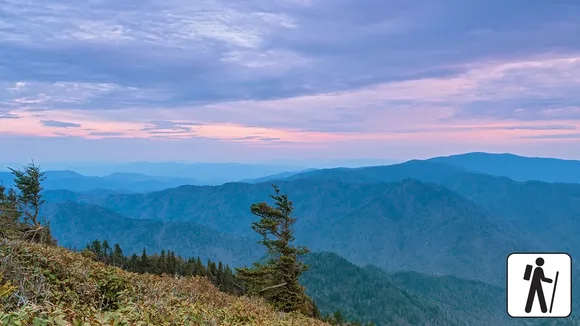
Alum Cave Trail to Mount LeConte offers the full elevation gradient in one hike: start in hardwood forest at 3,800 feet, pass through the Arch Rock tunnel, and finish above 6,500 feet where the leaves have already dropped. Laurel Falls Trail brings easier access but also shoulder-to-shoulder foot traffic on October weekends. For fewer people, try Rainbow Falls Trail early on weekday mornings. The waterfall itself flows year-round, and the trail climbs through old-growth forest that peaks in late October.
Shenandoah National Park
105 miles of ridge-top driving / Peak color mid-October
Skyline Drive delivers what Great Smoky Mountains makes you work for: overlook after overlook where you can pull off, step out of the car, and watch the Blue Ridge unfold in waves of orange and crimson. The park sits close enough to Washington, D.C. that weekends bring crowds, but the manageable visitor numbers mean you'll find parking at most overlooks if you arrive before noon. Old Rag Mountain draws the serious hikers, and the rock scramble near the summit stays busy through November.
The hollows below Skyline Drive were farmland a century ago, and the young forest burns brighter than old-growth ever could.
Dark Hollow Falls Trail offers the park's most accessible waterfall hike at just over a mile round-trip, with enough elevation change to showcase color variety. Limberlost Trail runs flat through a hemlock grove, ideal for families with young kids or anyone seeking an easy walk. For bigger views with moderate effort, Stony Man Trail climbs to the park's second-highest peak in under two miles. Peak foliage typically arrives between October 10 and 25, starting at higher elevations and moving down. The park's relatively mild October weather, with highs in the 60s and lows in the 40s, makes layering easy.
Cuyahoga Valley National Park
Twenty miles of towpath along the Cuyahoga River / Cleveland's backyard surprise
Ohio doesn't make most foliage lists, which is exactly why Cuyahoga Valley belongs here. The park straddles the Cuyahoga River valley between Cleveland and Akron, offering mature hardwood forest that peaks in mid-October without the crowds that pack New England. Brandywine Falls drops 65 feet over a shale cliff surrounded by hemlocks and maples, accessible via a quarter-mile boardwalk from the parking lot. The Towpath Trail follows the old Ohio & Erie Canal for 20 flat, bikeable miles through forest that turns yellow and orange by mid-month.
The glacial rock ledges along the Ledges Trail frame the forest like a natural gallery, with slabs of Sharon conglomerate rising from beds of fallen leaves.
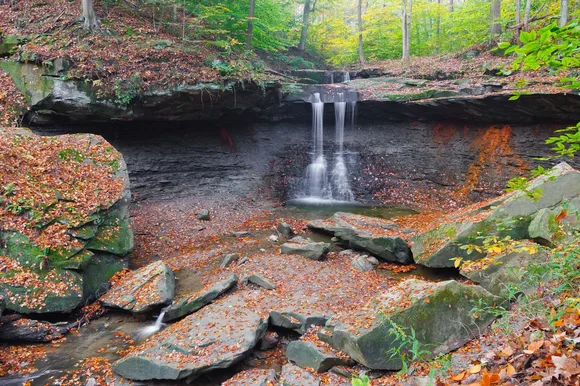
Ledges Trail loops through the park's most dramatic rock formations over a moderate three and a half miles. Ice Box Cave stays cool year-round, and the cliff faces catch afternoon light that makes the fall color almost glow. The park sits close enough to Cleveland that you can visit on a day trip, but October's mild weather makes overnight camping worth considering. Stanford House, a historic farmstead along the towpath, hosts ranger programs most weekends through October.
Rocky Mountain National Park
Aspens turn gold at 8,000 feet / September peaks before the snow
Rocky Mountain's fall show runs shorter and higher than the eastern parks, with aspen groves turning brilliant yellow from mid-September through early October. Trail Ridge Road typically closes by mid-October, so your window for combining high-alpine views with fall color is tight. Bear Lake sits in the heart of the park's aspen zone, and the half-mile loop trail circles the lake through groves that peak around September 20. Emerald Lake Trail extends the hike another mile and a half, climbing past Dream Lake to a cirque ringed with evergreens and golden aspens.
Aspens don't blend like eastern hardwoods — they ignite in patches of pure yellow against dark spruce and granite.
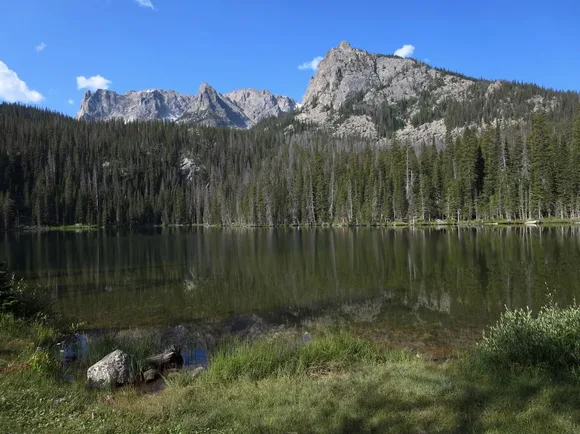
The park stays crowded through September, though not as packed as July's peak season madness. You'll still need timed entry permits for Bear Lake Road before 5 PM, and popular trailheads fill early. For bigger elevation gain and fewer people, try Glacier Gorge Trail toward Mills Lake. The hike climbs through mixed aspen and pine forest, and the lake itself sits in a dramatic glacial valley. September weather swings from 60s during the day to freezing at night, and afternoon thunderstorms remain common through the month.
Acadia National Park
First sunrise in America / October crowds rival August
Acadia packs New England's full fall display into a compact coastal package where granite peaks meet the Atlantic. The park draws intense crowds during peak foliage in mid-October, when parking lots at Jordan Pond and Cadillac Mountain fill before sunrise. But the carriage road network offers over 40 miles of car-free paths where you can bike or walk through forest without competing for space. Jordan Pond Shore Trail loops the pond in just over three miles, with views of the Bubbles rising from the north shore and maples reflecting in the water.
The combination of ocean, mountains, and color happens nowhere else on the East Coast quite like this.
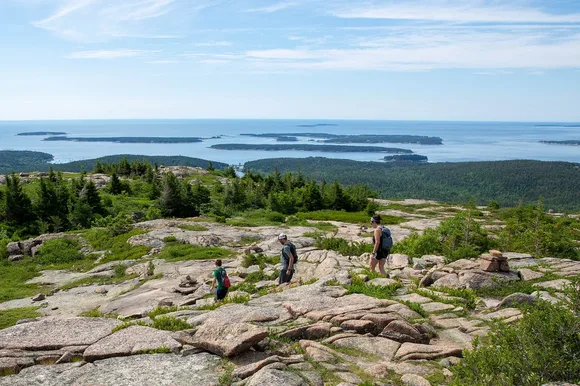
Cadillac Mountain's summit road brings color views without hiking, though you'll need a reservation for sunrise or sunset. The Precipice Trail closes in October to protect nesting peregrine falcons, but the Beehive Trail stays open and delivers similar exposure with iron rung ladders bolted to vertical rock. For families, the carriage roads around Jordan Pond stay flat and accessible, and the gravel surface handles bikes easily. October highs sit in the 50s with overnight lows in the 40s, and coastal fog can roll in without warning. Bring layers.
Glacier National Park
Larch trees turn gold above 5,000 feet / Going-to-the-Sun Road closes by mid-October
Glacier's fall color comes from an unexpected source: subalpine larch, a deciduous conifer that turns brilliant gold in late September before dropping its needles. These trees grow above 5,000 feet, often near treeline, creating pockets of color against gray talus and evergreen forest. Going-to-the-Sun Road stays open into early October most years, though snow can close it suddenly. Many Glacier Area offers easier access to larch zones via trails like Grinnell Glacier and Iceberg Lake.
Larch season turns the high country gold for two weeks, then it's gone — needles drop fast once they turn.
Hidden Lake Overlook Trail from Logan Pass climbs through alpine meadows where larches dot the slopes, and the three-mile round trip delivers views across the Continental Divide. The trail stays moderate despite the elevation, and boardwalks protect the fragile vegetation. September brings manageable crowds compared to July's peak season, and daytime temperatures in the 50s make layering essential. Wildlife activity increases in fall as animals prepare for winter, and grizzly bears remain active through October. Carry bear spray and make noise on blind corners.