6 parks where summer starts early
Six national parks where May offers better weather and smaller crowds than traditional summer months
May is summer's polite introduction — the month when temperatures rise without reaching extremes, when trails dry out but wildflowers still bloom, and when the crush of peak-season crowds hasn't yet arrived. For most of the country, it's shoulder season. For these six parks, it's the sweet spot.
From volcanic islands to coral reefs, these parks turn conventional summer timing on its head. While Yellowstone and Glacier dig out from snowdrifts, you can snorkel over living coral, walk across fresh lava, or explore desert canyons before the thermometer climbs past comfortable. May isn't just early summer here — it's often the best month on the calendar.
Channel Islands National Park
Five islands 12 miles offshore / Fewer visitors than most state parks
Channel Islands doesn't show up on most people's California itinerary, which is exactly why May works so well here. The spring wildflower bloom stretches into early summer, painting the hills of Santa Cruz and Santa Rosa islands in yellows and purples, while the marine layer that blankets the coast in July hasn't yet settled in. You'll catch clear views back to the mainland and across the channel between islands — a rarity in a place known for fog.
You need a boat to reach California's most isolated national park, which filters out the crowds but rewards those who make the crossing.
The ferry from Ventura takes an hour to Anacapa, longer to the outer islands, and every crossing feels like leaving the state behind. Island foxes the size of house cats patrol the campgrounds, sea lions bark from offshore rocks, and the Prisoner's Harbor to Chinese Harbor Trail on Santa Cruz crosses nine miles of coastal bluffs without a single road in sight. May also marks the tail end of gray whale migration, so scan the water on your crossing.
Hawaiʻi Volcanoes National Park
Two active volcanoes / More trail miles than the entire island of Oahu
May sits in the sweet spot between Hawaii's winter rains and summer crowds, making it one of the quietest months at a park that sees plenty of tour buses come December. The weather cooperates too — temperatures at the summit hover in the low 70s, cool enough for comfortable hiking but warm enough that you won't need layers when you descend into Kīlauea Iki crater. Walk across the solidified lava lake floor and you'll still see steam vents marking where molten rock sat just decades ago.
You're walking on geology so young it hasn't had time to grow moss — lava that flowed while your parents were alive.
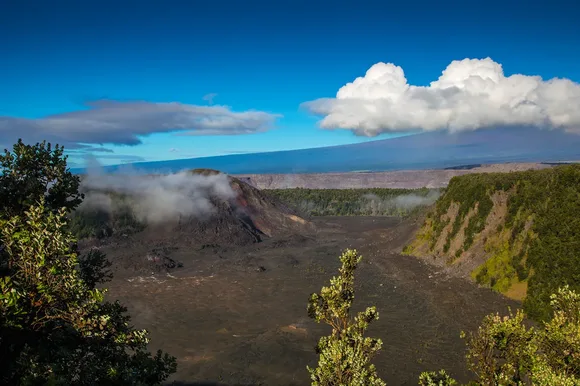
The park operates year-round, but May offers the best balance of accessibility and weather. Chain of Craters Road drops from rainforest to coast, passing frozen lava flows and petroglyphs carved into older rock. Thurston Lava Tube stays cool even on warm days, and the short paved trail makes it manageable for families. If you want solitude, skip the crater rim viewpoints and head to Mauna Ulu, where a three-mile trail crosses a landscape that looks more like Mars than Hawaii.
Biscayne National Park
Only living coral reef in the continental U.S. / Mostly underwater
May marks the edge of Florida's wet season, which means you'll beat both the summer afternoon thunderstorms and the winter snowbird crowds. The water temperature climbs into the low 80s — warm enough for extended snorkeling without a wetsuit but before the peak heat that makes even Floridians retreat to air conditioning. Most people don't realize Miami has a national park, which keeps Biscayne quieter than almost any other coastal park in the system.
You can see Miami's skyline from the mangrove-lined shore, but once you're on the water, the city disappears.
The park protects coral reefs, mangrove forests, and 40 small keys, but you'll need a boat to reach most of it. The concessionaire runs snorkel tours to the reef, where you'll float over brain coral, elkhorn formations, and schools of parrotfish that sound like they're crunching rocks as they feed. Elliott Key offers camping and a two-mile trail through hardwood hammock, while Boca Chita Key has a lighthouse and picnic areas. If you have your own kayak, the mangrove shoreline around the visitor center makes for excellent paddling without committing to a full island crossing.
Everglades National Park
Bigger than Delaware / Best known for what lives in its water
May sits at the tail end of the Everglades' dry season, which is exactly when you want to visit. The mosquitoes that make summer camping unbearable haven't yet reached biblical proportions, water levels have dropped enough to concentrate wildlife around sloughs and ponds, and temperatures still hover in the 80s rather than the swampy 90s of June. The Anhinga Trail becomes an alligator runway — you'll see dozens from the boardwalk, along with herons, egrets, and anhingas drying their wings in the morning sun.
The Everglades doesn't do mountains or waterfalls — it does subtlety, and you have to slow down to see it.
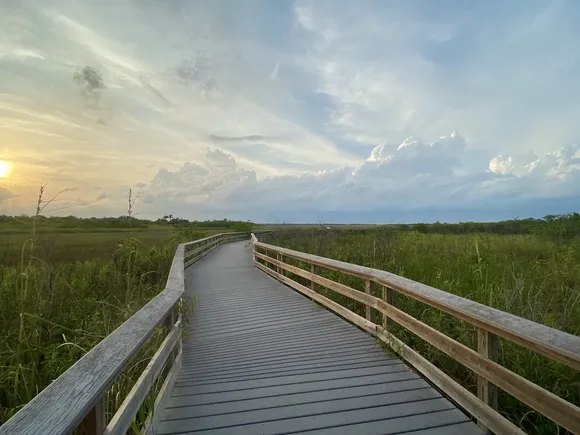
The park sprawls across the southern tip of Florida, encompassing sawgrass prairies, mangrove tunnels, and the shallow limestone basin that gives the River of Grass its name. Most visitors drive to Flamingo, stopping at short boardwalk trails along the way, but the real experience requires getting on the water. Rent a kayak and paddle the Nine Mile Pond loop or the longer Hell's Bay trail, where mangrove tunnels open into small bays and you'll spot wading birds hunting in the shallows. The Shark Valley loop offers 15 miles of flat biking past alligators and turtles, with an observation tower at the halfway point.
Virgin Islands National Park
Two-thirds of St. John / Sugar mill ruins meet coral reefs
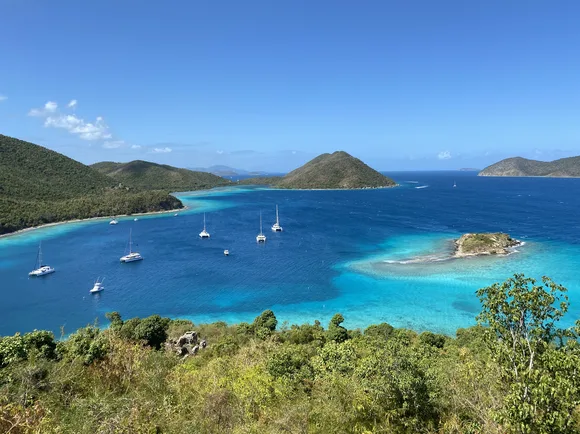
May falls just after the winter cruise ship season but before hurricane season builds steam, making it one of the best months for weather and water clarity. The trade winds keep temperatures from feeling oppressive, and the reefs around Trunk Bay and Cinnamon Bay offer snorkeling that rivals anything in the Caribbean. The underwater trail at Trunk Bay marks coral formations with labeled plaques, turning your snorkel into an informal marine biology lesson.
You can snorkel over living coral in the morning and hike through abandoned sugar plantation ruins by afternoon.

The park preserves both natural and cultural landscapes — trails lead through tropical forest to plantation ruins where enslaved Africans processed sugar cane in the 1700s. The Annaberg Plantation Trail loops past crumbling stone walls and interpretive signs explaining the brutal economics of Caribbean sugar production. For beaches, skip crowded Trunk Bay and head to Cinnamon Bay or Salt Pond Bay, where you'll find fewer people and equally clear water. The Cinnamon Bay loop trail climbs through dry forest and offers views across to Tortola before dropping back to the beach.
Death Valley National Park
Bigger than Connecticut / Hottest place on Earth waits until June
May represents the last comfortable month in Death Valley before the desert becomes genuinely dangerous. Daytime temperatures climb into the 90s, warm but manageable compared to the 120-degree infernos of July and August. The park's size means you can still find solitude even during the busier spring months — most visitors cluster around Badwater Basin and Zabriskie Point, leaving backcountry canyons and high-elevation trails nearly empty.
Death Valley earns its name in summer, but in May it's just hot enough to remind you where you are without trying to kill you.
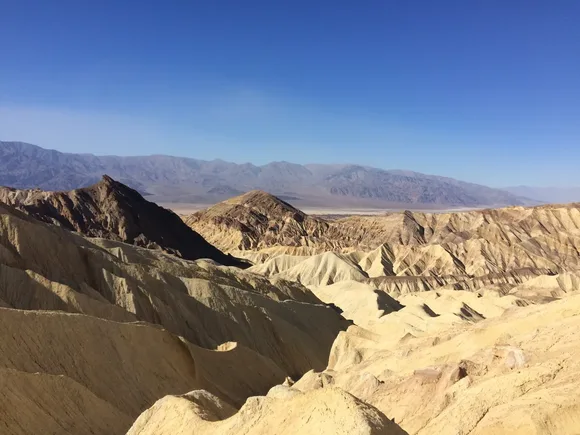
The Golden Canyon trail heads into eroded badlands that glow orange at sunrise, while the Mesquite Flat dunes offer the classic desert landscape without the punishing climb of larger dune fields. If you can handle elevation gain, Telescope Peak trail climbs to more than 11,000 feet, offering views across the entire valley and into the Sierra Nevada beyond. The Racetrack Playa requires high-clearance vehicles and a long dirt road, but you'll see the mysterious sailing stones that leave tracks across the dry lakebed. May wildflower blooms depend on winter rainfall, but even in dry years you'll find pockets of color in the washes and canyons.