7 Parks Where Spring Arrives First
Seven national parks where March brings the best weather, fewest crowds, and wildflowers before the summer heat arrives
March is the month when most of the country still shivers through late winter while a handful of national parks hit their stride. These seven parks don't just tolerate March visitors — they actively reward them with weather that won't return until fall, wildflowers that disappear by April, and elbow room that evaporates once summer arrives.
You won't find Yellowstone or Rocky Mountain on this list. Those parks are still digging out from snowdrifts while the Southwest and subtropical wetlands are having their best month of the year.
Big Bend National Park
Peak season is March / More bird species than any other park
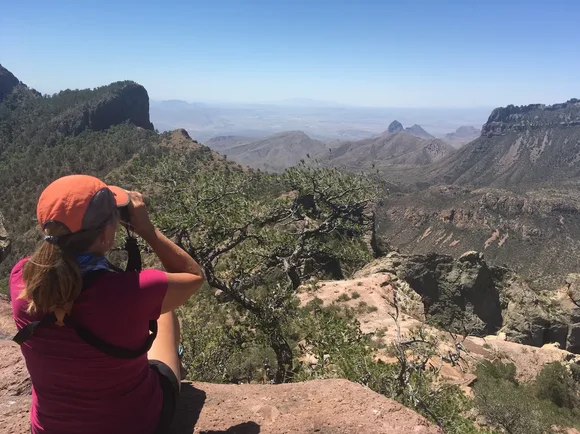
Big Bend reaches its sweet spot in March, when daytime temperatures settle into the seventies and the Chihuahuan Desert explodes with wildflowers. The park sees more visitors this month than any other, but that's relative — you'll still find entire trails to yourself, especially if you venture beyond the Chisos Basin. The Window Trail drops through oak and juniper to a desert pour-off with views that stretch into Mexico, and on a weekday morning you might share it with two other groups instead of twenty.
Big Bend in March feels like a secret that somehow five hundred thousand people a year still haven't figured out.
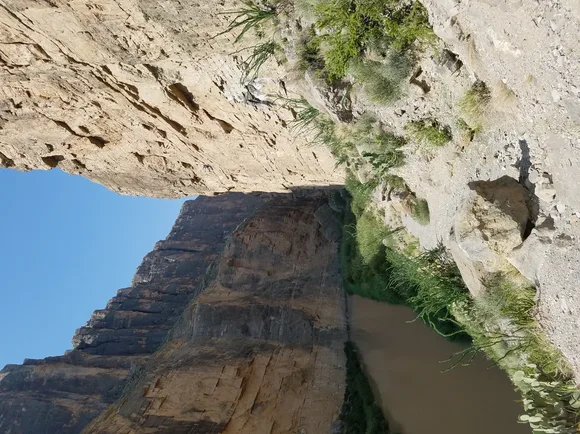
Santa Elena Canyon cuts fifteen hundred feet through limestone cliffs on the Rio Grande, and the trail along its base stays shaded and cool even when the desert heats up. March mornings start in the low forties, perfect for the hour-long drive down Ross Maxwell Scenic Drive, with stops at Sotol Vista and Mule Ears Overlook. By afternoon you'll want short sleeves, but you won't need to retreat indoors like you would from June through September.
Carlsbad Caverns National Park
March is the best month to visit / No camping in the park
The caverns maintain a constant fifty-six degrees year-round, which makes the surface weather your main planning consideration. March delivers mild desert days without the punishing heat that arrives by May, and you'll hit the cave at its least crowded before summer families descend. The self-guided Big Room route covers more than a mile of formations, and because the cave never varies in temperature, you can spend two hours underground without thinking about jackets or water bottles.
Carlsbad's formations were carved by sulfuric acid rising from oil deposits below, not by water dripping from above — geology that exists almost nowhere else.
The bat flights don't start until May, when four hundred thousand Mexican free-tailed bats return from their winter migration. March visitors miss the bats but gain something better: access to ranger-guided tours that fill up months in advance during peak season. King's Palace takes you through four decorated chambers, and the rangers actually turn off the lights for sixty seconds so you can experience absolute darkness. Surface trails around Rattlesnake Canyon and Yucca Canyon stay empty even on busy weekends.
Channel Islands National Park
Fifty miles from Los Angeles / Five islands, almost nobody visits
Channel Islands sits close enough to see from Malibu on clear days, yet it receives fewer visitors than almost any other park in the system. March brings calm seas for the ferry crossing, though the Pacific never guarantees smooth passage. Anacapa Island offers the easiest introduction — a steep staircase climb from the landing cove, then flat trails along the cliffs where western gulls nest by the thousands. Island foxes, found nowhere else on Earth, trot across the paths with complete indifference to humans.
The boat ride is part of the experience, not an inconvenience — sea lions surface beside the ferry, and if you're lucky, gray whales breach during their spring migration north.
Santa Cruz Island holds the backcountry, with Scorpion Canyon providing access to trails that climb through chaparral to island peaks. March weather hovers in the low sixties, perfect for all-day hiking without the wind that hammers the islands in winter. The marine layer burns off by midday most days, revealing California coastline that looks exactly like it did before Spanish ships arrived. Most visitors day-trip, but the island camping gives you sunset and sunrise without the ferry schedule.
Death Valley National Park
Larger than Connecticut / March is peak season
Death Valley becomes approachable in March, when temperatures drop from the lethal range into the merely warm. Badwater Basin, the lowest point in North America at two hundred eighty-two feet below sea level, sits empty of water but full of salt polygons that crack and buckle across the valley floor. The half-mile walk from the parking area crosses terrain that looks more like an alien planet than anything in California.
If winter rains cooperate, the desert superbloom transforms Death Valley's badlands into carpets of gold, purple, and pink that won't return for another year.
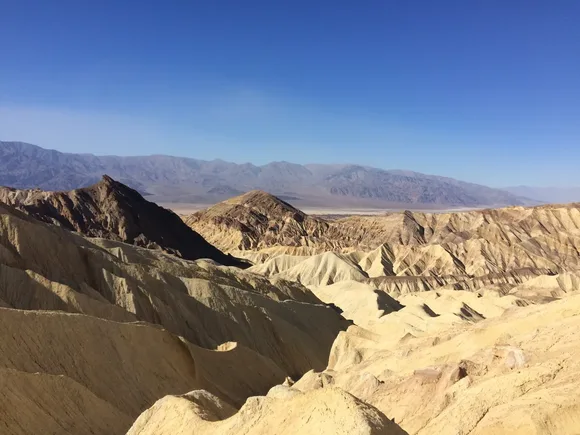
Zabriskie Point overlooks eroded mudstone hills that glow orange at sunrise, and Golden Canyon below offers hiking through the same formations up close. March wildflowers depend entirely on winter rainfall — some years deliver an explosion of desert sunflowers and phacelia, other years produce scattered blooms that require stopping and kneeling to appreciate. Either way, the weather stays comfortable enough to explore beyond the roadside pullouts. Mesquite Flat Sand Dunes see morning light that rakes across ripples in patterns that change with every wind.
Everglades National Park
Subtropical wetlands covering Rhode Island twice over / March is dry season
The Everglades operates on two seasons: wet and dry. March falls deep into the dry season, when receding water concentrates wildlife around shrinking pools and sloughs. Anhinga Trail becomes a guaranteed wildlife show — alligators line the banks, anhingas spear fish in the shallows, and herons wade through water that drops to knee depth. The same trail in summer spreads everything across an endless marsh where spotting anything requires patience and luck.
Dry season isn't a compromise in the Everglades — it's the entire reason to visit, when mosquitoes retreat and animals emerge.
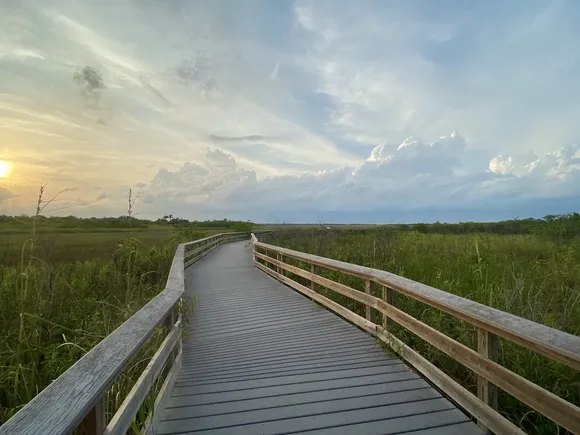
The fifteen-mile Shark Valley Loop takes you through sawgrass prairies on foot or bike, with an observation tower at the halfway point offering views across what locals call the River of Grass. March temperatures sit in the low eighties without the oppressive humidity that returns in May. Kayaking through the mangrove tunnels of Nine Mile Pond or Hell's Bay gives you access to waterways where roseate spoonbills and white ibis feed in the shallows. The park empties out by April when schools let out and summer heat builds.
Guadalupe Mountains National Park
Texas's highest peaks / March is peak season
Guadalupe Mountains rewards the effort it demands. Guadalupe Peak Trail climbs three thousand feet in four miles to the highest point in Texas, and the view from the summit stretches across the Chihuahuan Desert into New Mexico. March brings cool mornings in the forties that warm into the sixties by afternoon — ideal conditions for a strenuous climb that offers zero shade. The park sees its most visitors this month, though that still means empty parking lots and trails where you'll encounter a dozen people instead of none.
McKittrick Canyon in March offers something Guadalupe Mountains rarely provides: easy access to beauty without vertical gain.
The canyon trail follows a spring-fed creek through desert forest, with bigtooth maples that wait until fall to put on their famous show. March visitors get wildflowers instead — prickly pear blooms, desert marigolds, and Mexican gold poppies scattered across hillsides. Devil's Hall Trail climbs through a narrow canyon to a natural rock formation called the Devil's Hall, where hikers squeeze between boulders on the way up. The park's fossil reef, laid down two hundred sixty-five million years ago when this was an ancient sea, creates cliffs and canyons that look nothing like typical Texas desert.
Petrified Forest National Park
Twenty-eight-mile scenic drive through painted badlands / March offers mild weather
Petrified Forest compresses its highlights into a single paved road that crosses the park in less than an hour. Most visitors drive through without leaving their cars, but March weather makes hiking the overlooked trails worthwhile. Blue Mesa Trail drops into badlands colored in layers of purple, blue, and gray bentonite clay, where petrified logs the size of cars lie scattered across hillsides. The logs aren't wood anymore — they're quartz and jasper that formed two hundred twenty-five million years ago when this was a tropical forest.
The Painted Desert section glows brightest at sunrise and sunset, when low light brings out colors the midday sun washes flat.
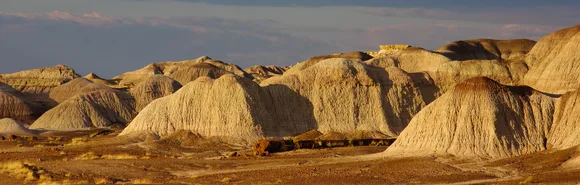
Newspaper Rock provides a short walk to a boulder covered in petroglyphs, though you'll need binoculars to see details from the viewing platform. Long Logs Trail takes you through the densest concentration of petrified wood in the park, where trees up to nine feet in diameter lie complete with visible bark texture and growth rings. March mornings start in the forties, warming to the sixties by afternoon — comfortable for hiking without the summer heat that makes the exposed badlands punishing. The park sits just off Interstate 40, making it an easy addition to any Southwest road trip.