7 parks where wildflowers peak in spring
Seven parks where wildflowers peak in April, from Smoky Mountain trillium to Teton balsamroot—before the summer crowds arrive
April is the month when most parks are still thawing or baking, but a few hit that narrow window where the weather cooperates and the wildflowers explode. These seven parks time their bloom cycles to spring, turning trails into corridors of color while the summer crowds are still planning their vacations. You'll find trillium in the Smokies, lupine in the Cascades, and entire mountainsides painted in wildflower gradients that last maybe three weeks before the heat shuts them down.
The timing is specific. Show up in March and you're too early. Wait until June and you've missed it. April is when these parks earn their reputations as wildflower destinations, and when the combination of mild temperatures, fewer visitors, and peak bloom makes the logistics worth navigating.
Great Smoky Mountains National Park
America's most-visited park / 850 miles of trails through Appalachian cove forests
The Smokies host more wildflower species than any other national park, and April is when the spring ephemerals carpet the forest floor before the tree canopy closes. You'll find trillium, bloodroot, and lady slippers along nearly every trail, but the real spectacle happens in the cove hardwood forests where sunlight still reaches the ground. Alum Cave Trail and Porters Creek Trail both pass through old-growth stands where wildflowers have been blooming in the same spots for centuries. The park draws more people than the population of Los Angeles over the course of a year, but April falls before peak season, so you'll share the trails without the shoulder-to-shoulder congestion of summer.
The wildflowers arrive in waves, each species timed to a narrow window of sunlight before the canopy closes for summer.

Cades Cove Loop Road offers an easier introduction if you'd rather drive than hike. The eleven-mile one-way loop passes historic farmsteads surrounded by fields that turn white with dogwood and pink with redbud by mid-April. Deer and black bears are active in the mornings, and the loop is open to bicycles only until 10 AM on Wednesdays and Saturdays, which cuts the car traffic to near zero. Laurel Falls Trail, an easy paved path to an eighty-foot waterfall, is the park's most popular trail and stays crowded even in April, but the wildflowers along the first half-mile justify the company.
Shenandoah National Park
105 miles of Skyline Drive along the Blue Ridge / Half the crowds of October
Skyline Drive winds through the park's spine, and in April the understory blooms before the hardwoods leaf out. Azaleas, mountain laurels, and wildflowers line the road, with pull-offs every few miles for views into the Shenandoah Valley. The park sits just 75 miles from Washington, D.C., which means summer weekends can feel like a suburb with trails, but April falls outside the peak visitation window. You'll find parking at trailheads and room to spread out at overlooks, which is rare for a park this close to a major metro area.
Shenandoah in April is what Shenandoah in October wishes it could be: uncrowded and mild, with the same views at half the cost.
Dark Hollow Falls Trail drops 440 feet in less than a mile to a seventy-foot cascade, and the trail corridor is thick with wildflowers in spring. Old Rag Mountain is the park's marquee hike, a 9.2-mile loop with a rock scramble near the summit, but it's crowded year-round. If you want solitude, head to Overall Run Falls Trail, which leads to the park's tallest waterfall and sees a fraction of the traffic. The Limberlost Trail, a 1.3-mile accessible boardwalk loop, passes through a hemlock forest carpeted in spring beauties and wild geraniums.
Mammoth Cave National Park
The world's longest cave system / Surface trails bloom while the cave stays constant
Most people visit Mammoth Cave for the underground tours, but the surface trails in April offer something the cave tours don't: wildflowers. The park sits in Kentucky's karst plateau, where limestone bedrock and hardwood forests create ideal conditions for spring ephemerals. The Green River Bluffs Trail follows the river through floodplain forests where bloodroot, trout lilies, and Virginia bluebells bloom in dense clusters. The cave tours run year-round regardless of weather, which makes Mammoth Cave a reliable choice when April weather turns rainy and shuts down higher-elevation parks.
The cave stays 54 degrees year-round, but the surface trails in April offer a riot of color that makes the underground seem almost monochrome by comparison.

The Historic Entrance Tour and Frozen Niagara Tour are both kid-friendly and less strenuous than the longer Wild Cave options, and you'll need reservations booked weeks in advance for April weekends. Above ground, the Nature and History Trail connects several shorter loops through forests that bloom from late March through early May. The park sees far fewer visitors than the Smokies or Shenandoah, despite being just 85 miles from Louisville, which means you'll find parking and campsite availability even on weekends.
New River Gorge National Park & Preserve
The East Coast's deepest river gorge / 100 miles of trails above Class V rapids
The New River Gorge cuts through ancient rock, and the ridgeline trails in April bloom with mountain laurel, rhododendrons, and wild azaleas. The Grandview Overlook Trail offers a one-mile loop to views over the gorge, with wildflowers lining the trail and rock outcrops framing the river 1,000 feet below. The park became the country's newest national park in 2020, so it's still absorbing its reputation, but the crowds have arrived. April falls before the summer rafting season and after winter closures, which makes it one of the few windows when you'll find both good weather and manageable traffic.
The gorge in April is green in a way that summer doesn't match—everything growing at once, the forest floor erupting before the canopy closes.
The New River Gorge Bridge Walkway opened in 2021, a half-mile catwalk under the bridge deck that offers views straight down to the river. It's packed on summer weekends but manageable in April. The Prince Wharton Juniper Trail drops into the gorge through old-growth forests where trillium and wild ginger bloom in the understory. Kids will enjoy the bridge walkway and the easy trails at Grandview, and the park's Junior Ranger program runs year-round with activities geared toward elementary-age children.
Rocky Mountain National Park
Trail Ridge Road still closed / Lower elevation meadows bloom while the alpine thaws
April in Rocky Mountain is a transition month. Trail Ridge Road, the park's signature high-altitude drive, doesn't open until late May, and most alpine trails stay buried under snow. But the lower-elevation trails around Bear Lake and Moraine Park bloom with pasqueflowers, fairy slippers, and wild iris by mid-April, and you'll have the trails nearly to yourself. The park draws more visitors than the combined populations of Alaska and Wyoming, but April is one of the quietest months on the calendar. You won't see the alpine wildflower displays that peak in July, but you'll trade them for solitude and parking availability.
April wildflowers in Rocky Mountain are a gamble on timing and elevation—show up too early and they're under snow, too late and you've missed them.

Bear Lake Loop and Dream Lake Trail both stay snow-free by mid-April, and the meadows along the trails bloom in waves through early May. Elk move down from higher elevations to the Moraine Park and Horseshoe Park meadows, and you'll see them grazing in herds that number in the dozens. The park requires timed entry permits from late May through October, but April falls outside the reservation window, which means you can enter whenever you want without planning weeks in advance.
Grand Teton National Park
Seven-thousand-foot peaks without foothills / Lower valleys bloom while the high country stays frozen
The Tetons dominate every view, but in April the wildflower action happens in the sagebrush flats and lower valleys where arrowleaf balsamroot and lupine bloom against the granite peaks. The high-elevation trails stay snowed in through May, but the valley floor trails around Jenny Lake and String Lake open by early April and offer views of the peaks reflected in still water. The park shares a boundary with Yellowstone, which pulls most of the summer crowds north, but April is quiet enough that you'll find parking at trailheads and space at overlooks without the hunt.
The Tetons in April are a study in contrasts—wildflowers blooming in the valleys while the peaks stay wrapped in snow that won't melt until July.
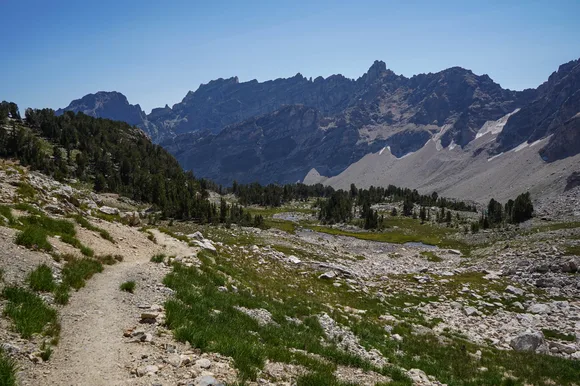
The Laurance Rockefeller Preserve Loop is a 2.5-mile trail through aspen forests and meadows that bloom with wildflowers by mid-April, and it's one of the park's most kid-friendly hikes. Cascade Canyon Trail, which starts from a boat shuttle across Jenny Lake, stays snow-free at lower elevations and offers wildflower displays in the first few miles. Moose and black bears are active in the valleys, and you'll see them from the road if you drive slowly through the park in early morning or late afternoon.
Mount Rainier National Park
More glaciers than any Lower 48 peak / Paradise area buries under 600 inches of snow annually
April at Mount Rainier is winter. Paradise, the park's most popular destination, stays buried under snow that won't fully melt until July, and most high-elevation trails are inaccessible without skis or snowshoes. But the lower-elevation trails near Longmire and the Carbon River area open by early April, and the old-growth forests bloom with trillium, bleeding hearts, and wild ginger. You won't see the subalpine meadows that turn purple with lupine in July, but you'll trade them for snow-covered views of the mountain and trails that see almost no traffic.
Mount Rainier in April is a park for people who don't mind adjusting their expectations—you'll find wildflowers, just not where the brochures say to look.
The Trail of the Shadows is a short loop near Longmire that passes through meadows and springs where wildflowers bloom by mid-April, and it's paved and accessible for strollers. The Carbon River area on the northwest side of the park opens earlier than Paradise and offers forested trails through old-growth groves where spring blooms start in late March. Kids will enjoy the snow play areas at Paradise if you visit on a sunny day, and the Jackson Visitor Center opens for weekends in April with ranger programs and exhibits.