8 Most Dog-Friendly National Parks
Eight national parks where your dog can actually hike trails, not just walk pavement. Miles matter more than gestures
Most national parks treat dogs like uninvited guests: leash-only, pavement-bound, banned from trails. These eight flip that script. You won't find token dog areas or grudging allowances here. These parks welcome dogs on actual trails, through forests and canyons, past waterfalls and orchards, where the only catch is carrying water and keeping the leash clipped.
This ranking measures trail access, not token gestures. Parks earned their spots based on miles of dog-friendly trails, terrain variety, and how much ground you can actually cover without hitting a "no dogs beyond this point" sign every quarter mile. April brings mild weather across most of these parks, when neither you nor your dog will overheat on the climbs.
Cuyahoga Valley National Park
More trail miles than Yellowstone / Twenty minutes from Cleveland
Cuyahoga Valley opens more trails to dogs than any other national park, and it's not close. You can walk your dog through hemlock forests, past waterfalls, and along a historic canal towpath that runs for twenty uninterrupted miles beside the Cuyahoga River. The Towpath Trail alone gives you more dog-friendly distance than entire national parks offer to hikers. Brandywish Falls drops sixty-five feet into a sandstone gorge you can reach on a mile-long loop that weaves through boardwalks and stairs. The Ledges Trail climbs through slot canyons carved by glaciers, where rock walls narrow to shoulder width and shade drops the temperature twenty degrees.
This is the only national park where your dog can hike more miles in a weekend than most people walk in a month.
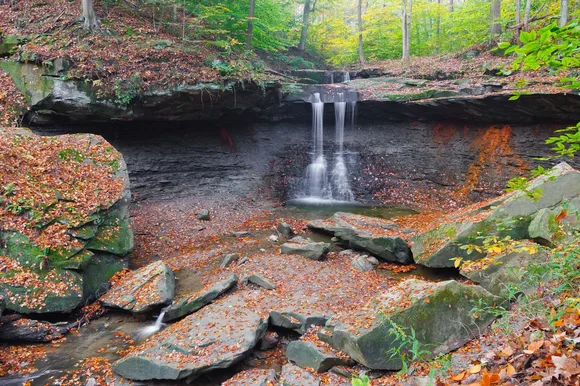
The park sits between Cleveland and Akron, carved into farmland and forest that never feels remote but somehow stays quiet. You'll share trails with bikes on the Towpath and families pushing strollers on the flatter routes, but the network spreads out enough that you can pick a trailhead and find breathing room. April brings wildflowers without summer humidity, and the waterfalls run high from snowmelt.
Indiana Dunes National Park
Lake Michigan beaches meet prairie forest / Expect shoulder-to-shoulder summer crowds
Indiana Dunes squeezes more terrain diversity into its beaches and dune trails than parks ten times its size. Your dog can walk through shifting sand dunes, oak savannas, wetlands, and pine forests in a single afternoon. The West Beach Loop circles the dunes with Lake Michigan views, while the Bailly-Chellberg Trail cuts through pioneer homesteads and maple forests. Miller Woods Trail pushes three miles through dune succession zones where beach grass gives way to cottonwoods, then oaks, then full forest canopy. Every trail shows you how wind and time build ecosystems from bare sand.
Dogs can't swim at the beaches here, but they can hike through more plant species than any other national park protects.
The park sits thirty miles from Chicago, and every summer weekend feels like it. Parking lots fill by ten in the morning, and the popular trails pack tight with families and day-trippers escaping the city. April beats the rush and catches migration season, when thousands of birds stop on their way north. The dunes stay cool enough to hike without burning paws, and you'll find parking without circling.
Acadia National Park
Granite coast meets mountain forest / More visitors than Los Angeles has residents
Acadia's carriage roads were built for horses a century ago, and today they give dogs access to forty-five miles of crushed stone paths that wind through the park's interior forests and circle its ponds. Your dog can't hike the rock scrambles or ladder trails that make Acadia famous, but the carriage roads loop past Jordan Pond, through Witch Hole, and up the western slopes where views open to the Atlantic. The paths stay wide enough for bikes and horses, graded gentle enough that you won't gasp on the climbs, and shaded by spruce and pine that keep the coastal sun manageable.
The carriage roads form their own park within the park, where dogs walk the same paths Rockefeller's horses pulled tourists up a century ago.
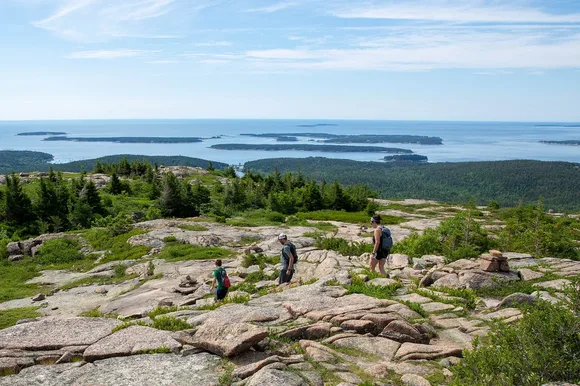
The park absorbs crowds that would crush smaller destinations, but August still packs the parking lots and clogs the loop road. April sidesteps the chaos but brings mud season and lingering snow at elevation. September and October give you the best compromise: stable weather, thinning crowds, and foliage that turns the carriage roads into tunnels of red and gold. Your dog can't join you on Cadillac Mountain's summit, but you can leave them at the car and hike up while a friend stays below.
Capitol Reef National Park
A hundred-mile wrinkle in the desert / Orchards and slot canyons
Capitol Reef allows dogs on its paved scenic drive and a handful of trails that most Utah parks would close entirely. You can walk your dog through the Fruita Historic District where pioneer orchards still grow beneath red cliffs, or push into Grand Wash where canyon walls rise three hundred feet on either side and shade drops the temperature twenty degrees. The Hickman Bridge Trail stays off-limits, but the Fremont River Trail parallels the water through cottonwoods where the only sounds are your boots on dirt and the river running over rock.
Grand Wash lets your dog walk a slot canyon without permits or technical gear, just four flat miles between walls that barely let the sky through.
April catches the park between snowmelt and summer heat, when wildflowers bloom in the washes and the orchards blossom pink and white. The park sees a fraction of Zion's crowds but still packs tight around the scenic drive during peak season. Arrive early or push to the northern end of the park where most visitors never drive. Your dog can't follow you into the technical canyoneering routes, but the accessible trails show you enough of the Waterpocket Fold to understand why geologists study this place.
Hot Springs National Park
Historic bathhouses meet Ouachita ridges / Urban park with mountain trails
Hot Springs packs forty miles of mountain trails into a park that shares sidewalks with downtown Arkansas. Your dog can hike the Hot Springs Mountain Trail to the observation tower, loop through Gulpha Gorge along the creek, or climb West Mountain where the trail gains a thousand feet through oak and pine forest. The Promenade runs behind Bathhouse Row on brick and pavement, where thermal springs still flow from the mountain at the same temperature they've held for thousands of years. You can walk your dog through the historic district, then drive five minutes to trailheads that feel miles from any town.
This is the only national park where your dog can start a hike from a downtown parking meter and finish on a mountain ridge.
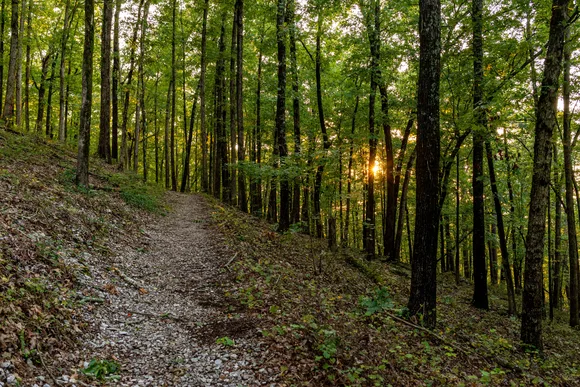
The park draws visitors year-round for the bathhouses and thermal waters, but the trails stay surprisingly empty even during peak summer months. April brings mild days before humidity settles in, when dogwoods bloom white through the understory and the creeks run clear. The trails connect enough that you can string together loops without retracing your steps, and every ridge gives you views over the city and Ouachita Mountains beyond.
Gateway Arch National Park
Smaller than a city block / Monument to westward expansion
Gateway Arch gives you riverfront paths beneath a steel monument taller than the Washington Monument, where your dog can walk the grounds that once launched expeditions west. The park spans less than a quarter square mile, all of it urban greenspace along the Mississippi. You won't find trails in any traditional sense, but the riverfront path runs north from the Arch through stretches where the city drops away and you can watch barges push upriver. The grounds loop around the Arch itself, manicured lawn and paved walks that take twenty minutes to circle.
Your dog can stand at the base of the Arch and look straight up six hundred feet to where steel legs meet sky.
The park sits in downtown St. Louis and draws crowds that would overwhelm any site this small. Summer weekends pack the grounds shoulder-to-shoulder, but early mornings and October afternoons give you space to walk without dodging tour groups. Your dog can't ride the tram to the top, but they can explore the museum grounds and riverfront where Lewis and Clark prepared for their expedition. April brings comfortable walking weather before summer heat turns the pavement into a griddle.
White Sands National Park
World's largest gypsum dunefield / White sand that doesn't burn
White Sands opens its dune trails to dogs in a landscape that shouldn't allow them to exist. Gypsum sand stays cool underfoot even in direct sun because the crystals reflect heat instead of absorbing it, which means your dog can walk the dunes without burning their paws. The Dune Life Nature Trail loops a third of a mile through the heart of the dunefield, while the Alkali Flat Trail pushes five miles into the backcountry where dunes rise forty feet and swallow the horizon. You can let your dog off-leash in the backcountry camping areas, though you'll need to carry every drop of water they'll drink.
This is the only desert where your dog can sprint across white sand in July without scorching their feet.
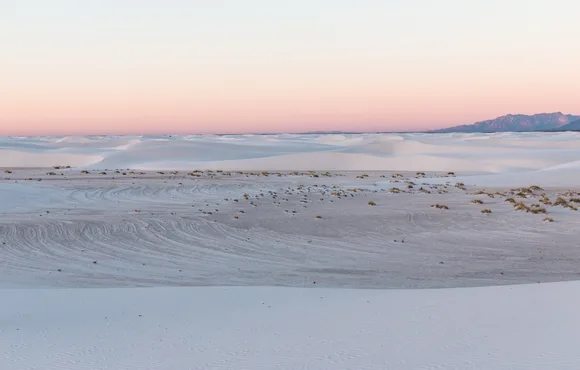
The park draws fewer visitors than its beauty deserves, but the ones who come pack the main dune area tight during peak season. April and October offer the best combination of weather and spacing, when temperatures stay mild and the dunes catch sunrise and sunset light that turns white sand pink and gold. The landscape shifts constantly as wind moves dunes up to thirty feet per year, burying roads and trails the park has to re-excavate. Your dog will leave tracks that disappear by morning.
Arches National Park
More arches than anywhere on Earth / Parking lots fill before breakfast
Arches restricts dogs to paved roads and a single trail, but that trail happens to run beneath Balanced Rock and through Park Avenue where sandstone fins rise three hundred feet on either side. Your dog can walk the Park Avenue Trail from end to end, a mile-long corridor through red rock walls that frame the La Sal Mountains in the distance. The paved paths around Balanced Rock and at roadside pullouts give you close access to formations that define the Colorado Plateau, even if your dog can't follow you up to Delicate Arch or through Devils Garden.
Park Avenue gives your dog a front-row view of the geology that made Arches famous, even if the famous arch itself stays off-limits.
The park draws crowds that overwhelm its infrastructure every day from April through October. Parking lots fill by seven AM, and the entrance gate closes when the park hits capacity. April brings perfect hiking weather but also peak visitation, when you'll compete for parking at every major trailhead. If you're bringing a dog, you've already accepted that most of the park will stay out of reach. Park Avenue makes the visit worthwhile anyway, and the scenic drive gives you windows-down access to formations you'd otherwise only see from viewpoints.