8 National Parks for a Romantic Stargazing Getaway
From Atlantic granite to Utah canyon country, eight national parks where April nights make the best case for going somewhere dark together
Romance and dark skies share the same requirement: distance from everything. The national parks on this list deliver both, landscapes that reward close attention by day and skies that most Americans have never seen at night. April is the right month for most of them. The desert parks warm up before summer heat arrives, the crowds have not yet peaked, and the nights, long enough for real stargazing without a midnight alarm, pair with days mild enough for hiking without layers.
What separates the best stargazing parks from the rest is not just darkness. It's setting. A Milky Way rising through Delicate Arch, or framed by hoodoos at Bryce, or reflected off flat water at Biscayne, turns a clear night into something specific and unrepeatable. These are the parks where the conditions align.
Acadia National Park
The first sunrise in the continental US / Busy but manageable before the summer peak
Acadia positions you at the edge of the continent, and that position matters after dark. Cadillac Mountain, the highest peak on the Atlantic seaboard north of Brazil, lifts you above the treeline with Frenchman Bay below and an unobstructed eastern horizon. On clear April nights, the stars reflect off the water and the glow of Bar Harbor feels far away. Being here for both ends of darkness, the last light of day and the first sunrise in the country, is worth the early alarm.
From Cadillac's summit at midnight, the stars and their reflections on Frenchman Bay blur the line between sky and ocean.
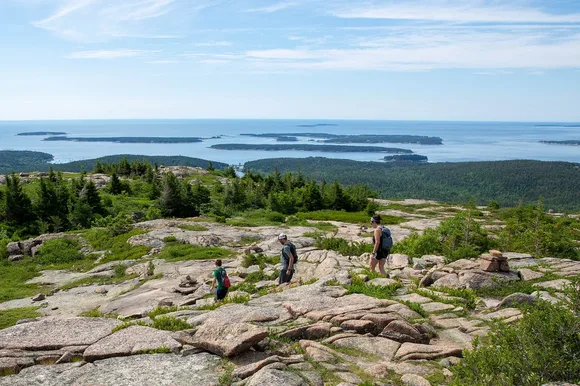
By day, the Carriage Roads, built specifically to exclude automobiles, give you 45 miles of smooth gravel through birch forest and past stone bridges, with Jordan Pond at the center. The Pond's remarkable clarity and the glacier-sculpted Bubbles rising behind it have drawn artists for 150 years. In April, you will share them with far fewer people than August suggests is possible here.
Arches National Park
More natural stone arches than anywhere else on earth / Book camping months out or plan to drive in from Moab after dark
Delicate Arch at dusk is so photographed that it risks feeling like a poster before you arrive. Stand there in April as the sandstone shifts from orange to near-purple and the crowd disperses to the parking lot, then stay. The National Park Service certifies Arches as one of the darkest parks in the Southwest, and the arch framing the La Sal Mountains under the Milky Way is the image the daylight photos were always trying to become.
After the day visitors leave, Delicate Arch under the Milky Way becomes the version of itself that the hike was always about.
The park's camping logistics are real. With only 51 campsites in the entire park, competition for a spot is intense. Staying in Moab and driving in after dark works well: the road to Devils Garden stays open, and parking after 8 PM is dramatically better than midday. A night hike to Landscape Arch by headlamp followed by a dawn return covers the park's best light twice in one visit.
Big Bend National Park
Bigger than Rhode Island and emptier than most small towns / Some of the darkest skies accessible by paved road in the lower 48
Big Bend's distance from everything is the feature. The drive from El Paso takes more than four hours with almost nothing along the way, and that inconvenience is the filter that keeps the light pollution out. The International Dark-Sky Association designates the surrounding area as one of the largest dark sky preserves on the continent, and on a clear April night the Milky Way core rises above the Chisos Mountains with enough detail to pick out the dust lanes without binoculars.
Big Bend's skies show you what the night looked like before electricity, and most Americans will only ever see it here.
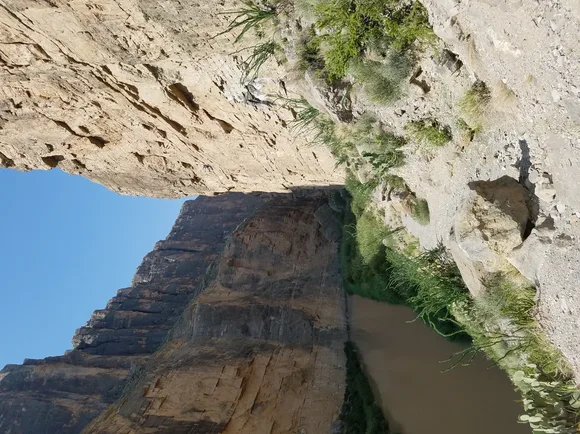
April is the ideal month. The desert heat of July has not arrived, the Chisos Basin stays cool through the evening, and the spring bird migration brings more species through this park than through any other in the national park system. The Window Trail ends at a pour-off above the desert floor where the Chihuahuan Desert spreads to every horizon in the last light. This is a park that rewards slowing down.
Biscayne National Park
Miami's skyline visible to the northwest, open Atlantic to the east / A national park almost no one from the mainland visits
Biscayne breaks every expectation for what a national park looks like. Most of it is underwater, the mainland entrance sits 15 miles from downtown Miami, and the islands where you will want to spend time are accessible only by boat. That water barrier is what keeps it quiet on weeknights. Elliott Key's campground puts you under skies darker than anything reachable by car in South Florida, with the city's glow on one horizon and the open Atlantic on the other. It is a specific and strange combination.
Lying on the sand at Elliott Key, Miami glows on one horizon while the stars fill everything above you, and the city might as well be on a different planet.
April is ideal: warm enough to snorkel the only living coral reef system in the continental United States, but before the daily afternoon storm season begins. A day on the water exploring the reef combined with a night on the island covers two entirely different versions of the same park. Reserve well ahead for spring weekends, when local boaters fill the limited dock space.
Black Canyon of the Gunnison National Park
North America's steepest gorge through rock older than the dinosaurs / One of Colorado's least-visited parks
The Black Canyon earns its name: the walls are steep enough that sunlight reaches the bottom for only minutes each day in some sections. At night, those walls create a natural frame. Looking up from the South Rim overlooks, the dark rock below amplifies the contrast with the stars above in a way that feels almost theatrical. Most Colorado visitors route through Rocky Mountain or Mesa Verde without finding this park, which means April here is genuinely spacious. The rim pullouts become private stargazing platforms.
At Pulpit Rock Overlook after dark, the canyon walls below and the stars above bracket you in a darkness that makes other parks feel overlit.
The Rim Rock Trail connects several overlooks on foot, so you can move from one dark position to another without retracing your steps. April brings mild days and cold nights at this elevation, which is also what keeps the sky clear and the seeing conditions sharp. Pack layers and plan to stay out longer than you expect to.
Bryce Canyon National Park
Orange hoodoos at 8,000 feet under some of the darkest skies in the Southwest / The best astronomy programming in the national park system
Bryce Canyon runs one of the most active astronomy programs in the national park system: ranger-led telescope nights, an annual astronomy festival, and a visitor center that can tell you what is visible on any given night. The park's elevation and distance from any significant city make the dark sky certification easy to understand once you are standing on the rim. The hoodoos that are impossibly orange by day become stark silhouettes against a sky where the Milky Way shows as a solid band from one horizon to the other.
The hoodoos that define Bryce by day define it even more at night, cut out as black shapes against a sky packed with stars.
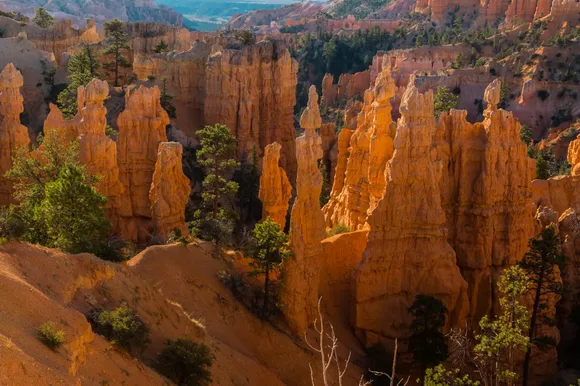
The crowds are real, and the rim overlooks at Sunrise Point and Sunset Point get busy even in April. The answer is to go down. The Navajo Loop drops you between walls of orange spires so narrow you can touch both sides, and at the bottom you get the silence and upward views that the rim denies you. Snow lingers on the trail in April, so microspikes are worth carrying and poles help on the switchbacks.
Canyonlands National Park
Canyons larger than the city of Los Angeles / The Utah park that Arches visitors rarely detour to
Canyonlands gets overlooked. Arches is 30 miles away and draws three times the visitors; Zion and Bryce pull the tour bus traffic. What that leaves for Canyonlands is a quieter version of the Colorado Plateau with terrain that is arguably more dramatic: Island in the Sky's mesa hangs above the confluence of the Green and Colorado rivers with sheer canyon walls on three sides and a horizon that extends far enough to feel like a different planet. The stargazing from the mesa is exceptional because nothing obstructs the sky in any direction.
Standing on Island in the Sky at midnight, the canyon below is invisible, the sky above is everything there is, and the nearest city might as well not exist.
April is the sweet spot: the desert heat has not arrived, wildflowers start appearing on the canyon rim, and camping reservations are still possible without the scramble that arrives in May. A trip that covers both Island in the Sky and the Needles District, where intimate canyon passages between sandstone fins replace sweeping overlooks, gives you both scales the park operates at.
Capitol Reef National Park
A hundred-mile fold in Utah's crust / The most underestimated park on the route between Bryce and Arches
Capitol Reef sits on the highway between Bryce and Arches, and most people treat it as a rest stop. That is a mistake. The Waterpocket Fold, where the earth buckled and exposed rock layers spanning hundreds of millions of years across nearly a hundred miles, is one of the stranger geological features in the national park system. In April, the pioneer orchards of Fruita bloom pink and white against the red canyon walls, a combination that exists nowhere else in Utah, and the park manages to keep it genuinely quiet.
A site in the Fruita campground during blossom season gives you the most improbable pairing in Utah: apple blossoms against canyon walls, and a sky full of stars above both.
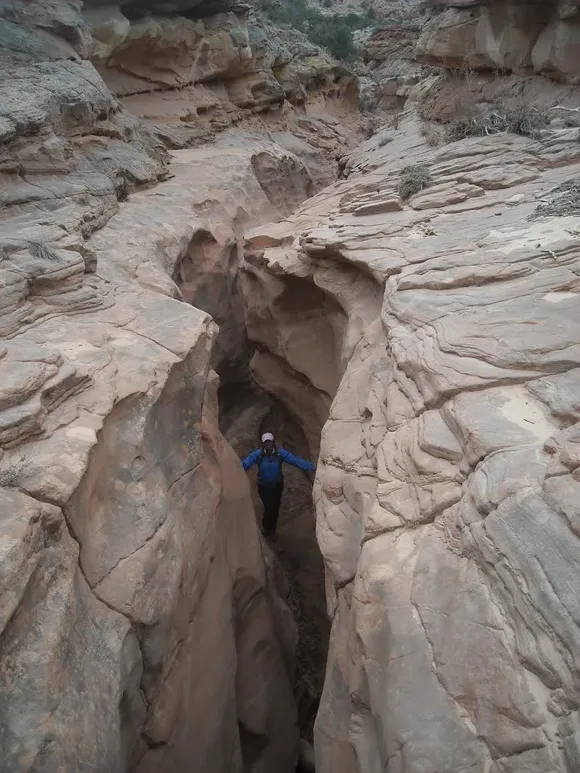
The dark sky designation covers the whole park, and the slot canyons cut into the Waterpocket Fold add a stargazing option that most visitors miss: standing in a narrow canyon and looking up at a strip of Milky Way framed by rock walls is as intimate as this kind of experience gets. Panorama Point, two minutes from the visitor center, gives you the open-sky counterpoint: a wide view of the reef and the Henry Mountains with almost no one there after sunset.