8 National Parks for Solo Adventurers
Eight parks where solo adventurers find space to disappear, trails worth hiking alone, and April weather that cooperates
Solo travel strips away the compromises. You don't negotiate about wake-up times or whether to push on to the next overlook. You move at your own pace, eat when you're hungry, and change plans without explaining yourself. The best national parks for solo adventurers aren't necessarily the most famous — they're the ones where the infrastructure supports independence, where trails reward solitary exploration, and where April weather cooperates with your schedule.
These eight parks excel at solo travel in April. Some offer the kind of space where you can disappear for days. Others pack enough variety into compact geography that you can sample everything without backtracking. All of them make it easy to meet other travelers when you want company and vanish when you don't.
Big Bend National Park
Bigger than Rhode Island / Fewer visitors in a year than Yellowstone sees in a week
Big Bend swallows crowds whole. The park sprawls across Texas borderland the size of three Denvers, and even during peak season in March and April, you can hike for hours without seeing another person. The Chisos Mountains rise from Chihuahuan Desert like an island, creating a dozen distinct ecosystems stacked on top of each other. You'll start the day watching roadrunners in creosote flats, lunch in pine forest at Emory Peak, and end at Santa Elena Canyon where limestone walls trap the Rio Grande in 1,500-foot jaws.
Big Bend is the park where solo travelers realize how much noise they've been carrying — and how quickly it falls away.
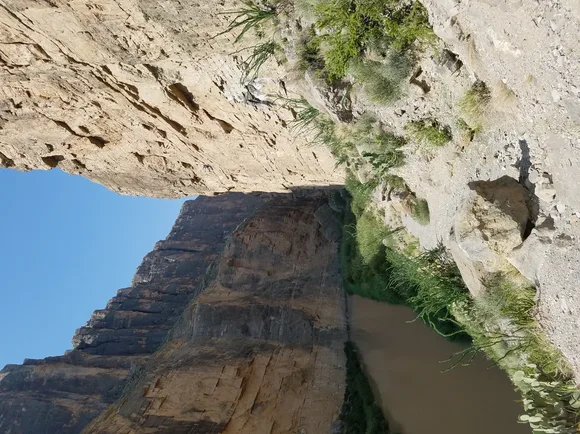
April hits the sweet spot before summer heat makes the desert trails punishing. The Lost Mine Trail climbs through woodland to a ridgeline view that stretches into Mexico, and you'll likely have it to yourself by midmorning. Hot Springs Trail follows the river to natural pools where you can soak while watching Mexican hawks circle overhead. The park's four campgrounds operate on first-come-first-served basis outside peak season, and solo campers rarely struggle to snag a site.
Black Canyon of the Gunnison National Park
Walls steep enough to block midday sun / More climbers than casual tourists
Most people have never heard of Black Canyon, which works in your favor. The Gunnison River spent two million years carving through Precambrian rock, creating a gorge so narrow and deep that sunlight only reaches the bottom for 33 minutes a day in winter. The South Rim Road delivers you to a dozen overlooks where you can stand alone at the edge of cliffs that drop 2,000 feet straight down. Painted Wall towers higher than two Empire State Buildings stacked end to end, striped with pink pegmatite that looks like lightning frozen in stone.
The silence at Black Canyon isn't peaceful — it's geological, the kind that makes you aware of how old the rock beneath your feet actually is.
April brings mild days in the 60s and occasional snow that dusts the rim without closing roads. The Warner Point Trail follows the canyon edge for nearly three miles, ending at a promontory where the Gunnison River looks like a silver thread 2,700 feet below. Climbers treat Black Canyon like a vertical playground — the north face of the Painted Wall ranks among North America's most challenging big walls — but rim hiking requires nothing more technical than sturdy boots and a tolerance for exposure.
Canyonlands National Park
Four districts larger than Los Angeles / Island in the Sky visible from space
Canyonlands divides into four separate worlds, each requiring its own approach and mindset. Island in the Sky perches on a mesa with overlooks that make you feel like you're surveying the earth from a plane. The Needles District hides slot canyons and stone spires between trails that weave through backcountry where you can camp in complete isolation. The Maze demands four-wheel-drive commitment and navigation skills. The rivers — where the Green and Colorado converge — belong to kayakers willing to put in upstream and float through days of silence.
Solo travelers love Canyonlands because you can choose your own difficulty level without feeling like you're missing the main event.
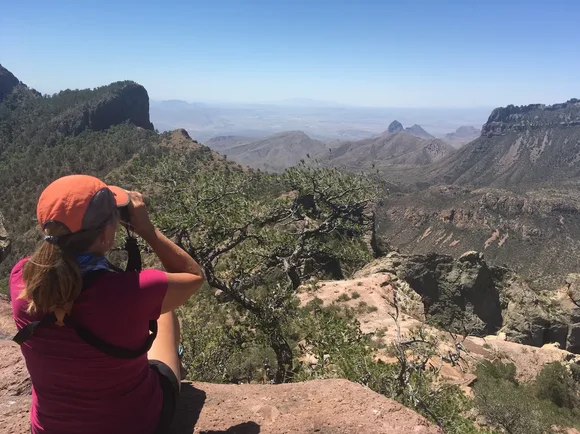
April delivers highs in the 70s before summer heat makes the red rock radiate like a kiln. The Confluence Overlook Trail in the Needles covers nearly 12 miles round trip through sandstone fins and painted desert to a viewpoint where two rivers meet 1,000 feet below. You'll pass maybe three other hikers all day. Island in the Sky's Grand View Point Trail takes 20 minutes to walk and frames 100 miles of canyon country in a single panorama. The park's primitive campgrounds operate first-come-first-served, and solo travelers can usually squeeze a tent into whatever spaces remain.
Capitol Reef National Park
A hundred-mile wrinkle in the earth / Pioneer orchards you can harvest free
Capitol Reef gets overshadowed by its Utah neighbors, which means you'll find elbow room even in April when the weather turns ideal. The Waterpocket Fold ripples through the park like a geological curtain — sedimentary layers tilted 90 degrees and eroded into cliffs, domes, canyons, and arches across nearly 400 square miles. The scenic drive delivers you to trailheads where you can disappear into slot canyons barely wide enough to extend your arms. Hickman Bridge Trail climbs through juniper woodland to a natural arch spanning 133 feet, and midweek you might have it entirely to yourself.
The Fruita orchards — planted by Mormon settlers in the 1880s — still produce cherries, apricots, and apples that you can pick and eat for free during harvest season.
Grand Wash Trail follows a canyon floor between walls that rise 600 feet on either side, narrowing in places to 15 feet across. The Cassidy Arch Trail gains 1,000 feet to a stone arch named for Butch Cassidy, who allegedly used the area's slot canyons to evade pursuers. April brings wildflowers — Indian paintbrush, globemallow, and evening primrose — without the summer heat that turns exposed trails into endurance tests. The park's three front-country campgrounds fill early during peak season, but solo campers with small tents can usually find a spot by early afternoon.
Arches National Park
More than 2,000 natural arches / Crowds that thin after 6 PM
Arches draws crowds that rival Yellowstone despite being a fraction of the size, but solo travelers can game the system. The park contains the highest density of natural stone arches on the planet — sandstone fins weathered into spans and windows that frame the La Sal Mountains. Delicate Arch stands alone on a slickrock amphitheater like nature's triumphal monument, and yes, you'll share the viewpoint with dozens of other hikers during the day. But if you time it for late afternoon and linger past sunset, the crowds drain away and you'll have the arch and the alpenglow to yourself.
The best way to experience Arches solo is to embrace the crowds at iconic spots, then escape to the Devils Garden backcountry where most visitors never venture.
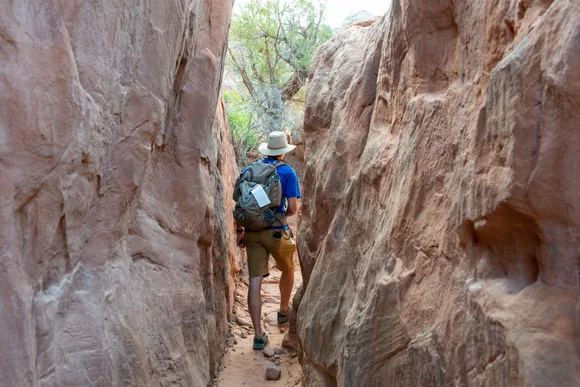
April brings comfortable hiking temperatures before June heat makes exposed trails dangerous after 10 AM. The Devils Garden Trail extends seven miles through fin canyons to eight different arches, and the crowds thin dramatically after Landscape Arch. The primitive loop section requires scrambling over slickrock and edging along narrow fins with exposure — exactly the kind of terrain where you'll walk for an hour without seeing another person. Park Avenue Trail descends between sandstone walls that look like Manhattan skyscrapers weathered by wind, and early morning light turns the rock the color of rust and blood.
Death Valley National Park
Larger than Connecticut / Hottest place on earth in summer, perfect in April
Death Valley earns its reputation from June through September when ground temperatures hit 200 degrees and the air shimmers like liquid. But April belongs to the smart visitors who show up when wildflowers carpet the bajadas and daytime highs hover in the 80s. The park sprawls across basin and range topography from Badwater Basin — the lowest point in North America at 282 feet below sea level — to Telescope Peak, which rises more than 11,000 feet above the valley floor. You can stand on salt flats that stretch to the horizon like white ocean, then drive an hour to alpine forest dusted with snow.
Solo travelers love Death Valley because the scale makes solitude inevitable — you could visit every week for a year and never run out of canyons to explore alone.
Golden Canyon Trail winds through badlands painted in shades of mustard, cream, and rust — mudstone layers deposited in an ancient lake, then tilted and eroded into a maze. Mosaic Canyon cuts through polished marble walls that glow when sunlight filters in from above. The Racetrack Playa requires high-clearance vehicles and three hours of rough road, but you'll find sailing stones that leave tracks across the playa without human intervention, and you'll likely have the entire basin to yourself. The park's dozen campgrounds range from developed sites at Furnace Creek to primitive spots scattered across the backcountry.
Denali National Park & Preserve
Larger than New Hampshire / One road through six million acres
Denali doesn't fit April travel well — the park road stays closed past mile 30 until late May, and most facilities don't open until June. But if you're planning solo adventures for summer months, Denali rewards the effort. North America's tallest peak anchors tundra wilderness where grizzlies, wolves, caribou, and moose outnumber visitors. The single park road stretches 92 miles through terrain that requires shuttle buses for most of its length, creating a travel experience unlike any other American park. You can't drive yourself past mile 15, which means you're riding with other visitors but hiking alone once you step off the bus.
Denali teaches solo travelers that wilderness doesn't mean isolation from other humans — it means isolation from human infrastructure.
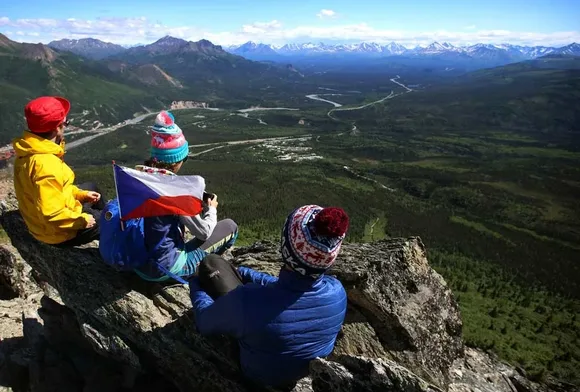
The park pioneered a backcountry system that divides the wilderness into units with limited permits. You file a trip plan, get your bear canister, and head into trackless tundra where you navigate by topography and compass. No trails, no signs, no designated campsites. The freedom feels absolute, but so does the responsibility. For solo travelers who prefer established paths, the front-country trails near the entrance climb through spruce forest to alpine ridges with views across the Alaska Range. Mount Healy Overlook Trail gains 1,700 feet in 2.5 miles to a shoulder where you can see Denali on clear days.
Acadia National Park
Atlantic waves against granite peaks / Carriage roads built for horses, perfect for bikes
Acadia compresses mountain, forest, ocean, and lakes into barely 74 square miles on Mount Desert Island. The park feels designed for solo exploration — 158 miles of trails ranging from shoreline loops to summit scrambles, 45 miles of carriage roads threading through the interior, and coastal drives that deliver you to pocket beaches and tide pools. Cadillac Mountain claims the first sunrise in the United States for part of the year, and yes, the summit fills with tourists at dawn. But walk 30 minutes down the North Ridge Trail and you'll find yourself alone in granite landscape that looks like the end of the earth.
The Bubbles Trail climbs through northern hardwood forest to twin summits where you can sit on bald granite and watch sailboats cross Frenchman Bay.
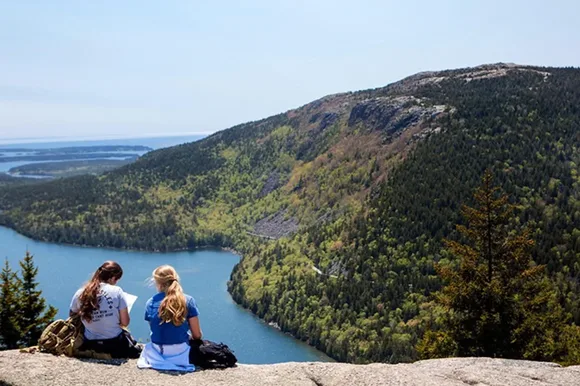
April sits just before peak season, which means you'll find parking at Jordan Pond without circling for 20 minutes. The shoreline trail loops the pond through spruce forest and over granite slabs where you can stop for lunch facing the Bubbles reflected in glass-smooth water. Beehive Trail climbs via iron rungs and ladders up exposed cliff faces — not for the height-averse, but thrilling for solo hikers who want to earn their views. The park's three campgrounds accept reservations months in advance, but solo campers can sometimes snag cancellations by checking the website daily.