8 National Parks for Your First Park Trip
Eight national parks that reward first-timers with clear payoffs, accessible trails, and April weather that won't punish you
Your first national park trip should feel like a discovery, not a navigational puzzle. You want drama without the logistical headaches of backcountry permits, accessible trails that don't feel crowded, and the sense that you're seeing something genuinely extraordinary. April delivers on all counts: mild weather across most of the country, wildflowers starting to bloom in desert parks, and shoulder-season crowds that haven't yet swelled to summer levels.
These eight parks reward first-timers with clear payoffs. You'll find trails that deliver views within the first mile, iconic features you can photograph from roadside pullouts, and enough variety to figure out what kind of park explorer you want to become. Some are famous for good reason. Others remain surprisingly quiet despite offering experiences that rival their better-known neighbors.
Acadia National Park
Where granite meets the Atlantic / More popular than most people realize
Acadia's appeal for first-timers comes down to density. You can summit a mountain, loop a glacial pond, and watch waves crash into granite cliffs without driving more than a few miles. The Park Loop Road stitches together the greatest hits, but the real reward is stepping onto the Carriage Roads: crushed stone paths that wind through forests and over stone bridges, perfect for families who want walking without technical hiking. Jordan Pond Shore Trail circles the water on nearly flat terrain while the Bubbles loom overhead, looking exactly like their name suggests.
Cadillac Mountain gets called the first place to see sunrise in the United States, which is true for part of the year and a marketing triumph all year long.
April in Acadia means mud season is ending and tourist season hasn't begun. You'll share Thunder Hole with a few dozen people instead of a few hundred, and parking at trailheads becomes a pleasant afterthought rather than a tactical challenge. The summit of Cadillac is accessible by car, which some purists scoff at but first-timers appreciate. Save the Precipice Trail for a future visit when your confidence matches its iron rungs bolted into vertical cliffs.
Arches National Park
More than 2,000 natural arches / Expect company at Delicate
Arches delivers the iconic Southwest postcard: red rock formations against blue sky, accessed by short trails that don't require mountaineering skills. The park's compact size means you can see the highlights in a day, though two days lets you linger without racing. Balanced Rock sits a few hundred feet from the parking lot, a boulder the size of three school buses perched on a pedestal. The Windows section offers two massive arches within a half-mile loop, and Sand Dune Arch tucks into a shaded alcove where kids can play in the sand between the fins.
Delicate Arch stands alone on a slickrock bowl like a sculpture someone placed there on purpose, which makes it feel both natural and impossible.
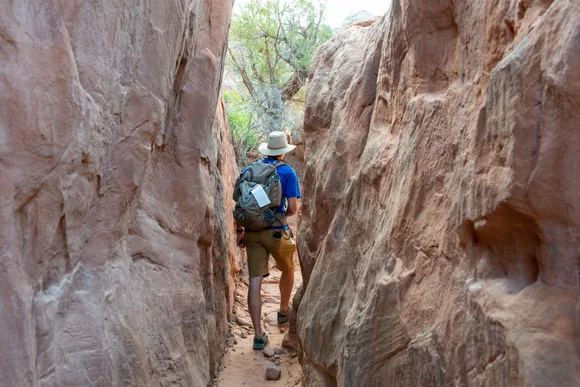
The Delicate Arch Trail climbs three miles round-trip with no shade, but April temperatures make it tolerable where July would be punishing. You'll share the final amphitheater with other hikers, but the arch itself is so visually striking that the crowds fade into background noise. Devils Garden stretches deeper into the park, leading to Landscape Arch, which spans longer than a football field and looks too thin to survive the next windstorm. April is the best month to visit Arches because summer heat turns the exposed trails into endurance tests.
Badlands National Park
65 million years of erosion on display / Bigger than you think
The Badlands look like something from another planet: layered spires and pinnacles carved from ancient seabeds, striped in white, pink, and tan. The park's main draw is the scenic drive along the Wall, a long ridge where every pullout reveals new formations. Door Trail drops you onto the badlands floor within minutes, letting you walk among the formations instead of just photographing them from overlooks. Fossil Exhibit Trail showcases replicas of ancient mammals that once roamed here, which makes the landscape feel less like geology and more like time travel.
The badlands earned their name from Lakota travelers who called them mako sica, meaning land bad, because they're nearly impossible to cross on horseback.
April brings wildflowers to the mixed-grass prairie that surrounds the formations, softening the lunar harshness with color. You'll spot bison grazing near the road, bighorn sheep on the ridges, and prairie dogs in sprawling towns that stretch for acres. The park feels less crowded than Utah's red rock destinations despite offering similarly dramatic landscapes. Castle Trail extends for five miles one way, but even a short out-and-back gives you solitude that's rare in more famous parks.
Black Canyon of the Gunnison National Park
Sheer walls that swallow sunlight / Criminally overlooked
Most people have never heard of Black Canyon, which is baffling given that it's one of the most dramatic gorges in North America. The Gunnison River carved through ancient Precambrian rock, creating walls so steep and narrow that sunlight only reaches the bottom for a few hours each day. South Rim Drive offers a dozen overlooks where you'll peer down at cliffs striping vertically into shadow. Chasm View and Painted Wall Overlook are the standouts, showcasing the canyon's depth and the river's persistence.
The canyon's narrowest point compresses 1,100 feet of depth into just 40 feet of width, creating a slot so tight it feels claustrophobic from the rim.
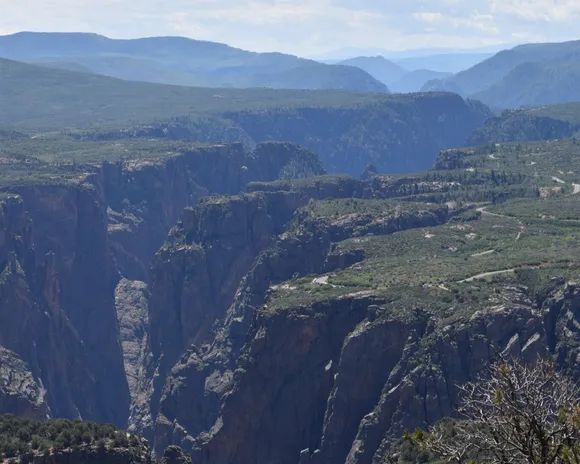
Gunnison Point Trail takes less than 15 minutes to reach the rim, making it ideal for families or anyone unsure about committing to a longer hike. Rim Rock Trail extends the experience, winding along the canyon edge with constant views. April weather is perfect here: cool enough for comfortable hiking but warm enough that snow has melted from the rim roads. The park's relative obscurity means you'll often have overlooks to yourself, a luxury that's vanished from most Southwestern parks.
Bryce Canyon National Park
Earth's densest hoodoo forest / Prepare for crowds
Bryce Canyon isn't a canyon at all but a series of amphitheaters carved into the Paunsaugunt Plateau, filled with thousands of orange and white spires called hoodoos. The formations look like a fantasy city designed by erosion, with towers, fins, and windows clustered so densely you can barely see between them. Sunrise Point and Sunset Point offer rim views that require zero effort, but the real experience happens below the rim on the Navajo Loop, which drops through switchbacks into the hoodoo maze.
Wall Street section squeezes between hoodoos so narrow that Douglas firs growing in the slot tower overhead while you walk in perpetual shade.
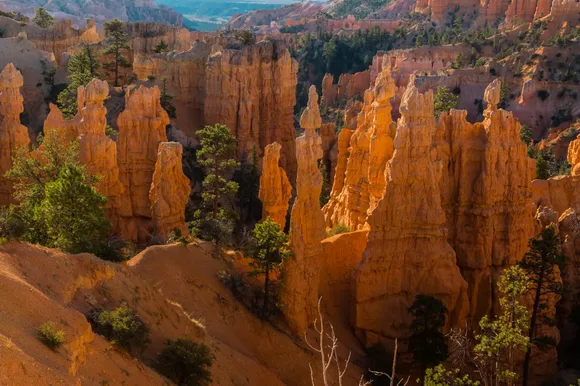
Queen's Garden Trail combines with Navajo Loop to create a three-mile circuit that's manageable for most hikers and showcases the park's best features. You'll descend into the hoodoos, walk among formations that loom hundreds of feet overhead, and climb back out with views that expand across the amphitheater. April means the rim can still have snow while the trails below are clear, creating striking color contrast. The park draws crowds because it's packed along a popular Utah road trip circuit, but even shoulder-to-shoulder on the rim, the trails thin out quickly once you drop below the viewpoints.
Canyonlands National Park
Four districts bigger than the five boroughs / Island in the Sky for first-timers
Canyonlands spreads across an area larger than Connecticut's shoreline, divided into four districts that feel like separate parks. Island in the Sky sits atop a mesa with overlooks that reveal layer after layer of canyon carved by the Colorado and Green Rivers. Grand Viewpoint Trail extends half a mile to a promontory where you can see for dozens of miles in every direction, with canyons dropping away in shades of red, orange, and purple. Mesa Arch frames sunrise perfectly, creating the most photographed view in the park.
The rivers meet at the Confluence, visible from an overlook that shows two ribbons of water merging a thousand feet below your boots.
Island in the Sky works well for first-timers because the main attractions cluster along a single scenic drive, requiring minimal hiking for maximum payoff. Upheaval Dome offers a bizarre geological feature that looks like an impact crater, though scientists debate whether it's actually volcanic. April temperatures make exploring comfortable before summer heat turns the desert punishing. The Needles district offers better hiking but requires more time and planning, so save it for your return visit once you've fallen for Canyonlands.
Capitol Reef National Park
A hundred-mile wrinkle in the earth / Pioneer orchards still produce fruit
Capitol Reef follows the Waterpocket Fold, a massive monocline where rock layers bend upward like a breaking wave frozen in stone. The park stretches along this feature for a hundred miles, but most visitors focus on the Fruita Historic District where Mormon settlers planted orchards in the 1880s. The trees still produce apples, cherries, and peaches that you can pick in season, creating a surreal juxtaposition of agriculture against red rock cliffs. Hickman Bridge Trail climbs two miles round-trip to a natural arch spanning 133 feet, offering views across the fold.
Grand Wash cuts through the reef in a narrow canyon where walls rise 500 feet overhead and close in tight enough to block the sun.
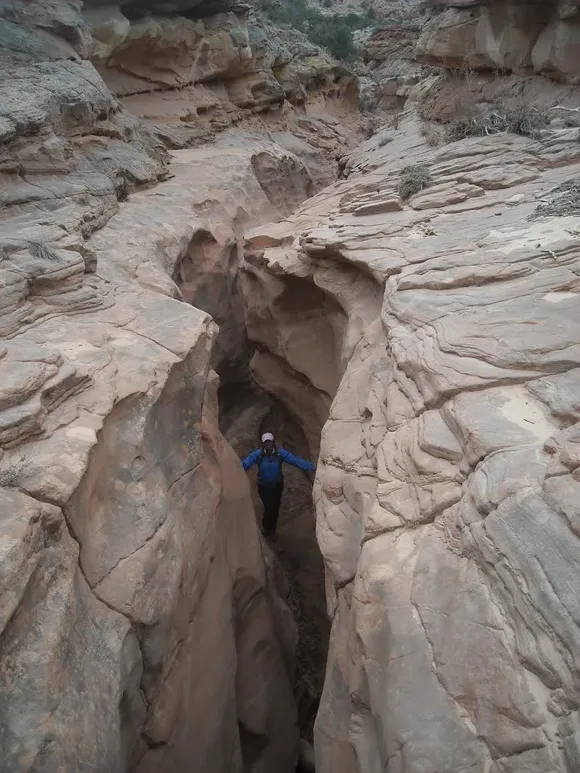
Capitol Reef draws fewer visitors than its Utah neighbors despite offering equally impressive geology, which means you'll find parking and solitude that Zion and Arches can't match. The scenic drive along the fold reveals Capitol Dome, a white sandstone formation that inspired the park's name. April is ideal because desert temperatures stay mild and spring runoff fills seasonal waterfalls in the side canyons. Cassidy Arch Trail climbs steeply but rewards the effort with views both of the arch and back across the canyon to the fold.
Carlsbad Caverns National Park
A limestone cathedral 750 feet underground / Bats spiral out at dusk
Carlsbad Caverns was carved by sulfuric acid rather than water, which explains its massive rooms and bizarre formations. The Big Room extends across an area larger than six football fields, filled with stalactites, stalagmites, and formations that look more like drapery than rock. You can descend via the Natural Entrance Trail, which drops you 750 feet through switchbacks into the cave system, or take the elevator if you're pressed for time or mobility is a concern. Either way, the underground landscape feels completely alien.
Mexican free-tailed bats emerge from the cave entrance each evening from May through October, spiraling upward in a tornado of wings that can number 400,000.
April sits just before bat season begins, but the cave itself remains a constant 56 degrees year-round, making it perfect when desert surface temperatures climb. King's Palace Tour takes you deeper into the caverns with a ranger guide, showcasing formations that the self-guided route bypasses. Above ground, the park preserves Chihuahuan Desert landscape with trails that wind through canyons and past desert plants most people only see in westerns. Carlsbad remains overlooked despite being one of the most accessible cave systems in the world.