8 National Parks International Visitors Love
Eight parks that reward international visitors with iconic landscapes, manageable logistics, and April timing that works
International visitors approach American national parks differently than domestic travelers. You're often working with limited time, unfamiliar logistics, and a once-in-a-lifetime mindset that demands parks worth the transatlantic flight. April offers a strategic window: spring weather softens the desert Southwest while coastal parks shake off winter, and you'll dodge the summer crowds that pack parking lots from June through August.
These eight parks reward international visitors with iconic landscapes, manageable logistics, and April conditions that let you actually enjoy them. Some require boats or backcountry permits. Others let you walk right up to the main attraction. All of them deliver experiences you can't find anywhere else on Earth.
Arches National Park
More stone arches than anywhere on the planet / April hits the sweet spot before desert heat
Arches concentrates its drama into a compact area that works brilliantly for visitors on tight schedules. You can drive the scenic road, hike to Delicate Arch, and explore Devils Garden in a single day without feeling rushed. April temperatures sit in the comfortable zone between winter cold and summer scorchers that push thermometers past 95F, and wildflowers bloom across the desert floor in wet years. The park gets packed, but its design funnels crowds to a handful of iconic spots while leaving secondary trails surprisingly empty.
Delicate Arch stands alone on a sandstone bowl like a monument someone placed there on purpose, except geology carved it over millennia.
The three-mile round trip to Delicate Arch climbs across slickrock with zero shade, so start early and carry more water than seems reasonable. Balanced Rock sits right off the road and delivers Instagram-worthy shots in under 10 minutes. For something less crowded, Park Avenue Trail drops you into a canyon lined with sandstone skyscrapers that dwarf Manhattan's buildings. The trailhead shuttle system requires timed entry permits during peak season, but April usually escapes the worst restrictions.
Bryce Canyon National Park
Forest of orange spires packed tighter than anywhere else / May edges out April for weather
Bryce Canyon inverts the usual national park experience. Instead of climbing mountains to see views, you descend into an amphitheater where thousands of hoodoos crowd together like a stone army. The Navajo Loop Trail drops you between formations so narrow you can touch both walls, then spits you out at Wall Street where Douglas firs grow from the canyon floor toward a stripe of sky. April brings lingering snow to the rim at 8,000 feet, but trails usually stay accessible and crowds haven't reached their summer density.
The hoodoos glow orange at sunrise like someone lit them from within, then shift to deep red as shadows fill the amphitheater.
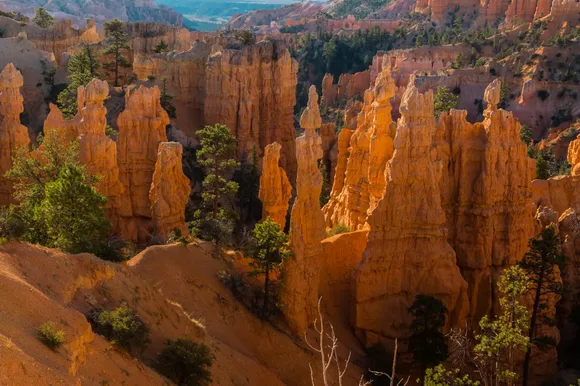
Combine Navajo Loop with Queen's Garden Trail for a moderate three-mile circuit that hits the park's best features without requiring technical skills or special permits. Sunrise Point and Sunset Point both deliver on their names, and the Rim Trail connects overlooks along a paved path that works for all fitness levels. International visitors often pair Bryce with Zion, but the parks couldn't feel more different: Zion puts you at the bottom looking up, while Bryce perches you at the rim looking down into geological chaos.
Death Valley National Park
Larger than Connecticut / April catches the tail end of comfortable weather
Death Valley earns its reputation as America's hottest place, but April flips the script with daytime temperatures in the 80s and 90s instead of the summer's 120F death march. The park sprawls across terrain that shifts from salt flats to sand dunes to mountain peaks tall enough for bristlecone pines. Badwater Basin sits at the lowest elevation in North America, where you can walk onto the salt crust and see a sea level marker on the cliff face 282 feet above your head. Most international visitors underestimate the distances: it's a 45-minute drive from Furnace Creek to the sand dunes, and cell service vanishes the moment you leave the visitor center.
The Racetrack Playa's sailing stones leave trails across the dried lakebed like evidence of geological vandalism nobody can quite explain.
Zabriskie Point delivers sunrise views over badlands that look like crumpled gold foil, and you'll share the viewpoint with a dozen photographers instead of the hundreds who pack better-known parks. Golden Canyon Trail winds through ochre walls that narrow and twist toward Red Cathedral, a moderate hike that escapes the worst heat. Mesquite Flat Sand Dunes let you climb sand without the commitment of Great Sand Dunes, and sunrise or sunset light turns them into ribbons of shadow and gold. The park's sheer size absorbs visitors into emptiness that feels almost aggressive after you've experienced shoulder-to-shoulder national park congestion elsewhere.
Acadia National Park
Rocky Atlantic coast meeting granite mountains / Summer crowds pack the loop road
Acadia concentrates Maine's best features into 74 square miles: rocky coastline where waves crash against pink granite cliffs, carriage roads built for horses that now carry cyclists, and Cadillac Mountain where you can watch sunrise before anyone else in the United States. The Park Loop Road stitches it together in a 27-mile scenic drive that hits Thunder Hole, Sand Beach, and Jordan Pond without requiring serious hiking. April means mud season in Maine, though, with trails emerging from snow and lodging still shuttered for winter. The park shines brightest in May and June before summer humidity and August crowds arrive.
Jordan Pond's mirror surface reflects the rounded Bubbles while Acadia's carriage roads trace the shoreline like someone designed the perfect photograph.
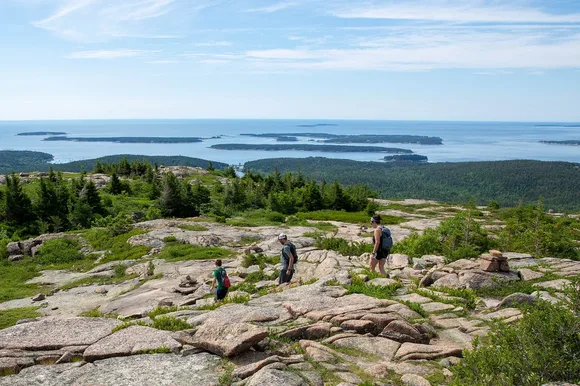
The Bubbles Trail climbs to granite summits in under two miles, offering ocean views that reward minimal effort. Precipice Trail requires scrambling up iron rungs bolted into vertical cliff faces, thrilling for experienced hikers but genuinely dangerous for anyone uncomfortable with exposure. The park's carriage roads offer 45 miles of car-free paths perfect for cycling, and you can rent bikes in Bar Harbor 10 minutes away. International visitors often overlook Acadia in favor of Western parks, which means you'll find accessibility and infrastructure that rival Yellowstone without the soul-crushing congestion.
Carlsbad Caverns National Park
Cathedral-sized rooms beneath the Chihuahuan Desert / Barely on most visitors' radar
Carlsbad Caverns delivers underground spectacle that rivals anything above ground in the Southwest. The Big Room stretches large enough to fit six football fields, with limestone formations that took millennia to drip into existence. You can ride an elevator 750 feet down or descend via the Natural Entrance Trail, a switchbacking path that follows the route early explorers took into what they thought was the underworld. April timing matters here because summer brings Mexican free-tailed bats that spiral out of the cave entrance at dusk in a living tornado, but they don't arrive until May.
The Big Room's scale breaks your brain until you spot the people on the trail ahead looking like ants beneath cathedral ceilings of stone.
The self-guided Big Room tour takes 90 minutes on a paved path that requires minimal fitness, making it accessible for nearly everyone. King's Palace Tour requires ranger accompaniment and drops deeper into decorated chambers where the Park Service turns off all lights for 30 seconds of absolute darkness you can't experience anywhere else. Above ground, the park's desert trails see almost nobody despite offering excellent hiking through canyon country. Most international visitors have never heard of Carlsbad Caverns, which means you'll explore one of America's most impressive parks without fighting crowds or scrambling for permits.
Crater Lake National Park
America's deepest lake fills a volcanic caldera / April means snow still blocks Rim Road
Crater Lake's water achieves a blue so saturated it looks Photoshopped, the result of purity and depth that eliminate sediment and reflect only the shortest wavelengths of light. The 33-mile Rim Road circles the caldera at 7,000 feet, offering viewpoints where the lake spreads below like liquid lapis lazuli. April timing works against you here, though, because the road doesn't fully open until July after snowplows clear winter accumulation. August delivers the park's best weather and full access, but if you're committed to April travel, the south entrance usually opens and Rim Village provides enough lake views to justify the trip.
Wizard Island rises from Crater Lake's surface like a miniature volcano within the caldera, which is exactly what it is.
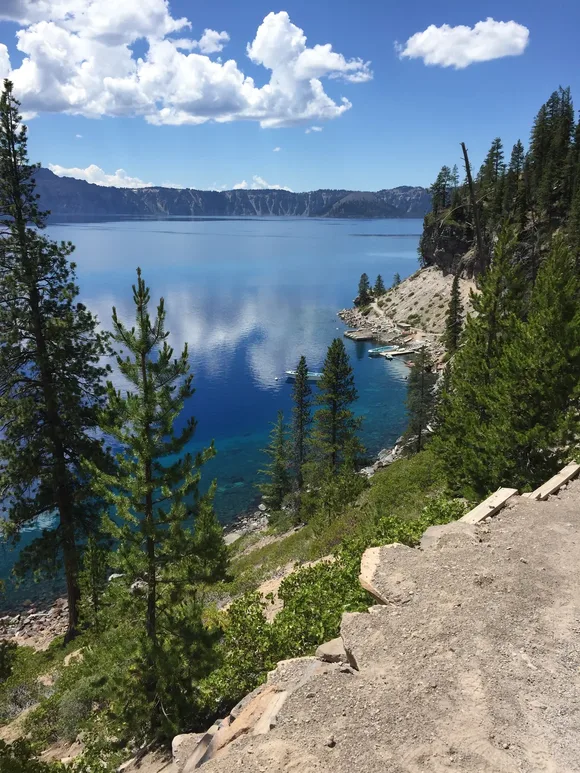
Watchman Trail climbs to a fire lookout with panoramic lake views in under two miles, and it's usually snow-free by late June. Cleetwood Cove Trail offers the only legal lake access, a steep descent to the shore where boat tours depart for Wizard Island. The lake's depth and purity mean scientists use it as a baseline for water quality measurements, and swimming in it feels like entering a different element than normal lake water. Most international visitors skip Crater Lake because it sits hours from major cities, but that isolation preserves a quietness that busier parks lost decades ago.
Denali National Park & Preserve
North America's tallest peak anchors six million acres / One road controls all access
Denali sprawls across an area larger than New Hampshire, but a single 92-mile road provides the only vehicle access into the park's interior. Private cars can't drive beyond Mile 15, so you'll board a bus that grinds along dirt roads through tundra where grizzly bears, caribou, and wolves roam within camera range. The mountain itself hides behind clouds most of the time, but when Denali emerges it dominates the horizon with an elevation gain that dwarfs Everest's from base to summit. April means the park road hasn't opened yet, with access typically starting in late May, so international visitors should target June through August for the full experience.
The bus driver stops without prompting when a grizzly crosses the road 50 feet ahead, close enough to see individual hairs in the sun.
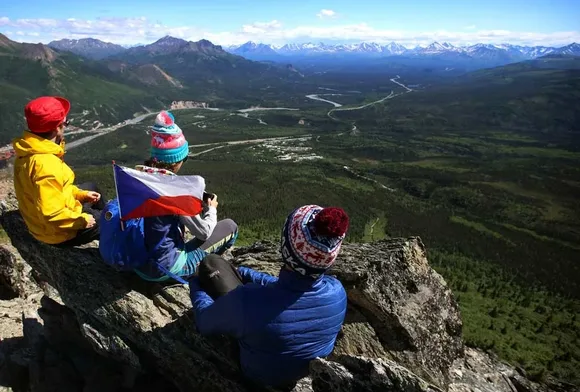
Mount Healy Overlook Trail climbs from the park entrance to alpine tundra views in five miles, offering a taste of Denali's landscape without requiring a bus ticket. Wonder Lake sits at Mile 85, an all-day bus journey that pays off with the mountain reflected in still water while moose graze along the shore. The park's backcountry doesn't use trails in the traditional sense; you pick a unit on a map and hike cross-country through wilderness that sees fewer visitors in a year than Yellowstone gets in a day. Most international visitors struggle with Alaska's logistics and costs, but Denali rewards the effort with wildlife encounters and scale you can't find in the Lower 48.
Glacier Bay National Park & Preserve
Fifteen tidewater glaciers calving into a 65-mile fjord / Boat or plane only
Glacier Bay eliminates roads entirely, accessible only by tour boat, cruise ship, private boat, or floatplane from Juneau 60 miles away. The fjord's tidewater glaciers calve icebergs directly into the ocean with cracks like thunder, and humpback whales surface close enough to tour boats that you'll hear them breathe. The park's glacial retreat happened so fast that scientists use it as a case study: in 1750 the bay didn't exist, buried under thousands of feet of ice that melted back 65 miles in 250 years. April means shoulder season rates and smaller crowds, but also colder temperatures and less wildlife activity than June through August.
The glacier face towers above the boat like a blue-white wall, then a section the size of a building calves off and crashes into the sea.
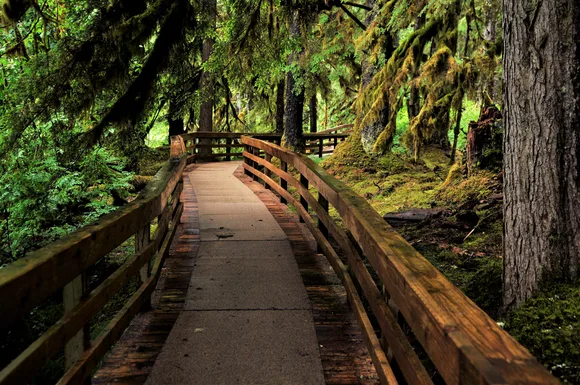
Tour boats from Bartlett Cove spend eight hours exploring the fjord, with Park Service rangers narrating glacier dynamics and pointing out wildlife. Kayakers can paddle from Bartlett Cove into the bay's arms, though permits require advance planning and backcountry camping experience. The Forest Loop Trail near park headquarters winds through temperate rainforest where moss hangs from spruce branches and bear tracks press into muddy paths. Most international visitors experience Glacier Bay from cruise ships that sail past glaciers without stopping, but the park rewards slower exploration that lets you hear ice crack and watch seals haul out onto floating bergs.