8 National Parks on the Water
Eight national parks where water defines the landscape, timed for April's weather windows and thinner crowds
April draws the line between winter's last gasp and summer's first crowds. If you're planning a national park trip on the coast this month, you're chasing a specific sweet spot: mild weather, thinner crowds, and ecosystems waking up from dormancy. The parks below reward April visitors with conditions that either peak this month or make the logistics workable before the summer surge arrives.
These eight parks sit on oceans, lakes, and bays. Some require boats to reach. Others let you drive right to the water's edge. What they share is timing: April puts you ahead of the rush or inside the weather window where these places actually work.
Biscayne National Park
Ninety-five percent underwater / Most visitors never get past the visitor center
You won't find Biscayne from the road. The park protects coral reefs and mangrove islands just offshore from Miami, and April sits squarely in the dry season when visibility underwater reaches its peak. Most people who make it here rent a kayak at Convoy Point and paddle the mangrove-lined Biscayne Bay, but the real draw is snorkeling the Maritime Heritage Trail, where six shipwrecks sit in water shallow enough for kids to freedive. The Fowey Rocks Lighthouse rises out of open water seven miles offshore, marking the edge of the reef tract.
Miami's skyline floats on the western horizon while you float above brain coral older than the city itself.
The park operates a glass-bottom boat tour from the Dante Fascell Visitor Center, which solves the logistics problem if you don't have snorkel gear or a boat. April temperatures hover in the low 80s, and afternoon thunderstorms haven't started their daily summer routine yet. Boca Chita Key has a small campground you reach by private boat or park ferry, and the half-mile lighthouse trail gives you a view of the entire park layout from the top.
Channel Islands National Park
Five islands off Ventura / Half the visitors of nearby Sequoia
Channel Islands sits close enough to Los Angeles that you can see the city's glow from Anacapa Island at night, but few people make the crossing. Island Packers runs boats from Ventura Harbor to five islands, and April hits the migration window when gray whales pass through the Santa Barbara Channel on their way north. The boat ride itself counts as wildlife viewing: dolphins ride the bow wake, and sea lions bark from kelp forests visible just below the surface. Once you land on Santa Cruz Island at Prisoner's Harbor, the Pelican Bay Trail drops you into a landscape that feels more Mediterranean than California.
The island fox weighs less than a house cat and exists nowhere else on Earth.
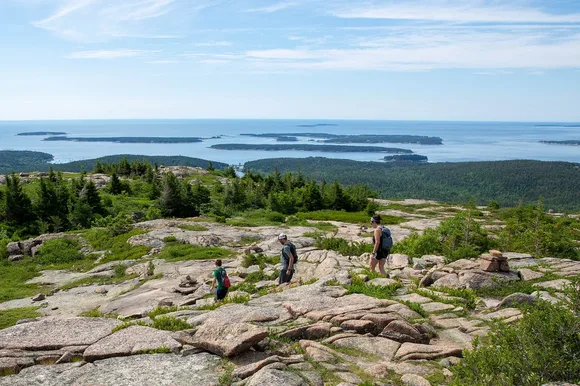
Anacapa Island makes the easiest day trip. The boat docks at a ladder cut into the cliff, you climb 157 steps to the island top, and a half-mile loop trail circles the entire island past nesting seabirds and the historic lighthouse. April wildflowers carpet the islands before the summer fog rolls in, and water temperatures are still cold enough that you'll want a wetsuit if you're snorkeling the kelp forests. Santa Rosa Island offers backcountry camping for visitors willing to commit to a longer stay, but most people stick to day trips from the mainland.
Dry Tortugas National Park
Seventy miles west of Key West / Only eight campsites
Fort Jefferson dominates Garden Key like a landlocked battleship, its brick walls rising from white coral sand. The fort was never finished and never saw combat, but it still holds the title of largest masonry structure in the Western Hemisphere. You reach it by seaplane or ferry from Key West, and April falls inside the calm-weather window before summer's heat makes the passage miserable. The park protects seven islands, but Garden Key gets ninety percent of visitors because it's where the fort and ferry dock sit. You can walk the fort's perimeter in twenty minutes, then spend the rest of the day snorkeling the moat wall where sergeant majors and parrotfish cluster in water clear enough to count their scales.
The snorkeling here rivals anything in the Caribbean, except you're still technically in the continental United States.
The campground books out months ahead for weekends, but midweek April dates sometimes open up. You're limited to what you can carry on the ferry, and there's no fresh water, no cell service, and no shade except inside your tent. Loggerhead Key holds the park's lighthouse, reachable by kayak if the seas cooperate. Bird migration peaks in April when exhausted warblers drop onto the islands after crossing the Gulf of Mexico, and some mornings the fort walls are lined with songbirds recovering for the next leg north.
Acadia National Park
Maine's only national park / More popular than Yellowstone by visitor count
Acadia in April means you're betting on weather. The park stays open year-round, but Park Loop Road doesn't fully open until mid-April, and even then you'll hit stretches of ice in shaded sections. The reward for tolerating uncertainty is solitude you won't find here any other time of year. Jordan Pond sits empty of the crowds that pack the lawn chairs in summer, and the carriage roads let you bike past granite cliffs without dodging tour buses. Cadillac Mountain's summit road opens by late April most years, giving you the first-sunrise-in-America experience without the August shoulder-to-shoulder crowds.
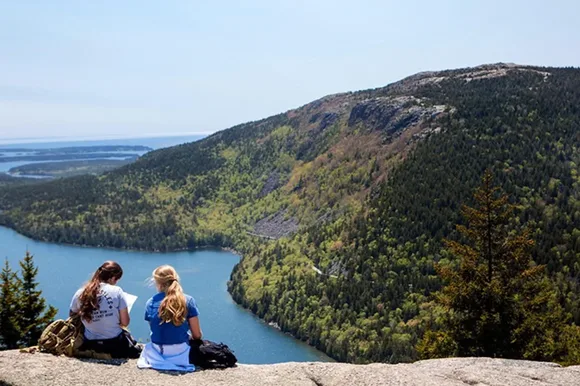
The Bubbles Trail climbs 400 feet in less than a mile, then drops you on a granite dome with views across the island to the Atlantic.
Thunder Hole performs best at high tide with a strong surf running, and April nor'easters deliver both. The wave compression through the narrow chasm can send spray fifty feet in the air when conditions align. Most campgrounds don't open until May, but Bar Harbor has accommodations open year-round, and the town is walkable enough that you don't need to drive into the park for every outing. The Precipice Trail stays closed until August for nesting peregrine falcons, but the Beehive Trail offers similar exposure and iron rung climbing once the snow clears.
Indiana Dunes National Park
Fifteen miles of Lake Michigan shore / More plant species than Yosemite
Indiana Dunes draws more visitors than Glacier or Olympic, mostly because Chicago sits thirty miles west and the dunes offer the closest national park experience to the third-largest city in the country. April here means the beach is still too cold for swimming, but the trails through the dune succession forest are walkable without the July crowds that pack the parking lots. Mount Baldy rises 126 feet above the lakeshore, and the climb up loose sand rewards you with views across the southern curve of Lake Michigan. The dune moves inland about four feet per year, burying trees as it migrates.
You can watch the entire history of plant succession in a single afternoon hike from beach to climax forest.
West Beach makes the best introduction to the park's ecology. The Dunes Succession Trail loops through all six ecological zones the park protects: beach, foredunes, blowouts, and three forest types. Bird migration peaks in late April when warblers stage along the lakeshore before crossing the lake, and the Paul H. Douglas Center for Environmental Education runs programs that explain why this shoreline holds more plant diversity than entire states. The Bailly Homestead dates to 1822 and shows what the region looked like before industrial development ate most of the Indiana shore.
Glacier Bay National Park & Preserve
Fifteen tidewater glaciers / No roads in
You reach Glacier Bay by boat or floatplane from Gustavus, which you reach by boat or plane from Juneau. The logistics filter the crowds down to people serious about seeing a temperate rainforest fjord system where glaciers still actively carve the landscape. April sits just outside the main cruise season but inside the shoulder period when day boat tours start running from Bartlett Cove. The park protects more area than Yellowstone, but most visitors see it from the water: tour boats run up the bay to Margerie Glacier where ice calves into the sound with cracks that sound like rifle shots.
The bay was entirely filled with ice 250 years ago, and glacial retreat here is the fastest documented in the world.
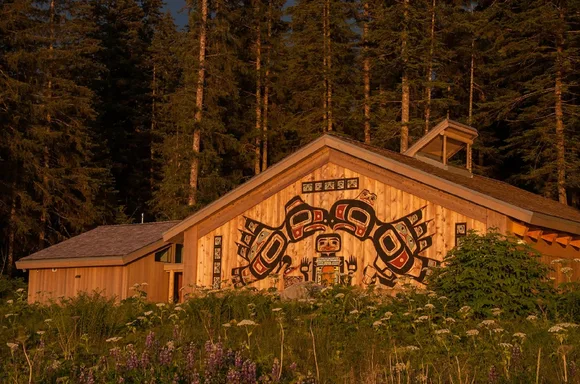
Bartlett Cove has the park's only developed trails and campground, and the Forest Loop Trail gives you a taste of the temperate rainforest ecosystem without committing to a backcountry paddle. Sea kayakers with experience can rent gear and paddle the western shore where humpback whales feed in Icy Strait, but April water temperatures make a wetsuit non-negotiable. The Tribal House at Bartlett Cove was carved by Tlingit and Haida artists and serves as a cultural center explaining the indigenous history the park protects. Rangers run evening programs in the lodge through April, though frequency increases as summer approaches.
Isle Royale National Park
Lake Superior island with no cars / Draws fewer visitors annually than Yosemite gets in a week
Isle Royale doesn't open until mid-April, and even then the ferry service runs limited schedules until Memorial Day. You're committing to a wilderness experience: no roads, no cell service, and backcountry camping at sites spaced along 165 miles of trail. The island is large enough that most backpackers plan three to five nights, hiking the Greenstone Ridge Trail spine or the Minong Ridge route, both of which require navigation skills and comfort with isolation. Moose outnumber visitors most days, and the wolf population that made Isle Royale famous for predator-prey studies still roams the interior forests.
This is the only national park where you might go days without seeing another person, despite being on marked trails the entire time.
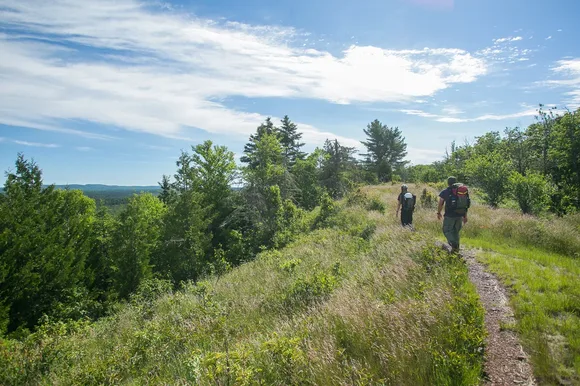
Rock Harbor serves as the main entry point, with a small store and visitor center. Day hikers can walk the Scoville Point Trail, which hugs the rocky shoreline and offers views across the harbor to the Canadian shore forty miles north. April temperatures hover in the 40s during the day, and nights drop below freezing, so come prepared for winter camping despite the spring calendar date. The island's isolation makes it a testing ground for backpackers planning bigger trips: if you can handle Isle Royale's weather and logistics, you can handle most wilderness areas in the Lower 48.
Katmai National Park & Preserve
Alaska's bear viewing capital / Larger than Connecticut
Katmai exists for one reason in most visitors' minds: Brooks Falls, where brown bears line up on the lip of a waterfall to catch salmon mid-leap. April sits too early for that spectacle, which peaks in July, but it puts you in the park when the Valley of Ten Thousand Smokes shows its volcanic moonscape without the summer haze. The 1912 Novarupta eruption buried forty square miles under ash up to 700 feet deep, and the valley still looks like Mars terrain dropped into the Alaska Peninsula. You need to book a bus tour from Brooks Camp to reach it, and April schedules are limited, but you'll have the ash flows essentially to yourself.
Brown bears here outnumber visitors by roughly sixty to one, which focuses your attention on bear safety protocols in ways zoo visits never do.
Brooks Camp requires a floatplane from King Salmon, and April weather can ground flights for days, so build flexibility into your itinerary. The camp has a small lodge and campground, but you'll sit through a mandatory bear safety talk before you're allowed to pitch a tent. The Naknek Lake area offers kayaking and fishing in waters surrounded by tundra and volcanic peaks, and you can walk the Brooks River Trail even if bears aren't actively fishing. The park sees fewer visitors annually than Acadia gets in a single summer week, which tells you everything about how remote this landscape feels.