8 National Parks That Stay Cool in Summer
Eight national parks where June means cool air, open roads, and crowds that haven't peaked yet
When the southwest hits triple digits in June, most park visitors do the same thing you're doing right now: looking for an escape route. The usual suspects (Yellowstone, Yosemite) get mobbed, but a handful of parks offer something better than mild weather. They offer actual cool air, the kind that makes you reach for a fleece at sunset.
These eight parks stay comfortable through June while the rest of the country bakes. Some sit at elevation, some hug the coast, and one requires a boat to reach. What they share is a short window when the weather aligns, the access opens, and the experience peaks.
Acadia National Park
First sunrise in America / Draws more people than most New England cities
The Atlantic keeps Acadia in the mid-70s through June while inland Maine climbs toward 90. You'll watch fog roll through the granite valleys in the morning, then burn off by noon to reveal Cadillac Mountain's bald summit. The Park Loop Road traces 27 miles of coastline where forest meets ocean in a collision of spruce and saltwater. Jordan Pond sits at the center of it all, ringed by the Bubbles and connected to the trail network by carriage roads wide enough for wheelchairs and strollers.
Acadia in June is Maine before the summer crowd realizes summer has started.
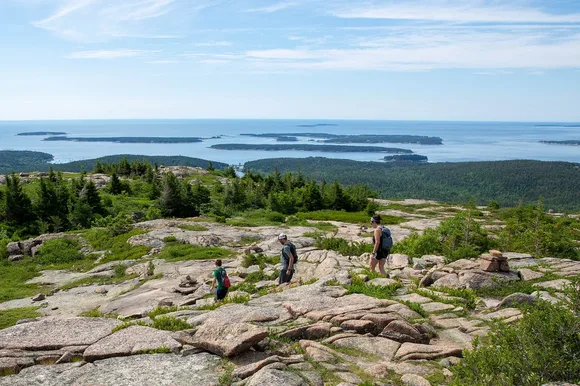
June falls between mud season and the August rush, which means you'll share the trails but not shoulder-to-shoulder. The Beehive Trail still packs a line by 10 AM, but if you hike the Precipice instead, you'll clip into iron rungs with only a handful of other climbers on the rock face. Thunder Hole performs best at high tide, and the park's tide pools along the Ship Harbor Trail teem with periwinkles and hermit crabs that keep kids occupied for hours.
Glacier National Park
More trails than you could hike in a year / Going-to-the-Sun opens mid-June if you're lucky
Glacier in June is a park half-open and fully alive. Going-to-the-Sun Road usually punches through the last snowdrifts around the summer solstice, which means you can drive over Logan Pass and drop into Many Glacier without backtracking. The high country stays cool, the lakes stay cold, and the waterfalls run at full throat from snowmelt that won't quit until July. Grinnell Glacier reflects in the turquoise water below it, and the trail there stays moderate enough that families with older kids knock it out in a long morning.
June is when Glacier looks like the postcard but feels like a secret.
The crowds haven't peaked yet, which matters in a park where parking lots fill by 8 AM in July and August. You'll still need to show up early for trailheads like Iceberg Lake and Hidden Lake Overlook, but the difference between moderately busy and gridlocked is the difference between a good trip and a frustrating one. The wildlife viewing peaks now too: grizzlies dig for glacier lily bulbs in the alpine meadows, and bighorn sheep work the high ridges above Logan Pass.
Denali National Park & Preserve
Twice the size of New Jersey / Grizzlies outnumber summit-spotters
Denali in June means 20 hours of daylight and a park that never quite goes dark. The summer bus season starts, the single park road opens deeper into the wilderness, and you can ride past Polychrome Pass watching for caribou and Dall sheep against ridges that stretch to the horizon. The mountain itself hides behind clouds more often than not, but when it appears, North America's tallest peak dominates the skyline so completely that every other view feels like a warm-up act.
Most parks offer trails; Denali offers tundra and tells you to find your own way.
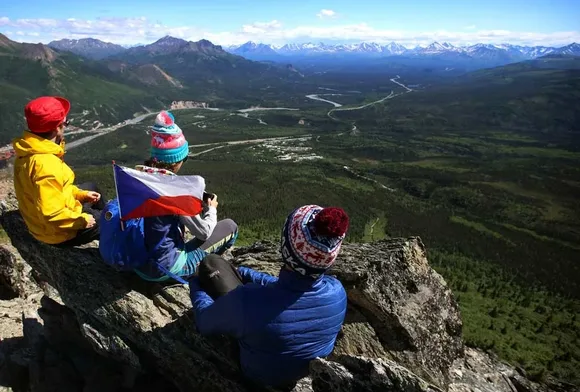
The permit system keeps numbers low, and the scale of the place absorbs what visitors do show up. You'll hike Mount Healy Overlook above the visitor center for views across the entrance area, but the real experience is a backcountry permit and a few days walking trackless tundra where grizzlies dig for ground squirrels and the only sound is wind. Families stick to the front-country trails and ranger programs at the sled dog kennels, where kids learn that mail delivery here requires a team and a musher.
Channel Islands National Park
California's Galápagos / Fewer visitors than Death Valley in a good year
The boat ride from Ventura takes an hour, and that single barrier keeps Channel Islands emptier than any mainland park in California. You'll land on Anacapa or Santa Cruz to find island foxes the size of house cats, sea lion rookeries loud enough to drown out conversation, and tide pools that rival anything on the Pacific Coast. June brings calm seas and clear skies before the summer marine layer sets in, which means kayakers can paddle the sea caves without getting pounded by swells.
Channel Islands is what California looked like before 40 million people showed up.
The half-mile Anacapa trail loops past the lighthouse and delivers views of adjacent islands rising from the Pacific like a fleet at anchor. Santa Cruz Island offers more terrain: Prisoner's Harbor to Chinese Harbor covers nine miles through coastal scrub and canyon bottoms where island jays and island scrub-jays (two different species, both endemic) work the branches. Kids love the seal and sea lion colonies visible from the landing cove, and the Junior Ranger program focuses on the species found nowhere else on earth.
Bryce Canyon National Park
Earth's densest hoodoo forest / 8,000 feet keeps it cool when Zion melts
Bryce sits high enough that June mornings require a jacket and afternoons top out in the upper 70s. The amphitheater glows orange at sunrise from Sunrise Point, and by the time you descend the Navajo Loop into the hoodoo forest, the light has shifted to illuminate Thor's Hammer and the fins beyond it. Wall Street narrows to a slot where you'll touch both walls between Douglas firs growing from the canyon floor.
Bryce doesn't sprawl like other Utah parks; it concentrates its geology into a single punch of color and form.
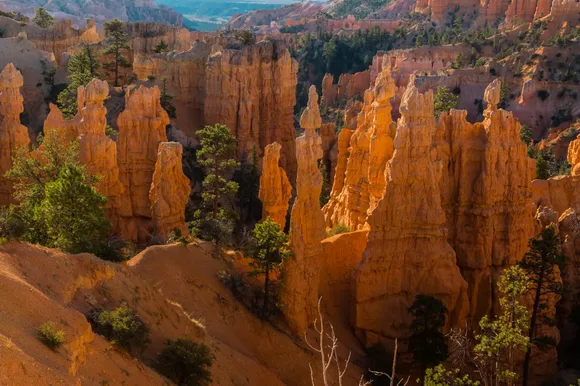
The Rim Trail connects all the viewpoints along an easy path, but the real experience drops below the rim where you're surrounded by hoodoos instead of looking down at them. The Queen's Garden Trail offers the gentlest descent, and families with younger kids can make the round trip in under two hours. The crowds pack tighter here than at parks ten times its size, but if you hike beyond the Navajo-Queen's Garden combination loop, you'll find the trail traffic drops to almost nothing.
Great Basin National Park
Ancient bristlecones at 10,000 feet / Hours from the nearest traffic jam
Great Basin might be the least-known park in the contiguous 48, which works in your favor if you're willing to drive across Nevada to reach it. Wheeler Peak pushes above 13,000 feet, and the road to the bristlecone grove climbs high enough that June temperatures stay in the 60s while Las Vegas bakes three hours south. The Bristlecone Pine Trail loops through trees older than the pyramids, their twisted trunks stripped bare by wind and polished by time.
Great Basin rewards the drive with something rare in the national park system: actual solitude.
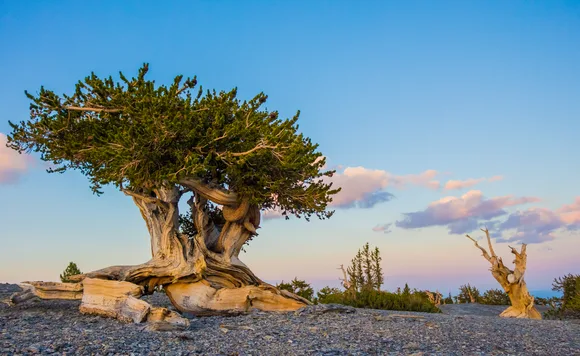
Lehman Caves offers an underground alternative when afternoon thunderstorms roll in, and the 90-minute tour drops you into marble chambers decorated with shields, helictites, and formations that look nothing like the stalactites you've seen elsewhere. Wheeler Peak Summit Trail gains more than 3,000 feet, but if you're acclimated, the payoff is summit views across the Great Basin and a glacial cirque that holds snow into July. Kids gravitate toward the cave tour and the easy nature trails near the visitor center.
Great Sand Dunes National Park & Preserve
Tallest dunes in North America / Medano Creek flows only in spring
The dunes rise 750 feet against the Sangre de Cristo Mountains in a collision of ecosystems that shouldn't work but does. June catches the tail end of Medano Creek's surge flow, when snowmelt creates a shallow stream along the dune field's edge and families wade through water that pulses in rhythmic waves. The sand stays cool in the morning, and if you climb High Dune before the sun hits full strength, you'll gain the ridge in an hour of glute-burning effort.
You don't hike Great Sand Dunes so much as surrender to them—every step forward slides you half a step back.
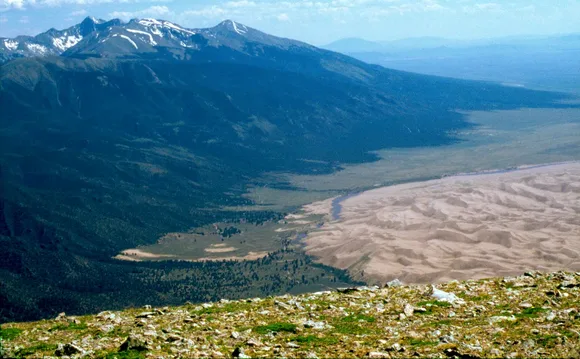
Most visitors stick to the first ridge and turn back, which means Star Dune and the deeper dune field stay nearly empty even on busy weekends. The sand squeaks underfoot when conditions align, and the views from the high dunes look back across the San Luis Valley toward the San Juans. Kids spend hours on the creek, building dams and splashing through water that never gets deeper than their knees, while adults set up camp chairs and watch the light change on the peaks.
Haleakalā National Park
10,000 feet above the Pacific / Crater big enough to swallow Manhattan
Haleakalā's summit stays in the 50s year-round, which means June mornings require fleece and afternoons feel like perfect hiking weather. The Sliding Sands Trail drops into a volcanic crater so large that clouds form inside it, and the cinder cones change color as the sun moves across the sky. You'll hike through alpine desert at elevation that makes sea-level lungs work harder, then descend the Kīpahulu coast to swim in waterfall pools surrounded by rainforest.
Haleakalā offers two parks in one: moonscape crater at dawn, tropical pools by lunch.
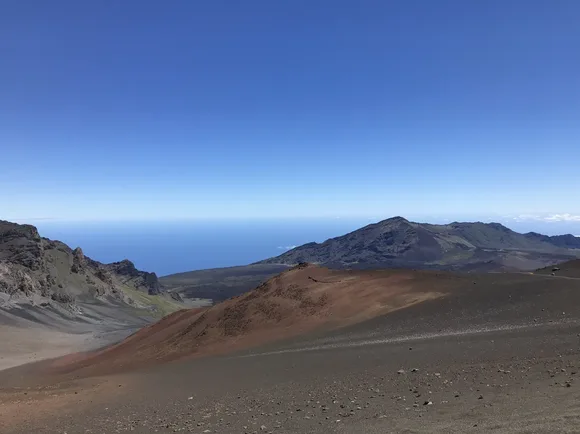
The sunrise reservations book out weeks ahead, but sunset from the summit draws a fraction of the crowd and delivers equally dramatic light. The silversword plants bloom in June and July, their tall stalks rising from rosettes that grow for decades before flowering once and dying. Kids handle the short trails around the summit visitor center easily, and the Hosmer Grove loop offers bird-watching for the endemic honeycreepers without the elevation gain.