8 National Parks That Won't Break the Bank
Eight national parks where April weather, thin crowds, and low overhead create the budget trip that doesn't feel like one
Budget travel doesn't have to mean settling for less. The cheapest national parks to visit aren't second-tier destinations that couldn't make the marquee — they're places that happen to reward April visitors with mild weather, thin crowds, and low overhead. No park charges more than $35 per vehicle for a week-long pass, but the real savings come from what surrounds them: affordable gateway towns, accessible campgrounds, and landscapes that don't require expensive permits or guide services to experience.
April hits the sweet spot at most of these parks. You'll dodge summer peak pricing on lodging, find campsites without reservations six months out, and walk trails that turn into parking lot gridlock by July. Here's where your dollar stretches furthest without compromising the experience.
Badlands National Park
South Dakota / 60 miles from Rapid City / Short trails, big rewards
The Badlands deliver more visual punch per mile than almost any park in the system. Pull off at any overlook along the loop road and you're staring at a geologic layer cake that spans 75 million years, eroded into towers and spires that glow pink at sunrise. The Door Trail takes 20 minutes round-trip and puts you in the middle of it — no endurance required, no special gear, just a quarter-mile boardwalk that turns into a flat dirt path through the formations.
This is a park where 90 percent of visitors never leave their cars, which means you own the landscape after a five-minute walk.
April weather sits in the comfortable mid-60s, and the park hasn't hit its summer rush yet. You can snag a campsite at Cedar Pass without a reservation, and the Fossil Exhibit Trail gives kids a self-guided tour through ancient turtle shells and three-toed horse remains embedded in the rock. Wall Drug, 8 miles north, offers free ice water and nickel coffee if you need a budget-friendly pit stop, though the real value is burning an afternoon on Castle Trail without seeing another hiker.
Black Canyon of the Gunnison National Park
Colorado / Most people have never heard of it / April is prime time
Black Canyon earns its name from walls so steep and narrow that sunlight only hits the river for 33 minutes a day in places. The South Rim Drive takes you past a dozen overlooks where you're staring straight down 2,000 feet into Precambrian rock twice as old as the first fossils. Unlike the Grand Canyon, you won't find shuttle buses, chain hotels, or crowds shoulder-to-shoulder at the viewpoints. You'll find parking spots and silence.
Stand at Chasm View and the canyon isn't wide enough to hold the echo when you shout into it.
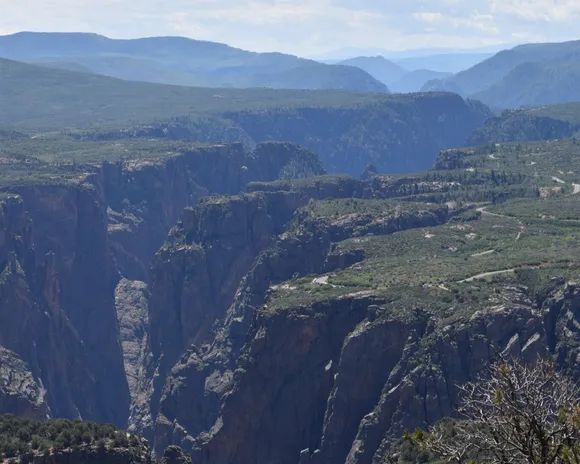
April is the best month to visit — temperatures in the 50s and 60s, wildflowers starting to bloom on the rim, and the Gunnison River running high with snowmelt. The Rim Rock Trail connects several overlooks in an easy three-mile walk, and Warner Point pushes you to the canyon's western edge where you can see the Uncompahgre Valley spread out below. Grand Junction sits an hour away with budget motels and grocery stores, and the park's South Rim Campground charges $20 a night for sites that look straight into the canyon.
Canyonlands National Park
Utah / Bigger than Zion and Arches combined / April before the heat
Canyonlands sprawls across four distinct districts, each one massive enough to be its own park. Island in the Sky delivers the easiest access and the most dramatic payoff: pull up to Grand View Point and you're looking at a hundred miles of layered canyon country carved by the Colorado and Green Rivers. Theviewpoint trail adds only a tenth of a mile to the parking area walk, but it pushes you to the absolute edge of the mesa where the drop is clean and vertical.
This is Utah's least crowded major park — your reward for driving past Moab's famous arches.
April weather peaks in the 70s before the desert turns into an oven, and wildflowers bloom across the mesa tops. Mesa Arch catches sunrise crowds, but walk to Upheaval Dome instead — a mile-wide crater that geologists still argue about — and you'll have the trail mostly to yourself. The park has no lodging and limited services, which keeps costs down if you're camping or staying in Moab. Pack your own food and water, because once you're in the park, there's nothing to buy and nowhere to resupply.
Capitol Reef National Park
Utah / Orchards and slot canyons / Peak visitation but still manageable
Capitol Reef sits between Bryce and Zion on the map but off the beaten path in visitor numbers. The Waterpocket Fold — a 100-mile wrinkle in the earth's crust — runs the length of the park, creating cliffs that glow red and white against the desert sky. The Fruita Historic District preserves a Mormon settlement from the 1880s, and the orchards still produce fruit you can pick for free when it's in season.
Hickman Bridge arches over your head like a 133-foot natural cathedral, and the two-mile trail to reach it never feels crowded even in peak season.
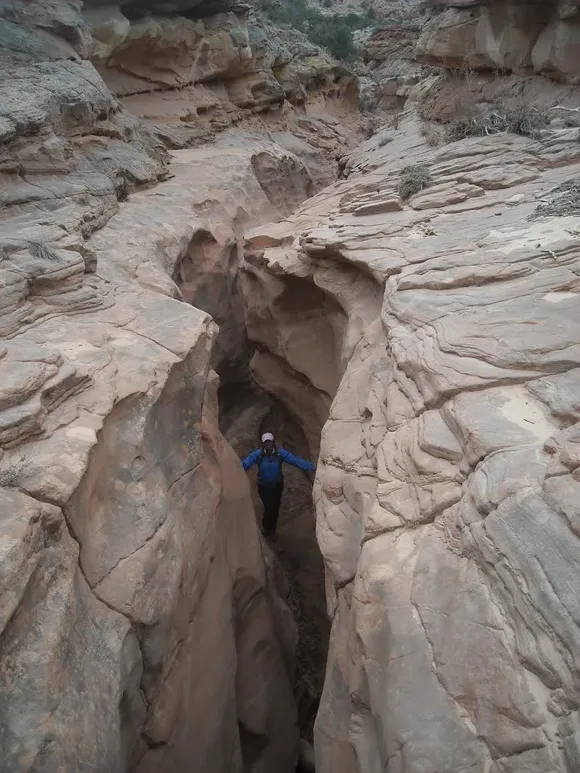
April brings the park's busiest month, but packed here still means breathing room compared to Zion's shuttles and Arches' entry reservations. Grand Wash cuts through the reef as a flat, easy trail between 500-foot walls, and Cassidy Arch pushes more ambitious hikers up switchbacks to a freestanding span named for Butch Cassidy's gang. The park's campground fills up early but costs $20 a night, and the town of Torrey eight miles west offers motels and diners that haven't adjusted their prices for National Park Instagram fame yet.
Death Valley National Park
California and Nevada / Largest park in the Lower 48 / Size absorbs the crowds
Death Valley spans an area bigger than Connecticut, and April sits at the tail end of the park's comfortable season. Daytime temperatures push into the 80s and 90s — warm but manageable before the summer furnace kicks in. Badwater Basin puts you at the lowest point in North America, where salt flats stretch toward mountains that look close enough to touch but sit 20 miles away. Zabriskie Point turns golden at sunrise, and the badlands below ripple like frozen waves.
You can drive for an hour between park features and never see another car — that kind of space doesn't exist at most western parks anymore.
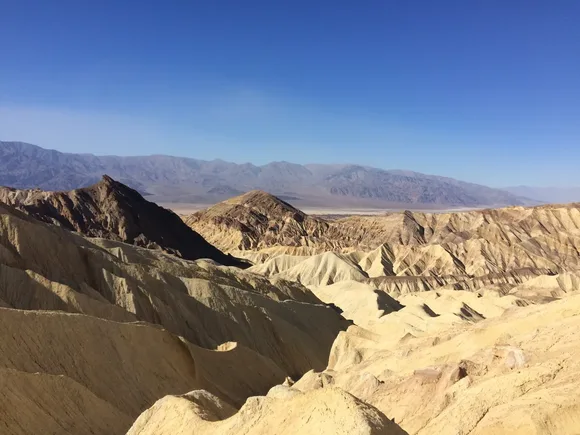
The Mesquite Flat Sand Dunes sit a short walk from the parking area and give kids something to climb without trail discipline or hydration math. Golden Canyon trails you through narrows and up to viewpoints, and if wildflowers cooperated with winter rain, April catches the desert in bloom. The park has limited lodging at Furnace Creek, but camping costs $18 to $36 a night depending on the campground, and towns like Beatty offer budget motels an hour outside the park boundaries.
Great Basin National Park
Nevada / Emptiest park in the system / Five hours from the nearest traffic jam
Great Basin sees fewer visitors in a year than Yellowstone gets in a week. The park sits in Nevada's eastern corner where nobody drives through by accident, and that isolation creates an experience most parks lost decades ago. Wheeler Peak climbs above 13,000 feet, and the Bristlecone Pine Trail winds through trees that were already ancient when the Romans built the Colosseum. Lehman Caves tours take you through marble passages dripping with stalactites, and the guides have time to answer questions because groups stay small.
This is what national parks felt like before Instagram turned viewpoints into photo ops with 20-minute wait times.
April weather can still bring snow to the high country, but the cave stays a constant 50 degrees year-round and the lower trails open up. The park has almost no infrastructure — one small visitor center, a handful of campgrounds, no lodges or restaurants — which keeps everything cheap and crowd-free. Ely sits 70 miles away with motels and diners, or you can camp at Wheeler Peak Campground for $15 a night and watch the Milky Way without a trace of light pollution.
Great Sand Dunes National Park & Preserve
Colorado / 750-foot dunes against 14,000-foot peaks / Most people have never heard of it
The tallest sand dunes in North America rise from the San Luis Valley floor like they were photoshopped into the wrong landscape. Behind them, the Sangre de Cristo Mountains still hold snow in April, creating a collision of ecosystems that shouldn't exist in the same frame. You can't hike these dunes the way you hike normal trails — every step up slides you half a step back, and the effort turns a half-mile climb into a full-body workout.
Stand on High Dune's ridge and watch the wind sculpt sand into patterns that look like frozen waves, while alpine tundra rises 8,000 feet above you.
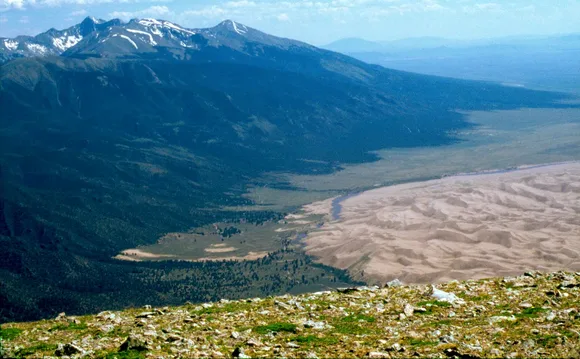
April brings moderate temperatures and Medano Creek starting to flow at the dune base, though peak creek season hits in late May. Kids treat the dunes like a giant sandbox where falling doesn't hurt and climbing burns enough energy to guarantee early bedtimes. The park sits three hours from Colorado Springs with no gateway town markup — Alamosa offers chain motels at regular prices, and the park's campgrounds cost $20 a night for sites that look straight at the dunes.
Hawaiʻi Volcanoes National Park
Hawai'i / April is the quietest month / Active volcanoes without the tropical storm risk
April hits Hawaiʻi Volcanoes during its annual lull — tourism drops after spring break and before summer vacation, which means thinner crowds at Kīlauea Caldera and easier parking at Thurston Lava Tube. The park spans from sea level to alpine desert, with terrain that shifts from rainforest to recent lava flows in the space of a 20-minute drive. You can walk across rock that solidified last decade and through tube caves carved by molten basalt.
Stand at the caldera rim and watch steam vents exhale sulfur into the air — this is a landscape still being written.
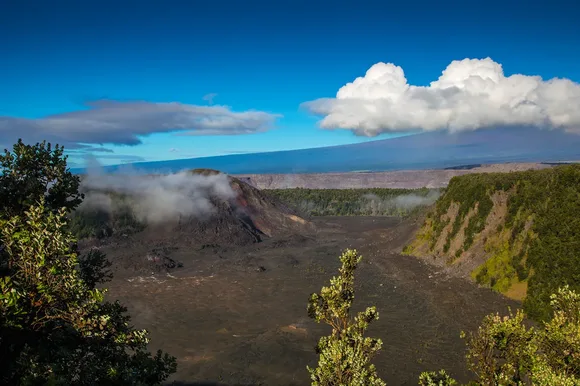
Kīlauea Iki Trail drops 400 feet into a crater that last erupted in 1959, crossing a lava lake that's still cooling beneath the surface. The four-mile loop takes you through rainforest and across the crater floor, and on clear days you can see the ocean from the rim. Chain of Craters Road descends 3,700 feet to the coast, passing petroglyphs and lava flows that buried the road multiple times before the Park Service gave up rebuilding it. Hilo sits 30 miles away with budget lodging options, and the park's campground costs $15 a night if you want to watch the caldera glow after dark.