8 National Parks With Every Kind of Trail
Eight parks where you can hike coastal cliffs, desert slots, alpine ridges, and cedar forests without changing your parking spot
Some parks offer one kind of trail: steep climbs through alpine bowls, or flat meanders along canyon rims. The best parks give you both, plus everything in between. They're the places where a family with toddlers can walk to a waterfall in the morning, and a backpacker can disappear into the wilderness by afternoon. Where granite scrambles, coastal loops, desert slot canyons, and meadow strolls all share the same trailhead parking lot.
These eight parks earned their spots by offering the widest range of trail experiences in the system. We measured terrain diversity, elevation spread, trail difficulty distribution, and the sheer variety of landscapes you can reach on foot. What matters isn't just the number of trails but the spectrum they cover.
Glacier National Park
More trail miles than Los Angeles has streets / Twenty-six glaciers still carving the peaks
Glacier delivers every kind of mountain trail without making you drive between regions. You can walk a wheelchair-accessible boardwalk to Hidden Lake Overlook at Logan Pass, then the next day grind up to Grinnell Glacier through switchbacks that gain more elevation than the Empire State Building is tall. The park's 700 miles of trails span alpine ridges where bighorn sheep graze, dense cedar forests that block the sun, and shoreline paths around glacial lakes so clear you can count rocks at 30 feet deep.
The trails here don't just vary in difficulty; they vary in what century they feel like you're hiking through.
Families gravitate toward the Trail of the Cedars boardwalk and the shore of Lake McDonald, where smooth paths wind through old growth forest and kids can skip rocks into water that reflects the mountains like a mirror. The Highline Trail along the Continental Divide rewards moderate effort with views across valleys that stretch into Canada. If you want solitude, push into the Belly River drainage or the southern backcountry past Nyack, where you'll walk for hours without seeing another hiker.
Yosemite National Park
750 trail miles from valley floor to alpine granite / Waterfalls, giant sequoias, and vertical climbs in one park
Yosemite's trail network spans 4,000 feet of elevation and crosses six distinct ecosystems. You can stand on the valley floor watching climbers inch up El Capitan, then drive an hour to Tuolumne Meadows and walk across subalpine grasslands that look more like Wyoming than California. The Mist Trail to Vernal Fall soaks you with spray from a waterfall that drops 317 feet, while the Mariposa Grove loops past giant sequoias older than the Roman Empire. Half Dome's cable route attracts hundreds on summer weekends, but the Four Mile Trail up to Glacier Point clears out by afternoon.
This is the rare park where you can hike to a sequoia grove, a granite dome, and a thundering waterfall without ever getting back in the car.
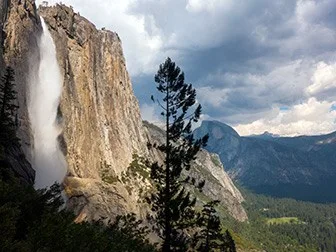
The valley trails work for families who want moderate effort and maximum reward. Mirror Lake Loop stays flat and delivers reflections of Half Dome when the water's high in May and June. The trail to Bridalveil Fall takes 20 minutes round trip and puts you at the base of a 620-foot cascade. For backpackers, the High Sierra Camps loop and the backcountry routes through Lyell Canyon offer multi-day trips through wilderness that stretches to the Sierra Crest.
Sequoia & Kings Canyon National Parks
700 trail miles across two parks / Fewer visitors than Yosemite gets in two months
These sister parks share trail systems that range from paved loops around the largest trees on Earth to multi-day backpacking routes through the John Muir Wilderness. The General Sherman Tree Trail drops you in front of a sequoia with a trunk wider than most suburban streets, while the High Sierra Trail climbs to alpine lakes where you can count the days since you last saw another human on one hand. The Big Trees Trail stays flat and accessible, perfect for strollers and wheelchairs. Moro Rock's granite staircase climbs 300 feet in a quarter mile, delivering views across the Great Western Divide.
The crowds that pack Yosemite's valley never make it here, even though the parks share a border and half the trails are objectively better.
Kings Canyon's backcountry stays empty even in July. The Rae Lakes Loop covers 40 miles through terrain that rivals anything in the Sierra, but you won't fight for campsites the way you do in Yosemite. Families can explore Zumwalt Meadow's boardwalk along the Kings River, where the canyon walls rise 8,000 feet overhead. The park's size absorbs visitors so effectively that even popular day hikes like Mist Falls feel uncrowded by afternoon.
Acadia National Park
158 trail miles where mountains meet the Atlantic / More visitors per square mile than Yellowstone
Acadia packs more trail variety into a compact footprint than any other eastern park. The Jordan Pond Shore Trail loops around glacial water with views of rounded granite domes called the Bubbles, staying flat enough for jogging strollers. The Precipice Trail climbs Champlain Mountain using iron rungs and ladders bolted into vertical cliff faces, gaining 1,000 feet in less than a mile. The Beehive scrambles up exposed granite with drop-offs that make your palms sweat, while the carriage roads offer 45 miles of crushed stone paths perfect for bikes and families.
You can summit a mountain, walk a rocky beach, and bike through the woods all before lunch, then watch the sunset from the first place in America to see dawn.
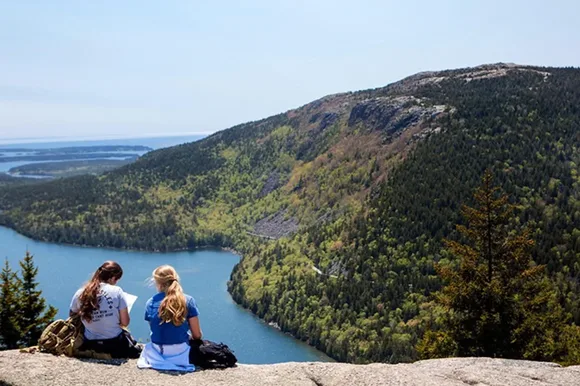
The park gets packed in summer, with parking lots full by 9 AM on weekends, but the Island Explorer shuttle system makes car-free hiking practical. Kids love the ladder trails like Beehive and Precipice, though both close in spring when peregrine falcons nest. The Ocean Path between Sand Beach and Thunder Hole stays accessible and dramatic, with waves crashing against pink granite cliffs. For solitude, head to the western side of Mount Desert Island or the Schoodic Peninsula, where trails empty out even in August.
Capitol Reef National Park
65 trail miles through a hundred-mile fold in the earth / Pioneer orchards still growing in the canyons
Capitol Reef's trails cut through terrain that shifts from red rock narrows to high desert mesas within a few miles. The Grand Wash Trail follows a canyon floor between 800-foot walls, staying flat enough that kids can run ahead without worry. Cassidy Arch requires more effort but rewards it with views through a sandstone arch that frames the Waterpocket Fold. The Hickman Bridge Trail climbs through slickrock to a natural bridge spanning 133 feet. In the Fruita Historic District, you can walk through orchards planted by Mormon settlers in the 1880s and pick apples in September.
Most Utah parks make you choose between slot canyons and mesa views; Capitol Reef delivers both on the same afternoon.
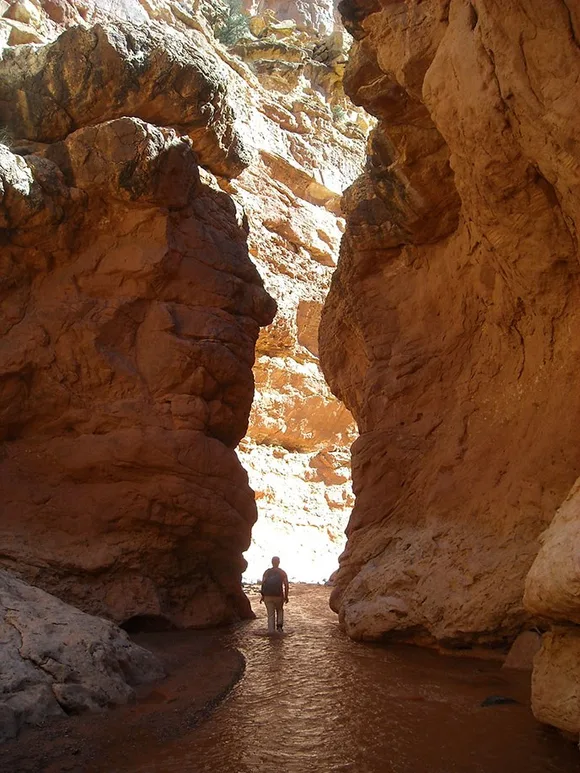
The park stays crowded during spring weekends when the desert blooms and temperatures sit in the 70s, but midweek visits in April offer elbow room even on popular trails. Families can wade through the Sulphur Creek route, a three-mile canyon walk that involves shallow water crossings and feels more like an adventure than a hike. The Cathedral Valley district in the north stays nearly empty year-round, with backcountry routes that require high-clearance vehicles and self-reliance.
Great Basin National Park
112 trail miles from desert sage to alpine lakes / Fewer visitors in a year than Zion gets in a week
Great Basin rises from the Nevada desert to Wheeler Peak at 13,063 feet, and the trails cover every zone in between. The Bristlecone Pine Trail at 10,000 feet winds through a grove of trees that were already ancient when the pyramids were new. Some of these pines have been growing for more than 4,000 years. The Wheeler Peak Summit Trail climbs through alpine tundra to the second-highest peak in Nevada, gaining more elevation than most east coast mountains contain from base to summit. Below ground, Lehman Caves offers a ranger-guided walk through marble rooms filled with shields and helictites.
This might be the only park where you can explore a cave system in the morning, then summit a 13,000-foot peak by afternoon.
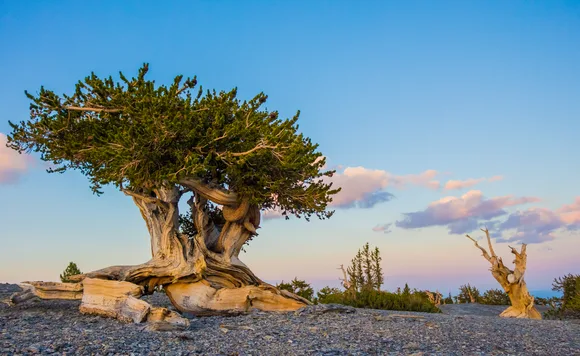
The park sees so few visitors that you can hike any trail on any day and have it largely to yourself. Families can walk the easy paths around the cave entrance and through the lower bristlecone groves, while backpackers can disappear into the South Fork Trail system for days without seeing another tent. The alpine lakes near Wheeler Peak hold snow into July, and the high-elevation trails don't fully open until mid-summer. Most people have never heard of this park, which means you won't fight for campsites or trailhead parking even on holiday weekends.
North Cascades National Park
225 trail miles through the most glaciated terrain in the Lower 48 / Quieter than any park this beautiful has a right to be
North Cascades delivers alpine grandeur that rivals anything in the Rockies, but with a fraction of the visitors. The park holds more than 300 glaciers carving through jagged peaks, and the trails range from roadside nature walks to multi-day backpacking routes through wilderness that extends to the Canadian border. Cascade Pass offers a moderate hike to views across hanging valleys and glaciated peaks, while the trail to Sahale Arm continues higher into true alpine terrain. Diablo Lake Trail follows the shoreline of water so blue it looks artificially dyed, the color a product of glacial flour suspended in the depths.
Three hours from Seattle, this park sees fewer visitors annually than Rocky Mountain gets on a busy summer weekend.
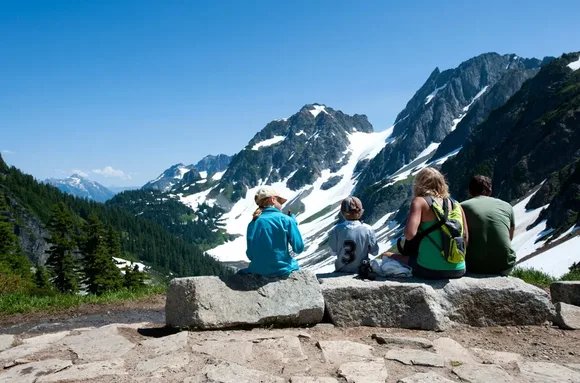
The trails stay snow-covered into July most years, which limits the hiking season but also keeps the crowds manageable. Families can walk the Thunder Knob Trail for lake views without serious elevation gain, or explore the Big Beaver Trail through old-growth cedar forest where moss hangs from branches thick as telephone poles. The Ross Lake area offers backcountry camping accessible by boat, letting you paddle to a trailhead and hike into valleys where few people venture.
Canyonlands National Park
85 trail miles split across four distinct districts / Canyons carved by the Colorado and Green Rivers
Canyonlands divides into separate worlds connected only by dirt roads and long drives. Island in the Sky delivers mesa-top trails with views across canyons deeper than the Grand Canyon is wide. The Grand View Point Trail barely qualifies as a hike at a fifth of a mile, but the overlook spans 100 miles of carved sandstone. The Needles district offers entirely different terrain, with trails winding between striped spires and through narrow gaps in the rock. Chesler Park Trail loops through a grassland surrounded by sandstone fins that look like ancient temple ruins.
This is Utah's least crowded major park, which makes no sense until you realize you need different permits and entrance points to access each district.
The Maze district stays so remote that most visitors never attempt it. The trails there require high-clearance 4WD vehicles just to reach the trailheads, then navigate slot canyons and pour-offs that demand route-finding skills and self-sufficiency. Island in the Sky works for families, with short trails to dramatic viewpoints and the Mesa Arch Trail delivering Instagram-worthy sunrise shots in half a mile. The Confluence Overlook Trail in Needles covers nearly 12 miles round trip but stays relatively flat, ending at the point where the Green and Colorado Rivers merge.