8 National Parks With More to Do Than Hiking
Eight parks where rock climbing, paddling, and scenic drives rival the hiking—with family programs that make them work for any skill level
Most national park guides treat hiking as the default activity and everything else as a bonus. But some parks flip that logic. These eight offer worlds beyond the trail: waters you can paddle or dive, walls you can climb, roads carved into cliffsides, and wildlife you can track across open prairie. April puts you ahead of the summer crowds and into weather that makes multi-sport exploration possible.
What unites these parks is their combination of substantial non-hiking options and family-friendly accessibility. You'll find Junior Ranger programs, short interpretive trails, and activities that don't require backcountry permits or technical skills alongside serious rock climbing, canyoneering, and paddling routes.
Acadia National Park
More trail miles than many states / Crowds rival Yosemite
Acadia packs more variety into its compact footprint than parks ten times its size. The carriage roads alone account for 45 miles of car-free gravel paths built by John D. Rockefeller Jr., threading through forest and along cliffsides perfect for biking or horseback riding. You can climb the exposed granite faces that made this park a rock climbing destination decades before most western parks saw their first bolts, then paddle Jordan Pond's still waters while the mountains reflect in glass-smooth surface. The park's coastal location means you can kayak among islands in the morning and summit Cadillac Mountain by sunset, watching the light sweep across Frenchman Bay.
You can bike, climb, paddle, and drive scenic roads without ever shouldering a pack.
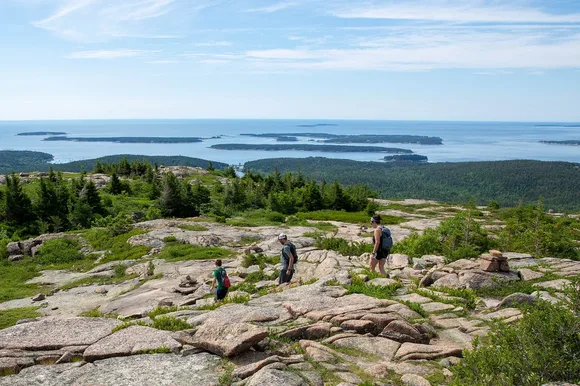
The Bubbles trail delivers accessible climbing without technical gear, while Park Loop Road strings together Thunder Hole, Sand Beach, and overlooks that require nothing more than pulling over. Kids gravitate to the tide pools at Wonderland Trail and the easy scrambles around Jordan Pond. April means you'll dodge the August shoulder-to-shoulder crowds, though you'll trade warmer water for fewer delays at park entry points.
Arches National Park
Over two thousand natural arches / Timed entry required in peak season
Arches rewards visitors who can clip into a rope or pedal gravel as much as it does hikers. The Fiery Furnace requires a ranger-guided tour or a permit, but it's canyoneering-lite: scrambling through slot passages and around fins where the sandstone glows deep orange in afternoon light. Rock climbers come for the crack systems and the chance to top out with views across the entire Colorado Plateau. The park allows bikes on any paved or unpaved roads, which means the Willow Flats Road offers a way to see backcountry without joining the parade to Delicate Arch.
Balanced Rock sits fifteen stories tall, visible from the road, climbable only in your imagination.
The Scenic Drive strings together pullouts where kids can run to Windows Arch or scramble around Sand Dune Arch without committing to long trails. Park Avenue Trail gives you canyon-wall immersion in an hour, while the night sky programs take advantage of some of the darkest skies in the Southwest. April hits the sweet spot before the desert turns molten, but you'll still face packed parking lots at the iconic arches by mid-morning.
Badlands National Park
Sixty-five million years of fossil beds / Crowds thin after sunset
The Badlands feel like a park designed for driving and exploring, not grinding out miles. The Badlands Loop Road cuts through formations that look computer-generated: white spires weathering out of layered colors that shift from rust to cream to gray. You can pull over almost anywhere, walk fifty feet, and stand among formations that would anchor entire exhibits in most geology museums. Horseback riding puts you into the Sage Creek Wilderness where bison herds move across prairie that hasn't changed since the Lakota hunted here. Wildlife viewing rivals any park outside Alaska once you learn to scan the ridgelines for bighorn sheep.
The Fossil Exhibit Trail puts you face-to-face with ancient pig and saber-toothed cat remains in their original sediment layers.
Kids connect with the fossil beds immediately, especially when they realize the weird lumps in the rock might be thirty-million-year-old rhino bones. The Junior Ranger program leans heavily into paleontology, and the short interpretive trails reward attention more than endurance. April brings mild days perfect for wandering the formations without the July heat that makes afternoon exploration miserable. The park's size absorbs visitors easily, even during peak season.
Big Bend National Park
Bigger than Rhode Island / Emptier than almost anywhere
Big Bend offers the full menu: paddle the Rio Grande through canyons where the walls close in overhead, climb Emory Peak to where you can see into Mexico, or drive Ross Maxwell Scenic Drive past volcanic dikes and into Santa Elena Canyon where the rock faces rise five times the height of Niagara Falls. The park records more bird species than anywhere else in the National Park System, which turns wildlife viewing into an active pursuit as serious as any trail. You can soak in the hot springs along the river, then drive an hour to the Chisos Basin where elevation and pine forest make you forget you're in the Chihuahuan Desert.
Santa Elena Canyon swallows you into shadow, the river reflecting cliffs that block out everything but a ribbon of sky.
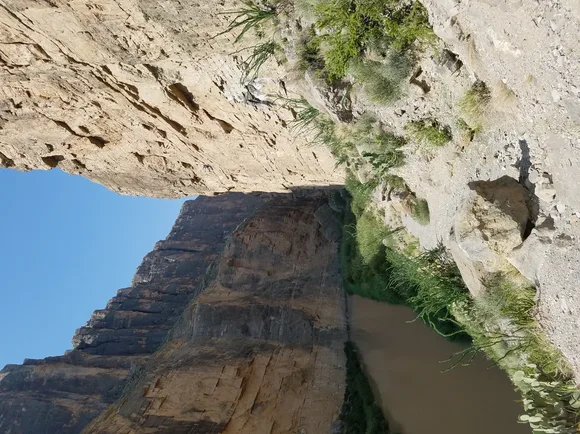
The remoteness that keeps crowds away also means kids get to experience a park that feels genuinely wild. Javelinas wander through campgrounds, roadrunners sprint across highways, and the night sky delivers views impossible near any major city. The Hot Springs Trail combines history and geology with the reward of warm water at trail's end. April remains shoulder season here, though by May the desert blooms and temperatures stay manageable through the long days.
Biscayne National Park
Ninety-five percent underwater / Closer to Miami than the Everglades
Biscayne flips the national park script entirely: trails matter less than what you can reach by boat or fins. The park protects the only living coral reef in the continental United States, which means snorkeling and diving aren't optional activities but the main event. You can paddle through mangrove forests where the roots create corridors narrow enough to touch both sides, then anchor off Elliott Key and step onto an island beach minutes from downtown Miami. The maritime heritage trail puts you on a snorkel route over six shipwrecks, each marked with mooring buoys and interpretive plaques you can read underwater.
The reef lies close enough to shore that even nervous swimmers can float above brain coral and sergeant majors without venturing into deep water.
Kids take to the protected waters immediately, especially at the Boca Chita Key harbor where the shallow bay stays calm and nurse sharks glide past the dock. Ranger programs run from the Dante Fascell Visitor Center, but the real education happens when you put your face in the water and realize the reef teams with life: parrotfish, spiny lobsters, and sea turtles that ignore snorkelers entirely. April offers ideal conditions before summer heat and storms push water temperatures into the uncomfortable range.
Black Canyon Of The Gunnison National Park
Steeper than anywhere in North America / Most visitors never heard of it
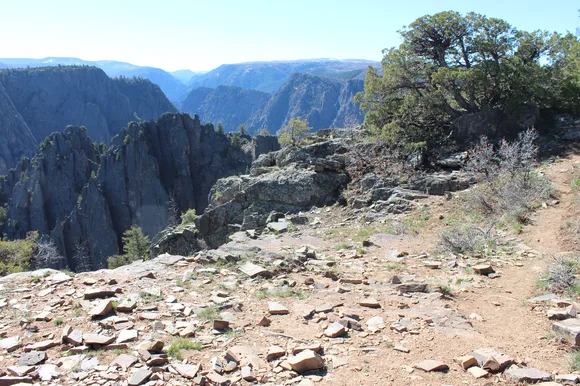
Black Canyon carved a gorge so narrow and deep that sunlight only reaches the bottom for thirty-three minutes a day in winter. The canyon attracts rock climbers willing to rappel into the abyss and tackle routes on 1.7-billion-year-old Precambrian gneiss, some of the oldest exposed rock on the continent. You can fish the Gunnison River if you're willing to descend the unmaintained routes that drop through poison ivy and loose scree, then cast to trophy trout in water few anglers ever reach. The kayaking and rafting opportunities require Class V skills, but they reward experts with water that cuts through walls darker than any other major canyon.
Stand at Chasm View and realize you're looking across a span narrower than the canyon is deep.
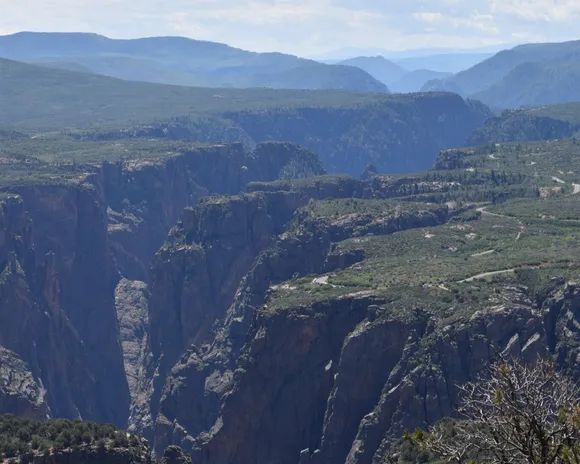
The South Rim Drive delivers overlooks that require nothing more than short walks from pullouts, while the Rim Rock Trail threads between viewpoints with exposure that feels dramatic without requiring technical skills. Kids respond to the Warner Point Nature Trail, where the self-guided stops explain how the river carved through mountain uplift faster than erosion could widen the walls. April weather makes rim hiking pleasant, though snow can linger at higher elevations into May.
Bryce Canyon National Park
Densest hoodoo forest on Earth / Packed overlooks by 10 AM
Bryce delivers from the rim overlooks, but descending into the hoodoos transforms the experience from viewing to immersion. The Scenic Drive connects fifteen viewpoints where you can shoot photos without leaving the car, while the Rim Trail strings them together on mostly flat terrain accessible to anyone who can walk a mile. Cross-country skiing takes over in winter when the hoodoos wear snow caps and the crowds disappear entirely. Horseback riding follows trails that drop into the amphitheater past formations with names like Thor's Hammer and Wall Street, where the walls close in tight enough to block the sun.
The Navajo Loop drops through Wall Street where Douglas firs grow from the canyon floor and hoodoos lean overhead.
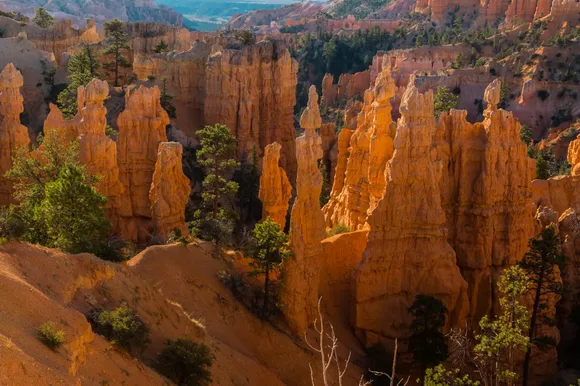
Kids gravitate to the Queens Garden Trail, where the formations suggest castle turrets and the grade stays manageable for short legs. The Junior Ranger program emphasizes geology in ways that click when you're surrounded by proof of erosion and uplift. April means moderate temperatures and possible snow that makes the orange rock pop against white, though you'll share overlooks with spring break crowds.
Canyonlands National Park
Four separate districts / Bigger than Los Angeles
Canyonlands spreads across territory so vast that each district functions like a separate park. Island in the Sky delivers overlooks where you can see multiple states and the confluence of the Colorado and Green rivers without hiking more than a few hundred yards. The Needles District opens up canyoneering and technical hiking through slot canyons and joint trails where the rock splits into passages narrow enough to scrape both shoulders. You can bike the White Rim Road, a 100-mile loop that takes three days and drops you into redrock landscape that sees a fraction of Island in the Sky's crowds. Kayakers paddle the flatwater sections of both rivers, while rafters hit the rapids downstream in Cataract Canyon.
Grand Viewpoint puts you at the edge where the plateau drops away and the distance swallows whole mountain ranges.
The Chesler Park Trail in the Needles rewards families willing to drive the rougher access road with formations that feel like outdoor architecture. Mesa Arch in Island in the Sky frames sunrise over the canyon in compositions that have launched a thousand Instagram accounts, but it pays off because the arch genuinely delivers. April hits perfect temps for exploring before the desert heat makes midday hiking dangerous.