8 national parks with the best fall birding
Eight national parks where October migration stacks warblers, raptors, and shorebirds in flyway funnels you can walk
Fall migration turns national parks into layover zones for millions of birds pushing south ahead of winter. The best birding doesn't happen in the parks with the most species counts — it happens where geography funnels migrants into tight corridors, where habitat diversity stacks warblers next to raptors next to shorebirds, and where October weather keeps you comfortable enough to stand still with binoculars for hours.
These eight parks earn their spots not for their year-round bird lists, but for what shows up between September and November when the continent's flyways converge on protected habitat.
Petrified Forest National Park
Painted Desert badlands meet ponderosa grasslands / Most people have never heard of it
Petrified Forest sits at the intersection of three ecosystems: high desert, grassland, and ponderosa transition. That convergence creates a stopover zone where raptors funnel through on their way to Mexico. Golden eagles, prairie falcons, and ferruginous hawks work the thermals above the Painted Desert while Swainson's hawks pass through in kettles that can number in the hundreds. Below them, Say's phoebes and rock wrens work the badlands for insects, and western meadowlarks call from the grasslands that border the park's northern edge.
The Painted Desert looks like Mars until a kettle of hawks spirals overhead and reminds you this is a working landscape.
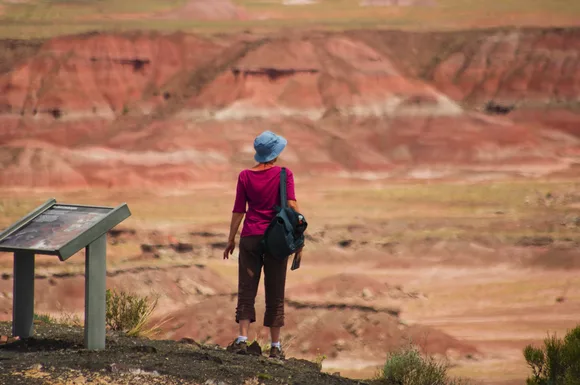
October brings the highest diversity, when resident species overlap with late-season migrants. Walk the Painted Desert Rim Trail at dawn and you'll spot horned larks, loggerhead shrikes, and mountain bluebirds against a backdrop of banded mudstone that shifts from lavender to rust as the sun rises. The twenty-eight-mile park road connects overlooks where you can scan for raptors without leaving your car, but the real birding happens on foot in the transition zones where desert meets grass.
Acadia National Park
Rocky Atlantic coast meets boreal forest / Packed in August, manageable by October
Acadia's granite coastline creates a natural landmark for songbirds island-hopping down the Atlantic flyway. Warblers, thrushes, and sparrows pile up along the shore in September, resting in the spruce-fir forest before launching across open water toward southern wintering grounds. The park's position on Mount Desert Island makes it both a stopover and a trap: birds that arrive exhausted from crossing the Gulf of Maine stay for days to refuel, giving birders extended looks at species that blow through inland sites in hours.
A single morning in Acadia's Sieur de Monts area can turn up twenty warbler species, all foraging within a hundred yards of the parking lot.
October shifts the focus to raptors. Sharp-shinned hawks and merlins hunt the island's edges, while peregrine falcons patrol the cliffs near Precipice Trail. Seabirds pass offshore: common eiders, black guillemots, and razorbills visible from the Park Loop Road overlooks. The Jordan Pond shoreline attracts resident species like black-backed woodpeckers and boreal chickadees, while the carriage roads offer quiet walking where you can scan for late-season migrants without competing for space with the August crowds.
Shenandoah National Park
105 miles of Blue Ridge ridgeline / More trail miles than most states have highways
Shenandoah's spine follows the Blue Ridge, which funnels migrating raptors south in concentrations that rival better-known hawkwatch sites. Broad-winged hawks peak in mid-September, sometimes passing in flocks that darken the sky, but October brings the sharpshinned hawks, Cooper's hawks, and red-tailed hawks that hunt the ridgeline thermals. Skyline Drive puts you at eye level with the flight path; pull into any overlook between Thornton Gap and Swift Run Gap and scan south for kettles forming over distant ridges.
The autumn raptor migration through Shenandoah happens at such volume that some days you stop counting and just watch.

Songbirds move through the park's oak-hickory forests in waves tied to weather fronts. A cold snap followed by northwest winds can deposit thousands of warblers, vireos, and thrushes in the hollows overnight. Dark Hollow Falls Trail and Limberlost Trail pass through forest types that attract different species: hermit thrushes in the hemlock groves, yellow-rumped warblers in the mixed hardwoods, and white-throated sparrows in the understory. By late October, most migrants have moved on, leaving behind resident species like tufted titmice and Carolina wrens that stay through winter.
Great Smoky Mountains National Park
America's most-visited park / Salamander capital of the continent
The Smokies sprawl across elevations that range from lowland coves to spruce-fir peaks, creating habitat zones that stack like layers in a cake. Fall migration here isn't a single event but a progression: flycatchers and tanagers move through the low-elevation forests in September, warblers work the mid-elevation slopes in early October, and boreal species like dark-eyed juncos and golden-crowned kinglets descend from the high peaks as temperatures drop. Cades Cove attracts raptors hunting the open fields, while the Alum Cave Trail passes through enough habitat types to turn up a dozen species in a single morning.
The Smokies don't funnel migrants so much as offer them a vertical buffet, with every elevation holding different species.
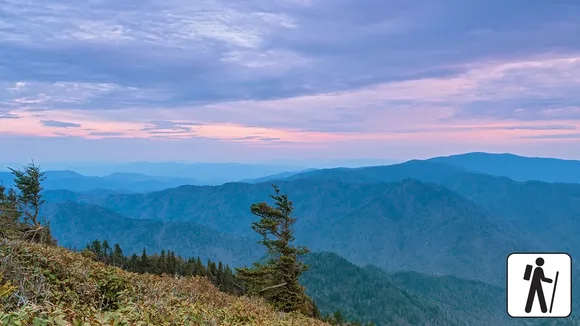
October traffic can be shoulder-to-shoulder on weekends, but the park's trail network spreads out the crowds. The Roaring Fork Motor Nature Trail offers quieter access to forest birding, where pileated woodpeckers and barred owls are year-round residents and where migrant thrushes forage in the leaf litter. Newfound Gap Road climbs from hardwood forest into spruce-fir habitat where red-breasted nuthatches and brown creepers work the bark, and where the occasional northern saw-whet owl roosts in the dense cover.
Everglades National Park
America's largest subtropical wilderness / Slow-moving river creating sawgrass marshes
The Everglades in October sit at the pivot point between wet and dry seasons. Water levels drop, concentrating fish and invertebrates into shrinking pools, which pulls in wading birds by the thousands. Wood storks, roseate spoonbills, and tricolored herons stalk the shallows along Anhinga Trail, close enough that you can hear their bills snap shut on prey. White pelicans arrive from northern breeding grounds to spend winter in Florida Bay, while swallow-tailed kites that nested in the park during summer have already left for South America.
Anhinga Trail in October feels less like a nature walk and more like a wading bird convention where you're the only mammal.
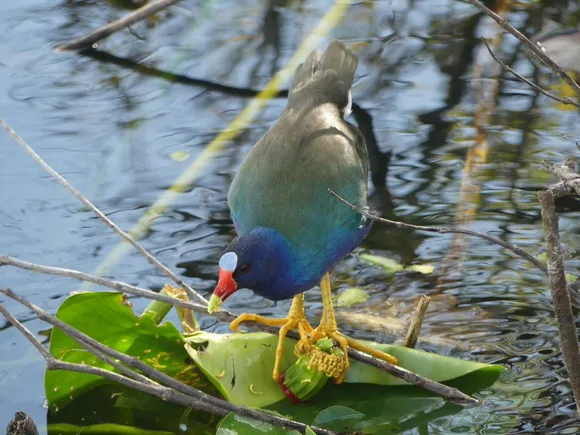
Shorebirds and terns work the mudflats at Eco Pond and Mrazek Pond, species lists that change week to week as migrants push through. Black-necked stilts, greater yellowlegs, and least sandpipers probe the mud while laughing gulls and royal terns patrol overhead. The real prize is diversity: a single morning can turn up forty species ranging from mangrove cuckoos in the hardwood hammocks to magnificent frigatebirds soaring over the coast. Mosquitoes drop off as dry season begins, making October the first comfortable month to stand still with binoculars.
Dry Tortugas National Park
Seven coral islands 70 miles west of Key West / Never finished, never fired upon
Dry Tortugas sits in the middle of the Gulf of Mexico with nothing but open water for hundreds of miles in any direction. That isolation makes it a critical stopover for exhausted migrants crossing from the Yucatan. Songbirds that arrive at Garden Key in fall drop into the few trees and shrubs around Fort Jefferson, sometimes piling up in such densities that a single sea grape tree holds five warbler species. October brings the peak fallout events, when cold fronts over the Gulf force migrants down to the only land available.
A fallout at Dry Tortugas turns Fort Jefferson's moat wall into standing room only for birders watching warblers forage at eye level.
The spectacle isn't limited to songbirds. Peregrine falcons hunt the exhausted migrants, while magnificent frigatebirds soar overhead and brown noddies nest in the fort's walls. Seabirds pass offshore: sooty terns, bridled terns, and occasional rarities like masked boobies. The fort itself acts as a migrant trap, with tired birds seeking shelter in the brick casemates and the handful of trees planted inside the walls. A dawn walk around the moat can turn up species that won't appear in mainland Florida for another week.
Virgin Islands National Park
Two-thirds of St. John protected / Sugar plantation ruins meet coral reefs
The Virgin Islands sit at the northern edge of the Caribbean, where migrant songbirds crossing from North America meet resident tropical species. October brings warblers, thrushes, and vireos into the dry forest along the Cinnamon Bay Loop Trail, often foraging alongside bananaquits and Caribbean elaenias that never leave the island. The overlap creates species lists that mix northern breeders with tropical residents, a combination you won't find on the mainland.
Birding Virgin Islands means watching a black-throated blue warbler forage in the same tree as a green-throated carib hummingbird that's never seen snow.
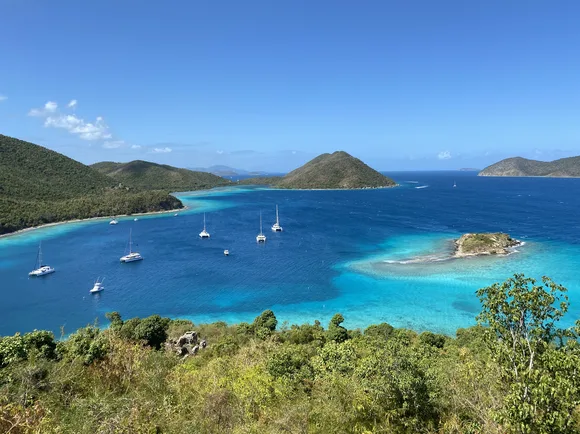
Shorebirds work the mangrove edges and coral beaches, species like ruddy turnstones and sanderlings that breed in the Arctic and winter in the tropics. The Annaberg Sugar Plantation Trail passes through secondary forest where thick-billed vireos and pearly-eyed thrashers call from the ruins, while brown pelicans and magnificent frigatebirds patrol the coastline. October temperatures stay in the low 80s with lower humidity than summer, making it comfortable to walk the exposed coastal trails where the best birding happens.
Biscayne National Park
Miami's skyline on the horizon / Continental United States' only living coral reef
Biscayne's mangrove shoreline and barrier islands create stopover habitat for songbirds migrating down the Atlantic coast. Elliott Key and Boca Chita Key act as stepping stones where exhausted migrants rest before continuing south, sometimes stacking up in the gumbo limbo trees and poisonwood groves during weather events. October brings warblers, vireos, and tanagers through the islands, while raptors like merlins and sharp-shinned hawks hunt the shoreline.
Biscayne proves that world-class birding doesn't require wilderness — just protected habitat in the right place at the right time.
Wading birds and shorebirds work the mangrove edges and tidal flats. Reddish egrets hunt the shallows with their distinctive hunting dance, while roseate spoonbills sweep their bills through the mud. The park's position between the mainland and the reef attracts seabirds: brown pelicans, royal terns, and occasional frigatebirds soaring on thermals. Most visitors arrive by boat, which means the islands stay quiet even when the reefs are crowded with snorkelers. A kayak tour through the mangrove channels turns up species that mainland parks miss.