8 national parks with the most waterfalls
Eight parks where waterfalls define the landscape, from Yosemite's iconic drops to North Cascades' glacial cascades almost nobody sees
Waterfalls define national parks differently than almost any other feature. A mountain peak or a canyon commands awe from a distance, but a waterfall pulls you in close — mist on your face, roar in your ears, the visceral proof that gravity and geology never stop negotiating. May is when snowmelt turns these parks into hydraulic theaters, when trails that were frozen in March now lead to curtains of water dropping hundreds of feet into plunge pools you can stand beside.
These eight parks deliver waterfalls in numbers and variety that set them apart. Some concentrate dozens into a single valley. Others scatter them across wilderness so vast you'll need days to reach the best cascades. What they share is an abundance of falling water that defines the landscape as much as the rock itself.
Yosemite National Park
More waterfalls in one valley than most states have in total / Peak flow happens now
Yosemite Valley concentrates waterfalls the way few places on Earth can manage. Yosemite Falls drops half a mile in three sections, visible from nearly every pullout on the valley floor. Bridalveil Fall throws itself off the south wall in a wind-tossed veil that never falls the same way twice. Vernal and Nevada Falls anchor the Mist Trail, a granite staircase where you'll climb through spray thick enough to soak through rain gear. By late summer, many of these falls reduce to trickles or vanish entirely, but in May they're running at full force.
The granite walls channel snowmelt into so many waterfalls that you stop trying to count them and just accept the valley as a place where water falls everywhere you look.

The Mist Trail to Vernal Fall puts you close enough to the cascade that the spray creates permanent rainbows on sunny mornings. Families with kids old enough to handle steep granite steps make this hike their Yosemite priority, and for good reason — it's one of the few trails in the park system where you finish soaking wet by choice. The upper section to Nevada Fall adds another four miles and significantly more elevation, but it also adds another waterfall and cuts the crowds in half.
Rocky Mountain National Park
Alpine waterfalls fed by snowfields that linger into July / Timed entry required
Rocky Mountain's waterfalls don't advertise themselves the way Yosemite's do. You'll find them tucked into glacial cirques, spilling over granite ledges on trails that climb toward the Continental Divide. Alberta Falls is the most accessible, a short hike from Glacier Gorge that rewards minimal effort with a 30-foot cascade framed by pines. The Sky Pond Trail pushes deeper into the backcountry, passing Timberline Falls and a series of smaller cascades before reaching a lake ringed by snowfields even in summer.
The waterfalls here feel like discoveries rather than destinations, rewards for hiking past the easy turnaround points where most visitors stop.
Ouzel Falls requires a longer commitment — nearly five miles each way through subalpine forest — but it delivers one of the park's tallest single drops and a trail that stays quieter than the Glacier Gorge corridor. May brings wildflowers to the lower elevations and keeps the high country snowbound, which means waterfall volume peaks just as the alpine lakes start to thaw. Kids handle the Alberta Falls hike easily, and the bridge over Glacier Creek gives them a safe vantage point to watch the water churn through boulders.
Glacier National Park
Glaciers feeding waterfalls that pour directly off cliffs / Going-to-the-Sun Road opens late May
Glacier's waterfalls come in two varieties: roadside spectacles you can see from your car window and backcountry cascades that require serious hiking. Bird Woman Falls drops 560 feet in a single tier visible from Going-to-the-Sun Road, a ribbon of water that seems to emerge directly from the hanging valley above. St. Mary Falls and Virginia Falls both sit less than two miles from trailheads, making them accessible to families who want a taste of the backcountry without committing to an all-day trek.
The park's glaciers are disappearing, but for now they keep feeding waterfalls that hit peak flow exactly when Going-to-the-Sun Road opens for the season.
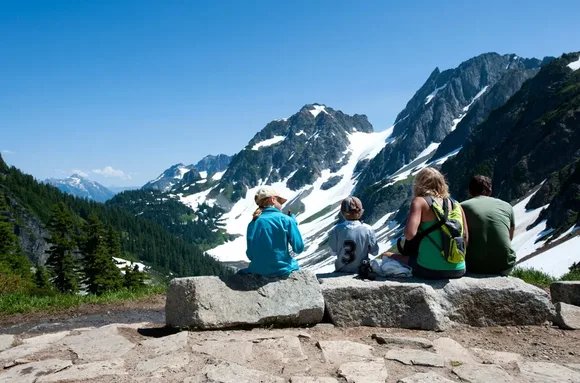
The Grinnell Glacier Trail passes three waterfalls on its way to the glacier itself, each one fed by meltwater that's been locked in ice for decades or longer. May is early for this trail — you'll likely hit snow before reaching the glacier — but the lower waterfalls are accessible and running at volumes you won't see later in summer. The Many Glacier area concentrates more waterfalls into a smaller space than any other section of the park, with trails to Redrock Falls, Ptarmigan Falls, and several unnamed cascades that appear wherever creeks drop off ledges.
Mount Rainier National Park
More glacial meltwater than any peak in the Lower 48 / Paradise lives up to its name
Mount Rainier manufactures waterfalls the way a factory produces widgets. The mountain holds more glacial ice than all other Cascade peaks combined, and that ice melts into five major river systems that carve through old-growth forest on their way to Puget Sound. Comet Falls drops 320 feet through a mossy amphitheater reached by a moderate trail that gains elevation steadily but never brutally. Narada Falls sits right off the road to Paradise, a two-tier cascade you can view from a bridge that puts you at eye level with the upper drop.
The waterfalls here aren't side attractions — they're the visible proof that the mountain is slowly tearing itself apart through the work of ice and gravity.
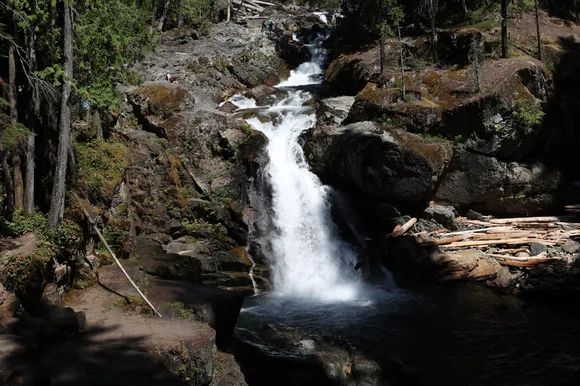
Christine Falls arches under a stone bridge on the road to Paradise, one of the most photographed waterfalls in the park system despite being only 40 feet tall. The setting matters more than the height — moss-covered rocks, old-growth forest, and the kind of Pacific Northwest green that doesn't exist anywhere else. May brings high water to all of Rainier's falls, but it also brings crowds to Paradise. The Comet Falls trail stays quieter, partly because it requires more effort and partly because most visitors never make it past the roadside viewpoints.
Olympic National Park
Rainforest waterfalls and alpine cascades in the same park / Three ecosystems, countless falls
Olympic's waterfalls range from roadside stunners to multi-day backpacking objectives, which makes sense for a park that holds rainforest, alpine peaks, and wild coastline. Marymere Falls is the accessible option — a short trail through old-growth forest to a 90-foot cascade that drops into a grotto so green it looks artificially lit. Sol Duc Falls gets more visitors because it sits closer to the main lodge, but it's worth the company: three channels of water converge in a narrow canyon carved through basalt.
The rainforest waterfalls run year-round, fed by rainfall measured in feet rather than inches, but May brings snowmelt from the high country and doubles their volume.
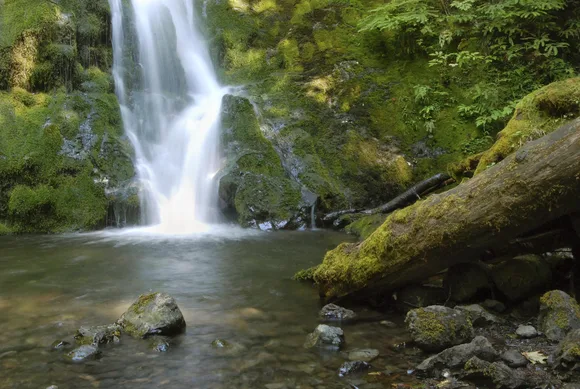
The Hoh River Trail follows its namesake river for miles through temperate rainforest, passing countless unnamed cascades where side creeks tumble over nurse logs and mossy boulders. This isn't waterfall hiking in the traditional sense — you're not climbing to a single spectacular drop. Instead, you're walking through a landscape where water falls constantly, in a hundred different forms, from mist condensing off branches to whitewater rapids carving through bedrock. Kids love the accessibility of Marymere Falls, and the loop trail option means you can return via a different route through the forest.
Sequoia & Kings Canyon National Parks
Waterfalls dropping through giant sequoia groves / The park's size absorbs the crowds
Mist Falls in Kings Canyon drops 80 feet at the end of a moderate trail that follows the South Fork of the Kings River through granite country. The trail gains elevation steadily but never steeply, and by May the waterfall is running hard enough to justify its name — you'll feel the spray from the viewing area. Tokopah Falls in Sequoia requires a longer hike, nearly four miles round trip, but it delivers a 1,200-foot cascade that drops in multiple tiers down a granite cliff visible for the last mile of trail.
These parks stay quieter than their Sierra Nevada neighbor to the north, which means waterfall trails that would be shoulder-to-shoulder in Yosemite feel almost private here.

Grizzly Falls sits right off Highway 180, a roadside waterfall that most people photograph from the parking area without bothering to hike. The short trail to the base puts you close enough to feel the spray and see rainbow patterns in the mist, and it's gentle enough for families with young kids who need a break from the car. May is ideal timing — the waterfalls are fed by snowmelt from the high Sierra, and the giant sequoia groves at lower elevations are free of snow and comfortable for hiking.
North Cascades National Park
More glaciers than any Lower 48 park outside Alaska / Almost nobody knows it exists
Three hundred glaciers feeding countless waterfalls, and annual visitation that wouldn't fill a small college football stadium. North Cascades defies the logic of national park popularity — it's drop-dead spectacular and almost empty. Rainbow Falls drops 312 feet near the town of Stehekin, accessible only by boat, foot, or floatplane. Gorge Creek Falls sits directly beside the North Cascades Highway, a 242-foot cascade you can view from a bridge without leaving pavement.
The waterfalls here outnumber the visitors, which creates the strange experience of hiking to major cascades and finding nobody at the overlooks.
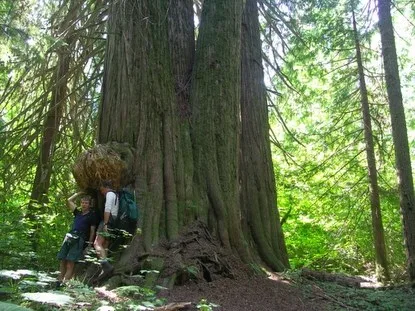
Ladder Creek Falls gets lit by colored lights after dark from late May through September, a quirky feature installed by Seattle City Light at the hydroelectric dam. The trail is short and paved, suitable for families with strollers, and the falls themselves are worth seeing even without the light show. May brings high water from snowmelt throughout the Cascades, and it's early enough in the season that you'll beat the limited summer crowds. The park's trail system accesses dozens of waterfalls, most of them unnamed, many of them visible from established paths without needing to bushwhack.
Cuyahoga Valley National Park
Brandywine Falls and 65 other named waterfalls / Twenty minutes from downtown Cleveland
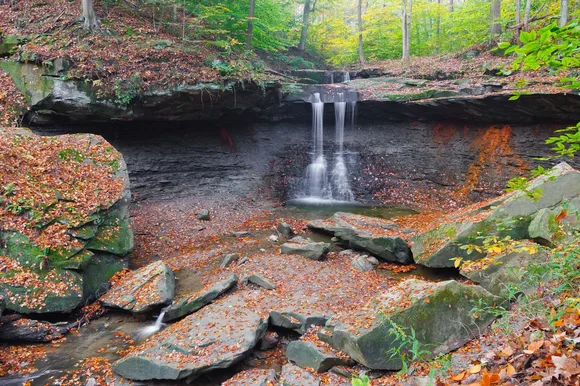
Cuyahoga Valley doesn't fit the Western waterfall template, but it delivers waterfalls in surprising numbers for a Midwest park surrounded by suburbs. Brandywine Falls drops 65 feet over Berea Sandstone, accessible via a short boardwalk trail that includes an observation deck positioned for ideal viewing angles. Blue Hen Falls requires a longer hike through hemlock forest, but the payoff is a 15-foot cascade that feels more remote than its proximity to Cleveland suggests.
The waterfalls here run year-round, fed by tributaries of the Cuyahoga River rather than seasonal snowmelt, which makes them reliable in ways Western cascades aren't.
The Ledges Trail passes several smaller waterfalls and seasonal seeps where water trickles through the distinctive Berea Sandstone formations. May brings spring runoff that boosts waterfall volume throughout the park, and the forest canopy leafs out without yet creating the dense shade that blocks views later in summer. The Brandywine Falls boardwalk is accessible for wheelchairs and strollers, making it one of the most family-friendly waterfall experiences in the park system. Kids can safely view the falls from multiple angles without parents worrying about cliff edges or slippery rocks.