8 parks where wildlife viewing peaks in summer
Eight parks where alpine terrain and open landscapes turn summer into peak season for watching bears, wolves, and herds
Summer wildlife viewing isn't about luck. It's about timing, terrain, and knowing where animals congregate when the rest of the West bakes under triple-digit heat. The parks below share two advantages: alpine or subarctic climates that keep animals active through July and August, and open terrain where you can actually see what you came for. No squinting into dense forest hoping for movement.
These aren't zoos. You'll need patience, binoculars, and a willingness to wake up early or stay out past dinner. But the payoff is watching grizzlies dig for roots in subalpine meadows, wolves traverse valleys at dawn, and brown bears stand shoulder-to-shoulder at salmon streams where the fish are so thick you can count them from the platform.
Yellowstone National Park
More trail miles than most states have highways / Bison herds that stop traffic on schedule
Lamar Valley in July looks like the Serengeti with conifers. Bison herds number in the hundreds, visible from pullouts along the Northeast Entrance Road. Grizzlies and black bears work the meadows at dawn and dusk, digging for roots and turning over logs. Wolves den in the northern range, and if you join the crowd with spotting scopes at Slough Creek or Lamar, you'll likely catch a pack moving through sagebrush or bedded on a hillside.
Yellowstone's wildlife doesn't hide in summer because the food is everywhere and the tourists stay predictably near the geysers.
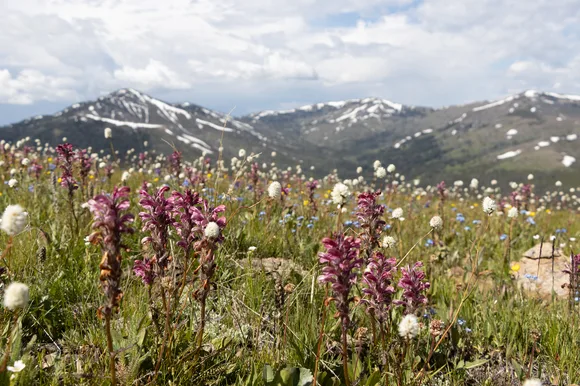
The Hayden Valley on the park's central plateau delivers another concentration point: bison, elk, and the occasional grizzly cruising the Yellowstone River corridor. You'll share the roadside with dozens of other viewers, but the valley is wide enough that animals stay wild and visible. Old Faithful to Morning Glory Pool offers a gentle walk where bison graze between thermal features, close enough to remind you why the park enforces the 25-yard rule.
Grand Teton National Park
Jagged peaks drop 7,000 feet without foothills / Moose in willows, bears on talus slopes
The Tetons compress wildlife into a narrow corridor between mountain and valley floor. Moose wade through willow flats along the Snake River and Oxbow Bend, visible from pullouts without leaving your car. Black bears forage talus slopes below Cascade Canyon and Delta Lake, and grizzlies work the higher benches near Paintbrush Divide. You won't see Yellowstone's herds here, but the vertical relief means animals concentrate where water and forage meet.
Grand Teton's wildlife viewing rewards those who stop moving and scan the middle distance where forest meets meadow.
Jackson Lake's north shore and the Colter Bay area attract elk in early morning, and pronghorn range the flats near Kelly. The park's smaller size means fewer guaranteed sightings than Yellowstone, but the drama of a grizzly crossing a scree field below the Cathedral Group beats a traffic jam full of bison any day. String Lake Trail and Laurance Rockefeller Preserve Loop both offer quiet hiking where you'll trade crowds for the chance to surprise a moose at a creek crossing.
Denali National Park & Preserve
One road for 92 miles / Grizzlies outnumber summit views of the mountain
Denali's single Park Road forces wildlife and visitors into the same corridor, and the open tundra means you can spot animals from miles away. Grizzlies dig for ground squirrels on slopes above Sable Pass and Polychrome Overlook. Caribou herds move through Teklanika River drainages. Dall sheep dot the ridges near Igloo Canyon and Primrose Ridge, white against gray scree. Wolves hunt the valleys, though sightings require patience and a willingness to wait with a spotting scope while other passengers on the shuttle bus fidget.
Denali's tundra doesn't let animals hide, which means you'll spend more time watching behavior than searching for movement.
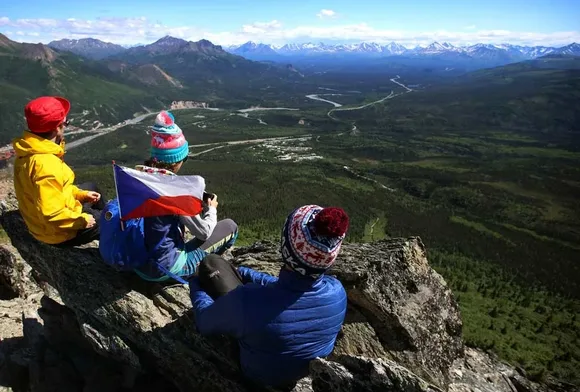
Most visitors see their first grizzly within the first 30 miles of the Park Road. By mile 60, near Wonder Lake, you're deep enough into the interior that animal density peaks and human density drops. The mountain itself hides behind clouds two-thirds of the time, but the wildlife shows up regardless. Mount Healy Overlook Trail near the park entrance offers a leg-stretcher with views over the Nenana River valley where moose browse willows below.
Glacier National Park
700 miles of trails through grizzly country / Mountain goats on cliffs you can't reach
Glacier's wildlife disperses across creek drainages and alpine basins, which means you'll need to hike to find it. Mountain goats claim the cliffs around Hidden Lake Overlook and Grinnell Glacier, visible from trails but always just out of reach. Grizzlies work huckleberry patches on slopes above Many Glacier and along Gunsight Pass. Black bears appear more often near Lake McDonald and Apgar, where forest cover gives them confidence to browse closer to roads.
Glacier's animals don't perform for visitors; you earn your sightings by going where most people turn around.
Bighorn sheep frequent the cliffs around Logan Pass, and if you hike Iceberg Lake or Grinnell Glacier Trail, you'll likely spot them on talus slopes above the trail. Moose browse wetlands near Bowman Lake and in the North Fork drainage. The park's size absorbs the crowds, but prime wildlife habitat overlaps with popular trails, so carry bear spray and make noise in dense cover. Going-to-the-Sun Road offers roadside viewing, but the real concentration is deeper in the backcountry where day hikers thin out.
Sequoia & Kings Canyon National Parks
Giant sequoias and black bears in the same frame / Fewer people than Yosemite next door
Black bears own the Giant Forest and Cedar Grove in summer, and they've learned that campgrounds and parking lots deliver easy calories. You'll see them in broad daylight near Lodgepole, Crescent Meadow, and along the General Sherman Tree Trail. Mule deer browse meadows at Zumwalt and Round, visible from short walks off Generals Highway. The High Sierra backcountry above Rae Lakes holds marmots, pikas, and the occasional black bear, but most wildlife action happens below 8,000 feet where sequoias meet foothills.
Sequoia's black bears are habituated to people but not tame, which creates a false sense of safety until one charges your cooler.
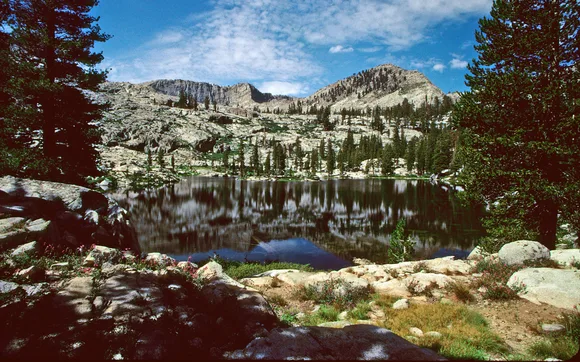
Kings Canyon's deeper valleys and granite walls concentrate wildlife along the South Fork Kings River. Mist Falls Trail passes through bear territory where you'll find scat and claw marks on trees, even if the bears themselves stay hidden in manzanita. The park's relative obscurity compared to Yosemite means animals tolerate less human pressure, and if you're willing to backpack the High Sierra Trail or Rae Lakes Loop, you'll encounter wilderness that feels genuinely remote.
Rocky Mountain National Park
Elk bugle in September but graze all summer / Alpine tundra above treeline where pikas scream warnings
Rocky Mountain's elk herds are the headline act, and they're visible year-round in the Kawuneeche Valley on the park's west side and around Moraine Park on the east. Summer sees them grazing meadows in early morning and late evening, bedded in shade during midday heat. Bighorn sheep frequent the slopes above Sheep Lakes near Horseshoe Park, close enough to photograph from the roadside. Mule deer browse aspen groves, and if you hike above treeline on Trail Ridge Road or the Longs Peak Trail, you'll hear pikas calling from rockpiles and spot marmots sunning on boulders.
Rocky Mountain delivers roadside elk viewing that rivals Yellowstone without the four-hour drive between valleys.

Moose inhabit willow carrs along the Colorado River on the west side, though sightings are less reliable than elk. Black bears work the forest between Bear Lake and Glacier Gorge, but tree cover makes them harder to spot than in more open parks. The real advantage here is density: you can see multiple species in a single morning without covering 50 miles of road. Emerald Lake Trail and Bear Lake Loop both pass through habitat where deer, elk, and birds outnumber the hikers.
Glacier Bay National Park & Preserve
Humpback whales in the fjord / Reachable only by boat or floatplane
Glacier Bay's wildlife viewing happens from the water, not the trail. Humpback whales feed in the lower bay from June through August, surfacing close enough to tour boats that you can hear them exhale. Orcas patrol the outer coast. Sea otters raft in kelp beds near Bartlett Cove. Harbor seals haul out on icebergs calved from tidewater glaciers, and if you're kayaking the fjord's upper arms, you'll paddle past seals so habituated to ice that they barely register your presence.
Glacier Bay compresses marine wildlife into a 65-mile fjord where every boat trip doubles as a floating observation platform.
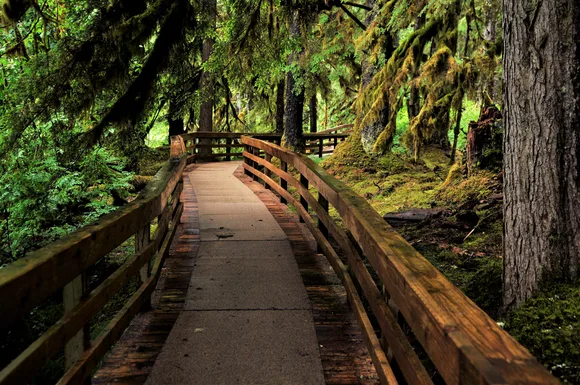
Brown bears fish salmon streams along the shoreline, visible from kayaks or cruise ships but inaccessible on foot unless you're a backcountry kayaker with a week to spare. Black bears roam the temperate rainforest near Bartlett Cove, and the Forest Loop Trail offers a chance to spot them in dense Sitka spruce and hemlock. Mountain goats cling to cliffs above the glaciers, white dots against gray rock. Most visitors see their wildlife from a day boat tour out of Bartlett Cove, which covers the bay's length in eight hours and delivers whales, seals, and seabirds without requiring advanced planning.
Katmai National Park & Preserve
Brooks Falls holds 2,200 brown bears / North America's largest protected population in one watershed
Katmai exists for one reason: to watch brown bears catch salmon in mid-air at Brooks Falls. July brings the first salmon run, and bears line the falls' lip, swiping at sockeye as they leap upstream. The elevated platforms put you 50 yards from bears fishing, fighting, and teaching cubs to hunt. You'll see a dozen bears in an hour during peak runs, more concentrated bear activity than anywhere else on the continent.
Brooks Falls turns bear watching into theater: every jump, every catch, every stolen fish happens in full view of the platform.
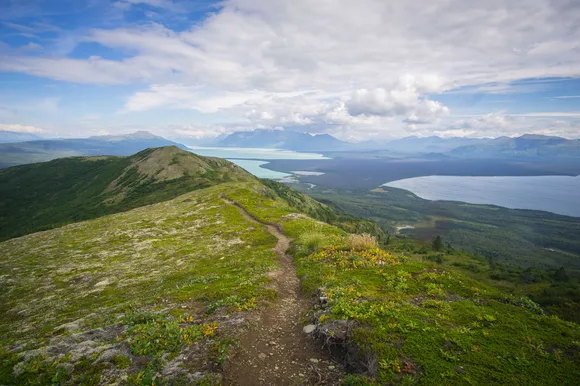
The park's remoteness filters out casual visitors. You'll fly in on a floatplane from King Salmon, land on Naknek Lake, and walk a mile to Brooks Camp through bear country that requires an orientation session before they let you on the trail. September's second salmon run draws even more bears as they fatten up for hibernation, but July offers longer daylight and better weather. The Valley of Ten Thousand Smokes bus tour delivers volcanic landscapes and the occasional bear crossing tundra, but Brooks Falls is why you're here.