8 parks with the best visitor centers
Eight parks where the visitor centers are worth planning your day around and ranger programs translate geology into stories
Most national parks invest in visitor centers the way airports invest in terminal lounges: fluorescent lighting, taxidermy dioramas, and a gift shop selling the same field guide you can order online. But a few parks built centers that matter, where rangers translate geology in real time, exhibits orient you before you waste a day driving in circles, and the architecture itself becomes part of the story. These eight parks share two traits: visitor centers worth planning your itinerary around, and ranger programs that turn casual tourists into people who actually understand what they're looking at.
June is the best time to experience both. Rangers staff the centers at full capacity, Junior Ranger programs launch summer schedules, and interpretive talks run multiple times daily. You'll trade elbow room at the most popular parks for access to expertise you can't get from a trailhead sign.
Mesa Verde National Park
Seven hundred cliff dwellings carved into sandstone alcoves / Most people have never heard of it
The Chapin Mesa Archeological Museum sits where the park road forks, forcing every visitor to make a decision: drive deeper into the mesa or turn around confused. The museum solves that problem in fifteen minutes. Exhibits explain why the Ancestral Pueblo people built entire villages into cliff alcoves in the 1200s, then abandoned them a century later. You'll see pottery fragments, tools, and reconstructed rooms that prepare you for what a 150-room dwelling actually looks like when you're standing in front of Cliff Palace an hour later.
Mesa Verde makes you work for it: every major cliff dwelling requires a ranger-guided tour, a ladder descent, or both.
Ranger programs here aren't optional. You can't access Cliff Palace or Balcony House without a ticket and a guide who'll walk you through rooms where families cooked, slept, and stored grain eight centuries ago. The tours book out days in advance in June, and rangers tell stories the plaques don't: how archaeologists dated the structures by tree rings, why doorways were built shoulder-width, what happened to the people who left. Kids qualify for Junior Ranger badges by sketching pottery designs and interviewing a ranger, which turns a history lesson into a scavenger hunt.
Glacier National Park
More than 700 trail miles winding through alpine valleys / Rangers who'll rewrite your itinerary
The Apgar Visitor Center at the west entrance operates as triage for people who drove 12 hours without a plan. Rangers staff a counter where they'll ask three questions: how many days do you have, what's your hiking tolerance, and did you get a vehicle reservation for Going-to-the-Sun Road. Your answers determine whether you're sent to Many Glacier for grizzly sightings, Lake McDonald for family-friendly paddling, or back to your car to rethink your timeline. The center's relief map shows the full scope of the park, which sprawls across an area twice the size of Rhode Island.
Glacier's visitor centers function less like museums and more like base camps where you learn which valleys still have snow in June.
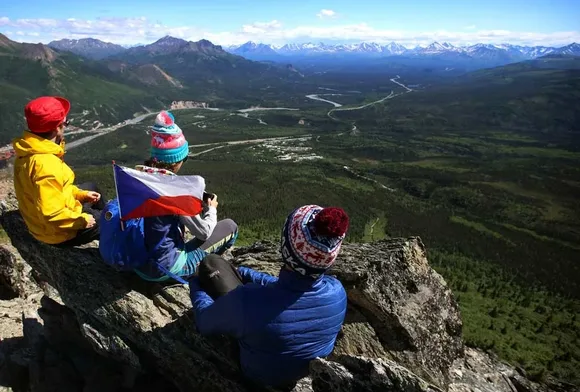
Logan Pass Visitor Center, perched at the high point of Going-to-the-Sun Road, offers interpretive talks on glacial geology every hour. Rangers explain why only 26 glaciers remain from the 150 that carved these valleys, and why the park will likely be glacier-free by 2030. The Hidden Lake Overlook Trail starts right outside the center: a boardwalk through alpine meadows where bighorn sheep graze and marmots whistle from the rocks. Junior Rangers can complete activity books at any visitor center, but the Logan Pass version includes a wildlife checklist that turns the drive into a game of spotting mountain goats and hoary marmots.
Yosemite National Park
Granite cliffs that rise half a mile straight up / Valley shuttle stops at every trailhead
Yosemite Valley Visitor Center anchors the park's public transit system, where free shuttles connect campgrounds, trailheads, and lodges in a loop that runs every 10 minutes. The center itself holds exhibits on John Muir, the glaciers that carved the valley, and the 1916 rockslide that reshaped Yosemite Falls. But the real value is the orientation: rangers help you understand that Yosemite isn't just the valley floor. Tuolumne Meadows, Mariposa Grove, and Hetch Hetchy are all day trips from here, and most first-time visitors never learn they exist.
Yosemite's visitor centers save you from the mistake of spending three days staring at El Capitan from the same parking lot.
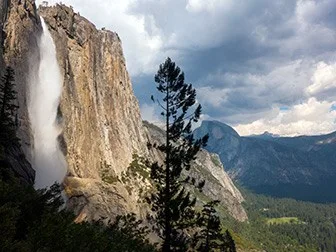
Ranger-led programs run throughout the valley: geology walks to the base of Yosemite Falls, night sky talks at Glacier Point, and photography workshops at Tunnel View. The Junior Ranger program includes a scavenger hunt through the visitor center, where kids match animal tracks to species and learn why black bears don't hibernate in Yosemite's mild winters. The Ansel Adams Gallery sits next door, and while it's not park-operated, it explains why this valley launched more photography careers than any landscape in America.
Grand Canyon National Park
Two billion years of rock stacked in horizontal bands / Draws more people than Los Angeles
Grand Canyon Visitor Center at the South Rim functions as the park's mandatory first stop, whether you planned it or not. Rangers direct traffic to overlooks, explain why hiking to the river and back in one day will put you in the hospital, and hand out trail maps color-coded by difficulty. The exhibits trace the canyon's formation: how the Colorado River carved through layer after layer of limestone, sandstone, and schist over six million years. A relief map shows the canyon's full 277-mile length, which helps visitors grasp that the viewpoints they'll drive between represent tiny fractions of the whole.
The Grand Canyon's visitor center exists mostly to convince tourists that no, you cannot hike to the bottom and back before lunch.
Ranger programs focus on the canyon's depth: geology talks at Mather Point, condor spotting at the rim, and night sky programs where rangers point out constellations over the North Rim's silhouette. Junior Rangers complete activity books by sketching rock layers and interviewing visitors from other states, which turns the crowded rim trail into a social expedition. The Yavapai Geology Museum sits a mile east, with floor-to-ceiling windows overlooking the canyon and exhibits explaining the Great Unconformity, where 1.2 billion years of rock simply vanished from the geologic record.
Denali National Park & Preserve
North America's tallest peak anchors six million acres / One road, zero cell service
The Denali Visitor Center sits at Mile 1.5 of the park's single road, the last place you'll see pavement, Wi-Fi, or other humans in any concentration. Rangers staff a counter where they'll explain the shuttle system, because private vehicles can't drive past Mile 15 unless you're camping in the backcountry. The center's exhibits focus on the Alaska Range, the geology that built Denali to over 20,000 feet, and the grizzlies, wolves, and caribou you'll likely see from the bus. A topographic model shows the mountain's full mass, which helps visitors understand why summit weather changes by the hour and why climbers spend three weeks attempting it.
Denali's visitor center operates less like an orientation and more like a briefing: this is wilderness, you're just visiting, act accordingly.
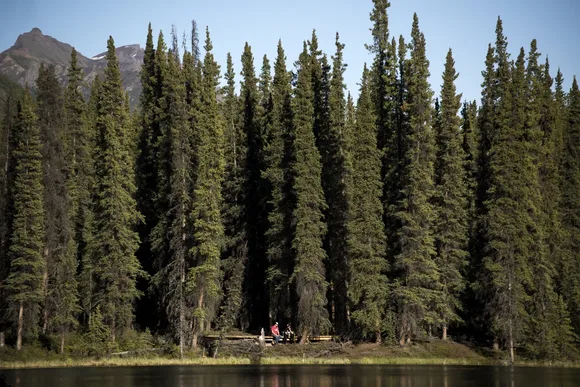
Ranger programs include sled dog demonstrations at the kennels, where working dogs help patrol the backcountry in winter. Junior Rangers learn to identify animal tracks in the tundra, sketch wildflowers, and complete a wildlife bingo card during shuttle rides. The programs assume kids can handle real information: what grizzlies eat, why wolves hunt in packs, how tundra plants survive subzero winters. June brings 20 hours of daylight, which means evening ranger talks run at 9 PM under skies that never quite darken.
Olympic National Park
Three ecosystems most parks never combine / Temperate rainforest, glacier-capped peaks, wild coast
Olympic operates three separate visitor centers because the park sprawls across ecosystems that don't logically connect: the Hoh Rain Forest on the west side, Hurricane Ridge in the mountains, and the coastal strip near Kalaloch. The main visitor center in Port Angeles serves as mission control, where rangers help you decide which ecosystem to prioritize. Most visitors try to see all three in one day, which rangers will gently discourage. The center's exhibits explain how the Olympic Mountains wring 12 feet of rain annually from Pacific storms, creating rainforests where Sitka spruce grow 300 feet tall and moss blankets every surface.
Olympic's visitor centers exist to prevent the mistake of driving six hours roundtrip only to find Hurricane Ridge socked in by clouds.
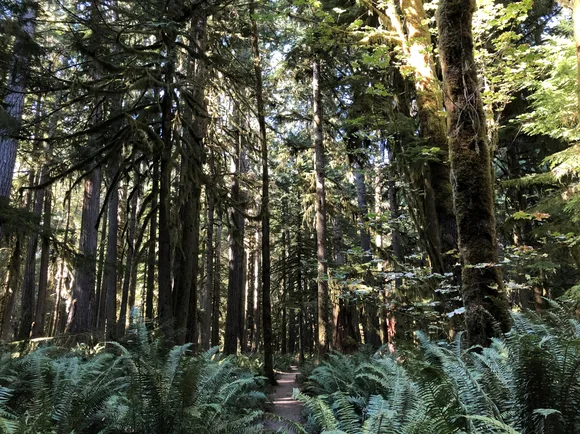
Ranger programs vary by location: tide pool talks at Kalaloch, alpine wildflower walks at Hurricane Ridge, and rainforest ecology hikes in the Hoh, where rangers point out nurse logs and explain how fallen trees become soil. Junior Rangers complete different activity books depending on which ecosystem they visit, which encourages families to return and explore the coast if they spent their first day in the mountains. The Hurricane Ridge Visitor Center offers the park's most dramatic views: Mount Olympus and its glaciers dominate the southern horizon, visible from a wheelchair-accessible overlook.
Carlsbad Caverns National Park
A 600-foot limestone cavern beneath the Chihuahuan Desert / 400,000 bats spiral out at dusk
The visitor center at Carlsbad sits at the cave's natural entrance, which means you're 750 feet above the Big Room and about to descend a switchback trail into darkness. Rangers at the center explain the cave's formation: not by water erosion like most caverns, but by sulfuric acid that dissolved the limestone from below. That chemistry created formations you won't see anywhere else, including the massive stalagmites and draperies in the King's Palace. The center's exhibits cover the cave's discovery in the early 1900s, when miners harvested bat guano for fertilizer and stumbled into rooms the size of football fields.
Carlsbad's visitor center prepares you for the moment you step into the Big Room and realize you're standing inside a mountain.
Ranger-led tours descend into sections the self-guided route doesn't reach: the King's Palace requires a guided group, and the more adventurous Spider Cave and Hall of the White Giant tours involve crawling through tight passages. The evening bat flight program runs from late May through October, when Mexican free-tailed bats exit the cave in a spiral cloud that takes 45 minutes to fully emerge. Junior Rangers complete activity books by sketching cave formations, learning bat echolocation, and attending a ranger talk in the underground lunchroom, which sits 750 feet below the desert.
Acadia National Park
Rocky Atlantic coast crowned by Cadillac Mountain / Expect packed trailheads and full parking lots
Hulls Cove Visitor Center sits at the start of Park Loop Road, where rangers hand out tide charts, carriage road maps, and warnings about Cadillac Mountain's summit parking. The center's exhibits focus on the island's glacial history, the Rockefeller family's role in building the carriage roads, and the 1947 fire that reshaped the forest. But the real service is logistical: rangers explain that you need reservations to drive up Cadillac before dawn, that Jordan Pond fills by 9 AM, and that the Island Explorer shuttle system connects every major trailhead without the parking stress.
Acadia's visitor center operates as crowd control, steering tourists away from the same three overlooks everyone photographs.
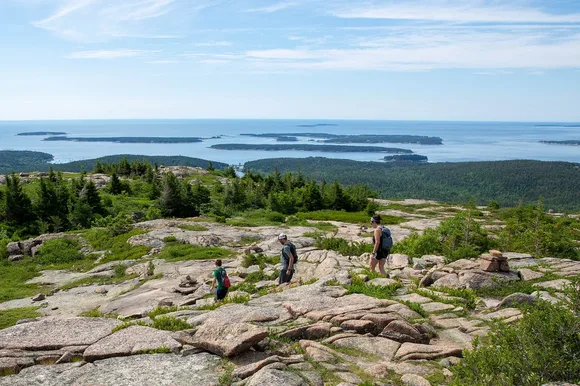
Ranger programs include tidal pool walks at Sand Beach, birding hikes along the Schoodic Peninsula, and geology talks at Thunder Hole, where waves crash into a narrow inlet and compress air into a booming exhale. Junior Rangers complete books by identifying intertidal species, learning how glaciers carved the island, and attending a ranger program that explains why Cadillac Mountain gets the first sunrise in the United States from October through March, but not in summer. The Sieur de Monts Nature Center offers a quieter alternative to Hulls Cove, with exhibits on Acadia's wildflowers and trails that loop through birch forests instead of along the crowded coast.