Acadia vs Great Smoky Mountains: Which Park Should You Visit?
Acadia packs ocean drama into a compact granite jewel. The Smokies sprawl across ridges built for endurance hiking
Acadia and Great Smoky Mountains sit at opposite ends of the national park experience. One packs ocean drama into a compact coastal jewel you can lap in an afternoon. The other sprawls across mountain ridges so vast you could hike for weeks and still find new hollows. Both draw crowds that rival any park in the system, but April splits them cleanly: Acadia is just waking up from winter while the Smokies hit peak bloom.
The choice isn't really about which park is better. It's about what you want from the trip and how much driving you're willing to do to get there.
Acadia National Park
Rocky Atlantic coast meets granite peaks / Smaller than most beach towns but packed every summer
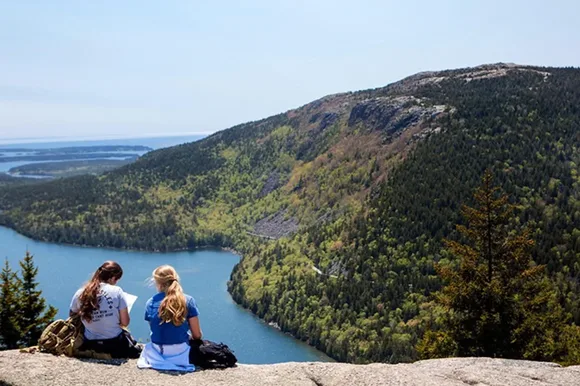
You can stand on Cadillac Mountain and see the entire park spread below you: islands, peninsulas, and a road system that stitches it all together in about thirty miles. Acadia is the rare national park that rewards efficiency. The Loop Road delivers ocean views, Thunder Hole's crashing waves, and trailheads to some of the best granite scrambles in the East, all within two hours of driving. Most people focus on Mount Desert Island, where Jordan Pond reflects The Bubbles and carriage roads built by the Rockefellers wind through forests without a single car.
Acadia gives you granite cliffs plunging straight into the Atlantic, which means every viewpoint comes with the smell of salt and seaweed.
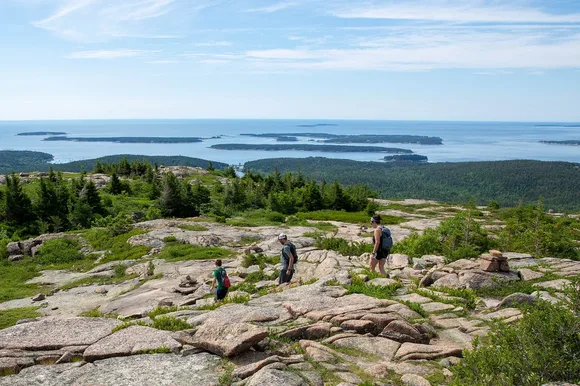
April in Acadia means mud season. Trails stay wet, some carriage roads close for maintenance, and the park feels distinctly off-season. You'll avoid the August madness when parking lots fill by 8 AM, but you're gambling on weather: temperatures hover in the 40s, and spring arrives late this far north. The Beehive and Precipice trails, both equipped with iron rungs for exposed scrambling, don't open until peregrine falcons finish nesting in May. If you're planning an April visit, think of it as a scouting trip for a return later in the year.
Great Smoky Mountains National Park
More visitors than any other park / Ten times the size of Acadia with trails to match
The Smokies are what happens when a national park gets plopped between two interstates with no entrance fee. Traffic backs up through Cades Cove on weekends, and the Laurel Falls trail becomes a parade of families, church groups, and couples on first dates. But the park absorbs the crowds because it's enormous. Once you're a few miles into the backcountry, the only sound is water running over rocks and woodpeckers hammering dead chestnuts. The park has more than five times the trail mileage of Acadia, which means even popular routes like Alum Cave feel spacious compared to the Precipice on a Saturday morning.
April is when the Smokies earn their reputation: wildflowers carpet every cove, and the crowds haven't arrived yet.
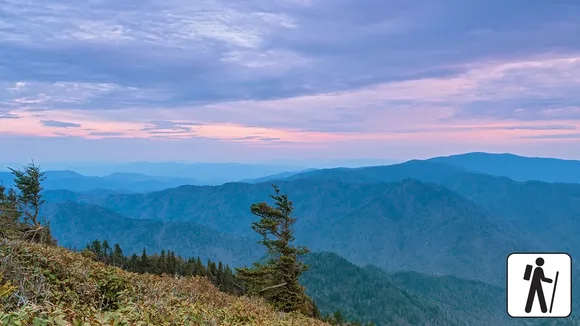
Spring arrives in waves here, starting in the valleys and creeping upslope through April and May. Cades Cove explodes with trillium and bloodroot while Clingmans Dome, the park's highest point, stays locked in winter. You can hike through three seasons in a single day if you're willing to chase elevation. The only downside: spring rain is relentless, and the humidity makes 60 degrees feel warmer than it sounds. Waterfalls run heavy, which means Rainbow Falls and Abrams Falls are worth the muddy approaches.
Getting There
Acadia sits two hours north of Portland, which means you're either flying into a regional airport or committing to a drive from Boston. Bangor International gets you closest, but flights are limited and often expensive. Most people fly into Portland and treat the drive as part of the trip, stopping at lobster shacks and coastal towns on the way up. Once you're in Bar Harbor, the park entrance is ten minutes away.
The Smokies are easier. Knoxville's airport sits forty miles from the park, and you can be hiking within an hour of landing. Gatlinburg and Cherokee anchor the two main entrances, which means lodging options range from budget motels to absurd novelty cabins shaped like boots. You don't need to plan as carefully here because everything is closer and more accessible.
Hiking and Terrain
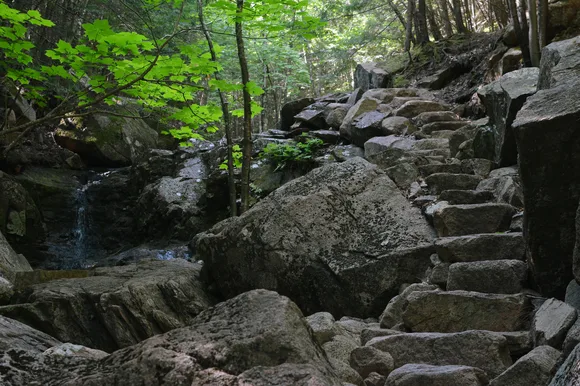
Acadia's trails are short and punchy. The Beehive covers less than two miles but includes iron rungs bolted into near-vertical granite. The Bubbles takes you up rounded domes with views over Jordan Pond in under an hour. You're not logging big mileage here; you're scrambling, balancing, and picking routes over exposed rock. The carriage roads add another dimension: smooth, crushed-stone paths where bikes and horses outnumber hikers.
The Smokies favor endurance over technical skill. Alum Cave climbs steadily for five miles to the stone arch and beyond to Mount LeConte, gaining elevation through switchbacks rather than scrambles. Chimney Tops offers a short, steep punch to a rocky summit, but most trails here are about distance and patience. You'll cross streams, wind through cove forests thick with rhododendron, and climb ridges that seem to stretch forever. The terrain is forgiving on your joints but relentless on your lungs.
Crowds and Timing
Both parks are mobbed in peak season, but they handle it differently. Acadia's compact size means crowding is inescapable: parking lots at Sand Beach and Jordan Pond fill by mid-morning in summer, and the Loop Road becomes a slow procession of RVs. The Island Explorer shuttle helps, but you're still sharing trails with hundreds of other people. April misses the worst of it, but you're trading crowds for cold.
The Smokies spread the impact across more space. Cades Cove and Laurel Falls are shoulder to shoulder, but trails like Porters Creek and Albright Grove stay quiet even in October. April is ideal here because wildflower season draws dedicated hikers, not casual tourists. You'll share the park, but you won't feel like you're waiting in line.
The Verdict
Choose Acadia if you want ocean views, compact hiking, and a park you can explore in a long weekend. The granite peaks and tidal pools make it unlike any other park in the system, and Bar Harbor offers more dining options than most gateway towns. Just don't go in April expecting full access or reliable weather.
Choose Great Smoky Mountains if you want space, spring wildflowers, and a park that rewards deep exploration. April is the best time to visit, and the proximity to Knoxville makes logistics simple. You'll deal with crowds near Cades Cove, but the backcountry stays open and quiet.