Acadia vs Rocky Mountain: Which Park Should You Visit?
One delivers coastal granite in full spring bloom. The other keeps its best road closed until June. April timing changes everything
Choosing between Acadia and Rocky Mountain for an April visit means picking sides in an argument between coasts and peaks. One delivers granite summits that plunge into the Atlantic. The other sends you across the Continental Divide on a road that won't fully open until late May. Both parks rank in the top ten for visitation, but their April realities couldn't look more different.
April in Acadia means mud season is ending and the park is waking up. April in Rocky Mountain means Trail Ridge Road is still buried under snowpack and half the park remains inaccessible. If you're comparing these two for a spring trip, understand that you're weighing an accessible coastal experience against an alpine park still locked in winter.
Acadia National Park
Granite peaks meet the Atlantic / More packed than most city parks in summer
Acadia wraps around Mount Desert Island like a crescent, offering ocean views from trails that would feel at home in the Rockies. Cadillac Mountain anchors the park at just over 1,500 feet, but elevation doesn't tell the full story when you're climbing exposed granite with surf crashing below. The Park Loop Road ties together the island's highlights: Thunder Hole, Sand Beach, Jordan Pond, and the Precipice Trail's iron rungs bolted into cliffsides. April here means temperatures in the 40s and 50s, occasional rain, and crowds that haven't arrived yet.
You'll find more trail variety per square mile in Acadia than almost anywhere else in the park system.
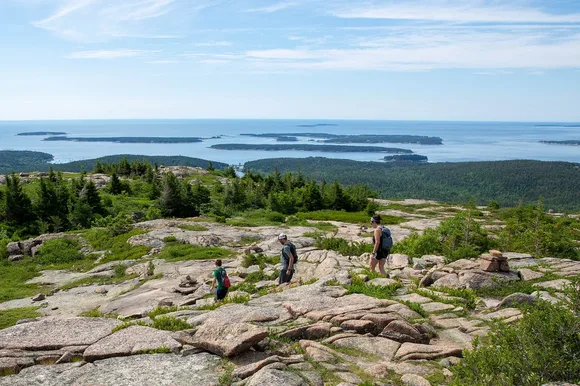
The carriage roads deserve their own trip. John D. Rockefeller Jr. funded 45 miles of crushed stone paths that wind through the park's interior, crossing seventeen stone bridges and climbing to views most visitors never see. You can bike them, walk them, or ski them in winter, but in April you'll share them with locals emerging from cabin fever. Jordan Pond Shore Trail circles its namesake lake on flat, easy terrain, while the Beehive and Precipice trails demand scrambling and a head for heights. The park gives you easier than easy and harder than hard, with not much in between.
Rocky Mountain National Park
Five times the size of Acadia / Trail Ridge Road closed until late May
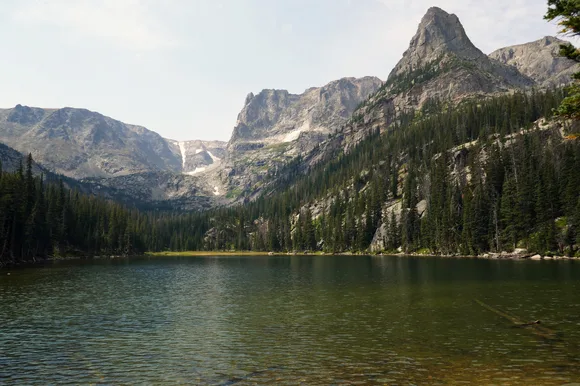
Rocky Mountain sprawls across both sides of the Continental Divide, which means April visitors get access to about half the park. Trail Ridge Road stays closed through May, cutting off the alpine tundra and the west side entirely. What you can reach in April clusters around Bear Lake and the lower valleys: Dream Lake, Emerald Lake, and the Glacier Gorge trails all start below 9,500 feet and push into snowpack within a mile. Expect microspikes, expect afternoon storms, and expect trail conditions that change day to day.
April in Rocky Mountain feels like borrowing someone else's winter, beautiful and unforgiving in equal measure.
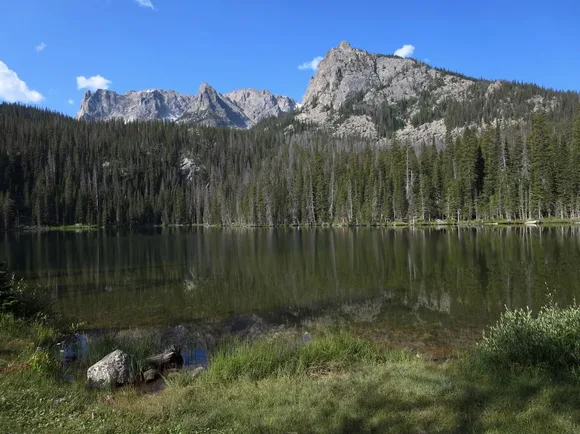
The park's reputation for crowds doesn't apply in April. The timed entry system doesn't kick in until late May, and you'll find parking at Bear Lake without the summer scrum. Moraine Park and Horseshoe Park offer flat, accessible walks where elk graze in plain sight, and the lower elevation means you can hike without postholing through snow. But Trail Ridge Road's closure means you miss the park's signature experience: the drive across 12,000-foot tundra with views that stretch into Wyoming. If you're visiting Rocky Mountain in April, you're visiting a different park than the one advertised on postcards.
Getting There
Rocky Mountain sits 76 miles from Denver International Airport, an easy drive on I-25 and Highway 34 that takes about 90 minutes without traffic. Acadia requires more commitment: fly into Bangor and drive 50 miles, or fly into Portland and add another hour. Denver gives you a major hub with direct flights from everywhere. Bangor gives you a regional airport with connections through Boston or New York. If you're coming from the West Coast, Rocky Mountain wins on logistics. From the East Coast, the difference matters less.
Hiking
Acadia packs 158 miles of trails into an area smaller than many ski resorts. Rocky Mountain spreads 300 miles across terrain five times the size. In April, Acadia's trails are mostly clear and accessible, while Rocky Mountain's best routes hide under lingering snowpack. Acadia's Cadillac Mountain North Ridge Trail climbs through forest and granite to summit views that include both ocean and islands. Rocky Mountain's Sky Pond Trail climbs through evergreens to an alpine lake, but you'll need traction and maybe an ice axe in April.
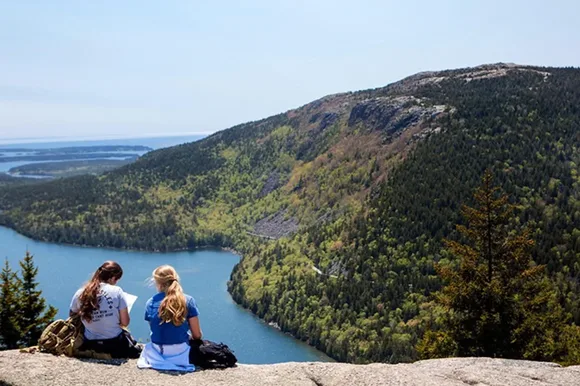
For families, Acadia delivers easier wins. Jordan Pond Shore Trail circles its lake on mostly flat ground. The Bubbles Trail climbs to a summit in under a mile with views worth the effort. Rocky Mountain's Bear Lake Loop offers a half-mile paved path, and Dream Lake extends that to two miles, but snow lingers well into spring at this elevation. If you want guaranteed hiking in April, Acadia clears its trails weeks before Rocky Mountain does.
Crowds and Timing
Both parks rank in the top ten nationally for visitation, which means summer turns into a parking lot scavenger hunt. Acadia draws more people than the population of Los Angeles spread across 74 square miles. Rocky Mountain's size absorbs crowds better, but Bear Lake and Trail Ridge Road still pack shoulder to shoulder in July. April sidesteps this entirely in both parks. Acadia sees locals and early-season visitors who know mud season is ending. Rocky Mountain sees spring breakers from Denver and skiers waiting for Trail Ridge Road to open.
The difference is access. Acadia in April gives you nearly the full park. Rocky Mountain in April gives you the east side valleys and lower trails. If you're chasing solitude, both parks deliver in April. If you want the full experience, Acadia delivers now and Rocky Mountain makes you wait until June.
The Verdict
Choose Acadia if you want coastal granite, accessible trails, and a park that's fully open in April. The ocean adds a dimension Rocky Mountain can't match, and the carriage roads create hiking alternatives you won't find in Colorado. You'll trade alpine drama for tidepool exploration and summit views that include ships on the horizon.
Choose Rocky Mountain if you're already in Colorado, you're comfortable hiking in snow, and you want a preview of the alpine without summer crowds. April here feels like a locals' secret, but you'll miss Trail Ridge Road and the west side entirely. If you can visit in June or September instead, those months deliver the park at its best.