Acadia vs Shenandoah: Which Park Should You Visit?
Granite peaks meet the Atlantic at Acadia, forested ridges roll at Shenandoah. Which East Coast park fits your April plans
Acadia and Shenandoah sit on opposite ends of the Appalachian chain, but the parks couldn't feel more different. One grinds granite peaks into the Atlantic, the other rolls forested ridges above farmland gone back to wilderness. Both offer accessible hiking and scenic drives within striking distance of major East Coast cities, but choosing between them depends on whether you want ocean light or mountain hollows, rock scrambles or waterfall walks.
April puts Shenandoah at its peak while Acadia thaws from winter into mud season. If you're locked into spring travel, the choice becomes simpler. But if your dates can flex, the question gets more interesting.
Acadia National Park
Granite peaks meet the Atlantic / Draws more visitors than Yellowstone
Acadia packs more variety into 74 square miles than parks ten times its size. You can summit Cadillac Mountain at sunrise, scramble the iron rungs of Precipice Trail by midmorning, kayak the protected waters of Somes Sound after lunch, and still have time for the carriage roads before dinner. The ocean doesn't just frame the views here; it shapes everything, from the fog that rolls in without warning to the granite cliffs that drop straight into surf at Thunder Hole. Jordan Pond reflects the rounded humps of The Bubbles on calm mornings, creating the postcard shot that appears on every Acadia brochure.
The park feels like someone took a mountain range and tilted it into the sea, leaving just the peaks above water.
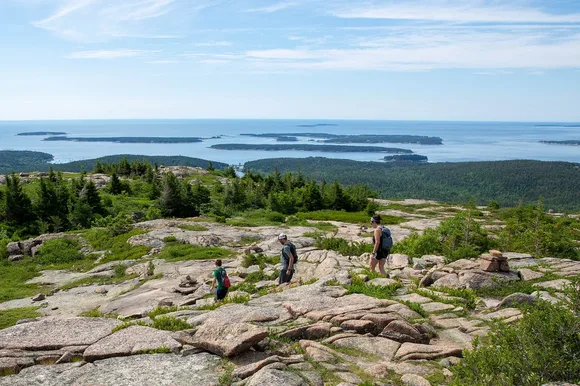
April in Acadia means temperatures in the 40s and 50s, bare trees, and services that haven't fully opened yet. Park Loop Road typically doesn't reopen until mid-April, and even then you're gambling on weather. The coastal location moderates winter but doesn't eliminate it. Many of the iconic trails like Beehive and Precipice stay closed into May because ice lingers in shadowed sections. You'll find parking easily and trails nearly empty, but you're trading crowds for conditions that limit where you can go. The park truly wakes up in May, when wildflowers emerge and the carriage roads become rideable without dodging ice patches.
Shenandoah National Park
Skyline Drive traces 105 miles of Blue Ridge crests / More trail miles than Acadia, Zion, and Rocky Mountain combined
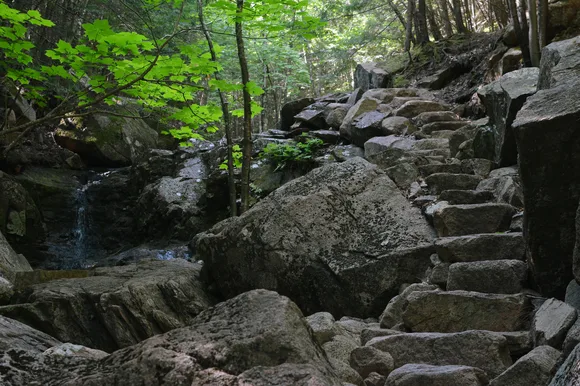
Shenandoah stretches four times larger than Acadia but feels less dramatic at first glance. There's no ocean, no granite scrambles, no iron rungs bolted into cliffs. What it offers instead is depth: 500 miles of trails that drop off Skyline Drive into hollows where stone foundations mark farms abandoned when the park formed in 1935. Waterfalls tumble through every drainage, from the easy boardwalk to Dark Hollow Falls to the six-mile trek to Overall Run Falls. Old Rag Mountain delivers the park's signature scramble, a boulder maze near the summit that requires hands-on problem solving, but most of Shenandoah's trails keep you in the forest, winding through oak and hickory stands that explode with wildflowers in April.
Where Acadia compresses its drama into ocean-meets-mountain collisions, Shenandoah spreads its appeal across ridge after forested ridge that seem to roll on forever.

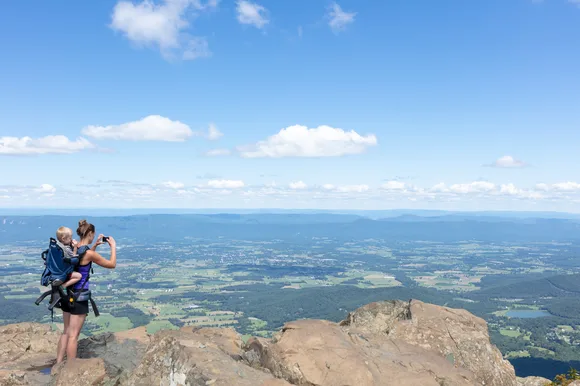
April gives you Shenandoah at its absolute best. Temperatures climb into the 60s and 70s, trillium and bloodroot carpet the forest floor, and the overlooks along Skyline Drive stretch for miles before summer haze settles in. You're visiting before the crowds that pack the park in October for fall color, and the manageable visitor numbers mean you can snag parking at popular trailheads without the 6 AM alarm. The proximity to Washington, D.C., makes this a weekend park for millions, but the trail network absorbs people quickly once they leave their cars. Hike a mile from any overlook and you'll find solitude that feels improbable given how close you are to the capital.
Getting There
Acadia requires commitment. Bar Harbor sits 50 miles from Bangor's regional airport, and most visitors fly into Portland or Boston and drive two to three hours along the coast. Once you're there, you're there; this isn't a park you casually add to a road trip. Shenandoah sits 75 miles from Washington, D.C., and 90 miles from Dulles Airport, making it an easy day trip or weekend escape for the entire Mid-Atlantic. You can leave D.C. after breakfast and be on a trail by lunch.
The Hiking
Acadia's 158 miles of trails concentrate drama: exposed summits, iron rung ladders, granite slabs that require scrambling. Trails like Beehive and Precipice aren't technically difficult, but they demand comfort with exposure and using your hands. The carriage roads add another 45 miles of crushed stone paths perfect for families, bikes, and anyone who wants views without the vertical. Shenandoah's 500 miles spread across a much larger park, offering everything from wheelchair-accessible walks to multi-day backpacking loops. The terrain stays forested and less technical, but trails like Old Rag and Hawksbill Summit deliver workouts that match anything Acadia offers.
Crowds and Timing
Acadia sees nearly twice as many visitors as Shenandoah despite being a quarter the size. August turns Bar Harbor into a gridlock, and parking lots at Jordan Pond and Cadillac Summit fill by 8 AM. The park's compact footprint means crowding feels more acute; there's no driving another 20 miles to find empty trails. Shenandoah's length and trail network dilute the crowds. Even in peak October, you can find quiet if you're willing to walk past the first overlook or pick a trail that isn't Old Rag.
The Verdict
Choose Acadia if you want ocean, granite, and the kind of compressed scenery that lets you experience five different ecosystems before lunch. The park rewards photographers, rock scramblers, and anyone drawn to the edge where mountains meet the sea. You'll deal with crowds and limited shoulder season access, but few parks pack this much variety into such a small area. Go in May or September, not April.
Choose Shenandoah if you prefer forests to coastline, waterfalls to ocean cliffs, and trails that disappear into hollows rather than climb exposed summits. April puts you in the park during its best month, when wildflowers peak and the overlooks extend for miles. The proximity to major cities and the sprawling trail network mean you can visit on a whim, escape the crowds with minimal effort, and return whenever the urge strikes.