Arches vs Black Canyon Of The Gunnison: Which Park Should You Visit?
One park delivers red rock icons and crowds to match. The other hides North America's steepest gorge in plain sight
Arches and Black Canyon of the Gunnison both sit in the plateau country of the Colorado River watershed, but they offer completely different versions of what erosion can do. One is famous enough to require timed entry reservations during peak season. The other is so overlooked that most people couldn't find it on a map. Both are at their best in April, when temperatures sit in the sweet spot between winter snow and summer heat.
The choice comes down to whether you want to walk among geology's greatest hits or peer into a chasm so narrow and deep that sunlight only reaches the bottom for 33 minutes a day.
Arches National Park
World's highest concentration of natural stone arches / Crowds rival Yosemite in peak season
You'll see more red rock architecture in a single afternoon at Arches than most people encounter in a lifetime. Over 2,000 natural stone arches punctuate the landscape, carved from Entrada sandstone that glows orange at sunrise and crimson at sunset. The park packs its highlights into a compact area roughly half the size of Black Canyon, which means you can hit Balanced Rock, the Windows Section, and Devils Garden without racking up serious mileage. It also means you'll be sharing those iconic views with plenty of other people.
Delicate Arch doesn't appear until the final switchback, and then it fills your entire field of vision like a monument to patience and erosion.
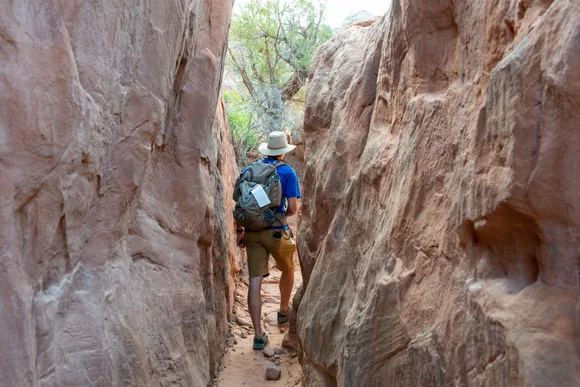
The three-mile round trip to Delicate Arch is the park's marquee hike, gaining about as much elevation as climbing to the top of a 50-story building. You'll cross slickrock with minimal shade and navigate a narrow ledge with exposure that makes some hikers turn back. The payoff is Utah's most photographed landmark, a freestanding arch as tall as a four-story building framing the La Sal Mountains. Go at sunrise if crowds bother you, though you'll still have company. For something less trafficked, the seven-mile Devils Garden loop takes you past eight named arches, including Landscape Arch, which spans longer than a football field and looks like it could collapse any season now.
Black Canyon of the Gunnison National Park
North America's steepest gorge / Most visitors have never heard of it
Black Canyon earns its name honestly. The Gunnison River carved a chasm so narrow and deep that sections of the inner canyon stay in shadow for most of the day, with walls of 1.7-billion-year-old metamorphic rock rising twice as tall as the Empire State Building. The South Rim Drive delivers overlook after overlook, each one revealing a slightly different angle on the abyss. Chasm View and Painted Wall are the standouts, but honestly, every pullout feels like a secret you shouldn't be allowed to see for the price of a park entrance fee.
Stand at the rim and look down: the river is closer to the center of the Earth than to you.
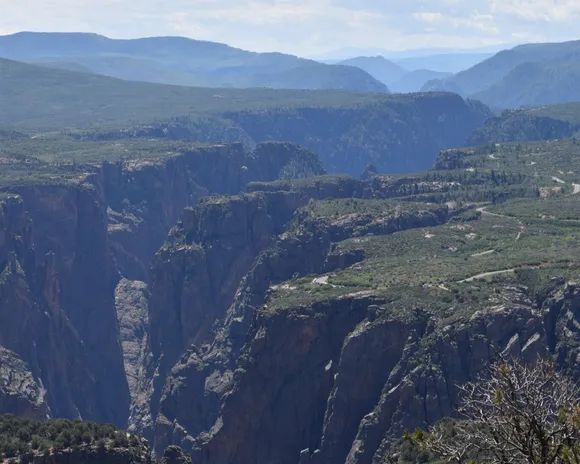
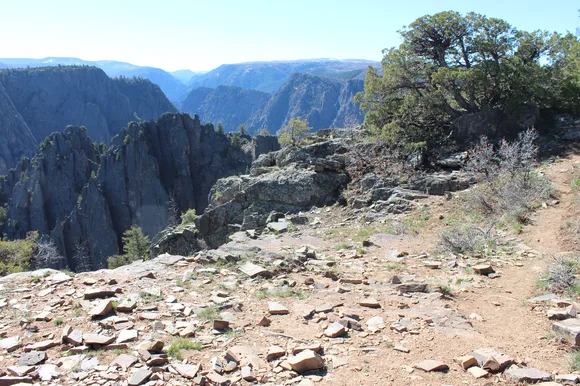
The rim trails are short and manageable, perfect for families who want the drama without the commitment. Gunnison Point is half a mile round trip and delivers immediate gratification. Warner Point Nature Trail stretches to just under three miles with wildflowers in April and views that extend to the San Juan Mountains on clear days. If you want to descend into the canyon itself, understand that these routes aren't maintained trails. They're more like controlled scrambles down steep gullies, dropping the height of a 200-story building in less than a mile. The Gunnison Route and Oak Flat Loop require a free wilderness permit and a comfort level with exposure that most casual hikers don't possess.
Getting There
Arches sits just outside Moab, a five-hour drive from Salt Lake City and close enough to Canyonlands that most visitors hit both parks in one trip. The nearest airport is in Grand Junction, about two hours away, though most people fly into Salt Lake and make the desert Southwest a multi-park road trip. Black Canyon requires more deliberate planning. It's an hour east of Grand Junction or four hours southwest of Denver, far enough from the standard Utah circuit that it rarely shows up on first-time itineraries. That distance is exactly why the park stays quiet even in summer.
Crowds and Timing
Arches draws more visitors than the entire population of Philadelphia squeezed into an area smaller than many suburban counties. April hits the sweet spot before summer heat and June's peak crowds, but you'll still encounter packed parking lots at major trailheads and a steady stream of hikers on Delicate Arch Trail. Black Canyon pulls fewer people in an entire year than Arches sees in a busy month. Even in July, its busiest time, you can often have overlooks to yourself for minutes at a stretch. April brings mild days in the 60s and 70s at both parks, with snow mostly melted from rim trails and wildflowers starting to appear.
Beyond Hiking
Rock climbing draws serious athletes to both parks, though the approaches and styles differ dramatically. Arches limits climbing to protect the fragile sandstone arches themselves, but the surrounding towers and walls offer classic desert routes. Black Canyon's Painted Wall is one of the tallest vertical cliffs in Colorado, attracting climbers who measure their days in hundreds of feet of exposure. The Gunnison River below offers Class IV and V whitewater for experienced kayakers willing to portage around the truly insane sections. Arches has no river access, but the paved scenic drive and pullouts make it more accessible for visitors with limited mobility.
The Verdict
Choose Arches if you want the greatest hits of Southwest geology packed into a single day, don't mind sharing the experience with crowds, and prefer well-developed trails with clear destinations. The concentration of iconic features means you'll come home with a memory card full of images that look like they came from a geology textbook.
Choose Black Canyon if you value solitude over name recognition, want to experience vertigo from a guardrail, and appreciate landscapes that reveal their scale slowly rather than all at once. You'll leave with fewer iconic photos and more time spent staring into a void that seems engineered to make humans feel appropriately small.