Best Family Parks This Summer That Won't Be Packed
Six national parks where kids can climb into cliff dwellings, roll down sand dunes, and spot bison without fighting theme park crowds
Summer vacation at a national park usually means shoulder-to-shoulder crowds at every viewpoint and a parking lot full by 8 AM. But not every park follows that script. These six combine genuine kid appeal with breathing room that makes them feel less like a theme park and more like the wilderness they're supposed to protect.
You won't find Yellowstone or Zion on this list. What you will find are ancient cliff dwellings you can climb into, sand dunes you can roll down, caves that stay a constant 54 degrees no matter how hot it gets outside, and lakeshores where you might be the only boat for miles.
Mesa Verde National Park
Seven hundred cliff dwellings carved into sandstone / Durango 35 miles away
Most people have never heard of Mesa Verde, which tells you everything about why it works for families who want to avoid the July crowds. The Ancestral Pueblo people built entire cities into the alcoves of sandstone cliffs here, and the rangers will hand your kids a flashlight and let them climb ladders into rooms that were occupied 800 years ago. Cliff Palace alone contains 150 rooms tucked under an overhang so massive it looks photoshopped.
Watching an eight-year-old scramble up the same ladder that archaeologists used in 1906 puts every museum visit to shame.
The tours book up weeks in advance during summer, but that's the only crowd management you'll face. Once you're inside Balcony House or climbing through the tunnel entrance to Spruce Tree House, you're in small groups led by rangers who actually know the archaeology. The Mesa Top Loop gives you a driving tour of pit houses and pueblos if your kids are too young for the ladder climbs, and the mile-high elevation keeps temperatures in the high 70s while the rest of the Southwest bakes.
Great Sand Dunes National Park & Preserve
North America's tallest dunes against the Sangre de Cristos / Sand temperatures hit 150F by noon
The first time you see the dune field from the visitor center parking lot, it looks like a desktop wallpaper someone forgot to finish rendering. Sand piled 750 feet high against the jagged spine of Colorado's Sangre de Cristo Mountains shouldn't exist, but there it is, and your kids will be halfway up the first ridge before you've finished lacing your boots. No trails, no guardrails, no rules except physics and the limits of your own cardiovascular system.
Every step forward slides you half a step back, and by the time you reach High Dune, even the teenagers have stopped complaining about being unplugged.
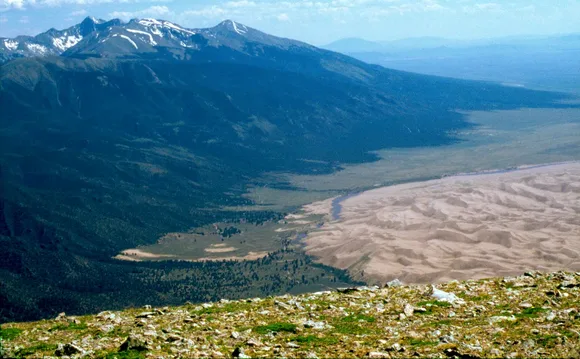
Medano Creek runs along the base of the dunes from late May through June, creating a shallow beach that feels surreal in the middle of Colorado. Kids splash through the surge flow while adults drag camp chairs to the water's edge and watch the mountains turn pink at sunset. By July the creek dries up, but the dunes stay open and the visitor numbers drop to almost nothing. Bring sleds or sandboards and let the kids figure out that sand friction works differently than snow.
Mammoth Cave National Park
More than 400 miles of mapped passages underground / Louisville 85 miles north
The world's longest cave system offers something most national parks can't: a guaranteed escape from summer heat. The temperature underground stays at 54 degrees year-round, which means you can take a two-hour tour through Gothic Avenue and Frozen Niagara while it's 95 degrees outside and arrive back at the Historic Entrance feeling like you've been in air conditioning. Kids who get bored on hiking trails stay riveted when they're ducking under rock formations with names like Fat Man's Misery.
There's something about walking through passages that were explored by enslaved guides in the 1830s that makes history feel less like a textbook and more like detective work.
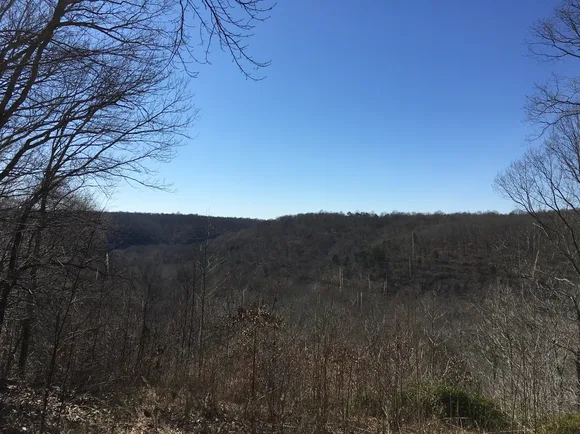
The ranger-led tours vary from easy strolls to crawl-through adventures, and you can book based on your family's tolerance for confined spaces and steep staircases. The Domes and Dripstones Tour includes an underground waterfall, while the Wild Cave Tour requires you to crawl through passages on your belly. Above ground, the Green River Bluffs Trail gives you forested ridges and river views without the crowds you'd find at Smoky Mountains three hours east.
Hawaiʻi Volcanoes National Park
Two active volcanoes shaping terrain in real time / Hilo 30 miles away
Walking across a lava field that formed during your lifetime changes how kids understand geology. Hawaiʻi Volcanoes puts you on recent flows where the rock still looks fresh and sharp, then drops you into rainforest growing on flows from centuries ago, then lets you peer into Kīlauea Caldera where the visible steam reminds you that everything here is temporary. The Thurston Lava Tube takes about 15 minutes to walk through, and kids lose their minds when they realize they're inside a tunnel carved by flowing lava.
You can explain plate tectonics in a classroom, or you can stand at the edge of a crater and watch steam rise from vents that might erupt tomorrow.
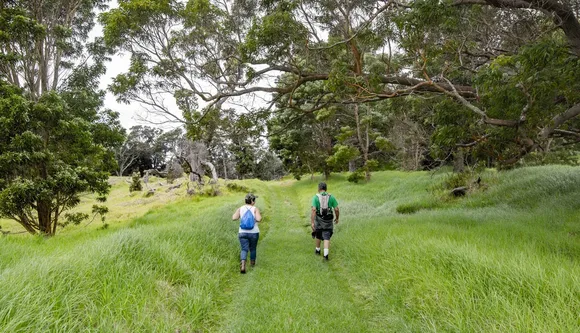
The park covers terrain from tide pools at sea level to alpine desert at 13,000 feet on Mauna Loa, which means you can visit multiple ecosystems without ever leaving the park boundary. Chain of Craters Road descends through lava fields to the coast, passing petroglyphs and collapsed craters along the way. Summer temperatures hover in the low 70s at the summit, and the park stays open year-round. Peak visitation hits in December, not July, which gives you elbow room during the traditional vacation window.
Voyageurs National Park
Four interconnected lakes where boats replace roads / Duluth 150 miles southwest
Voyageurs might be the only national park in the lower 48 where you can't see most of it from a car. The park is essentially a water maze of boreal forest and scattered islands, and if you want to explore it properly, you need a boat or a kayak. That barrier to entry keeps the visitor numbers low enough that you can paddle for hours without seeing another soul. Kids who've grown up with tablets and streaming services discover what boredom actually feels like, and then something shifts and they start noticing loon calls and beaver lodges.
There's no cell signal, no WiFi, and no backup plan except the paddle in your hands and the map you hopefully brought.
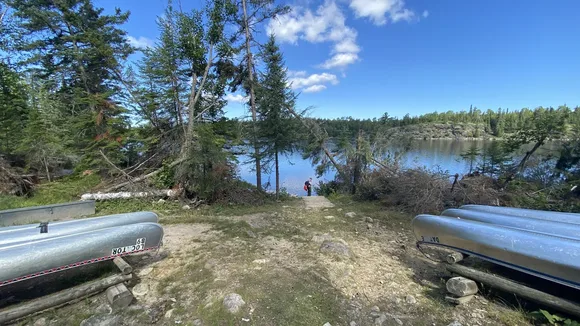
The park rents canoes and kayaks from several outfitters on the lake shores, or you can bring your own motorboat if you want to cover more water. Rainy Lake and Kabetogama Lake offer protected bays and islands perfect for families new to paddling, while Namakan Lake and Sand Point Lake stretch into more remote territory. Fishing for walleye and northern pike keeps kids engaged when paddling loses its novelty, and the park service maintains water-access-only campsites on dozens of islands if you want to make it an overnight trip.
Theodore Roosevelt National Park
Badlands that turned a politician into a conservationist / Bismarck 140 miles southeast
Roosevelt came to North Dakota as a grieving New York assemblyman in 1883 and left as the man who would eventually create the national park system. The badlands he fell in love with remain largely unchanged: eroded buttes in layers of rust and gray, prairie grasslands that roll to the horizon, and bison herds that treat the Scenic Loop Drive like their personal migration route. Pull over at any overlook and you'll likely see pronghorn, wild horses, or prairie dogs within minutes.
When a bison decides to cross the road, you wait—there's no honking your way past a thousand pounds of muscle and indifference.
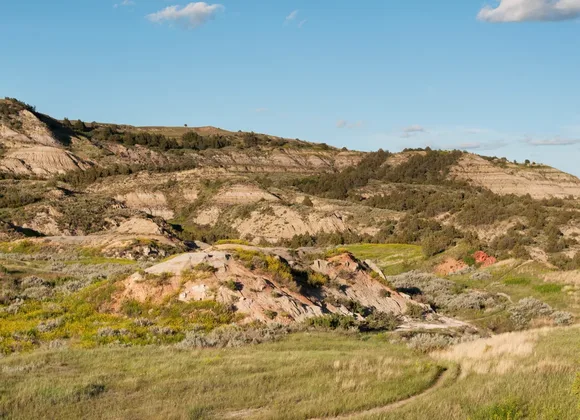
The South Unit's 36-mile loop gives you the park's greatest hits in a half day, including Painted Canyon and the Boicourt Overlook where you can see the Little Missouri River winding through the badlands below. The North Unit sees fewer visitors and offers better wildlife viewing, especially along the 14-mile drive to Oxbow Overlook. Kids can complete the Junior Ranger program at both units, and the trails range from the one-mile Painted Canyon nature walk to the 11-mile Petrified Forest Loop for families who want a full-day hike.