Big Bend vs Guadalupe Mountains: which park should you visit?
Two underrated Texas parks: one sprawls across three ecosystems, the other climbs straight to the state's highest summit
West Texas offers two national parks that most people have never heard of, both tucked into the Chihuahuan Desert within a three-hour drive of each other. Big Bend sprawls across territory larger than Rhode Island, encompassing three distinct ecosystems from the Rio Grande to mountain peaks. Guadalupe Mountains rises from the same desert as a single dramatic massif, home to Texas's highest summit and a canyon that turns gold every October.
You won't pick between these parks based on crowds or accessibility. Both are genuinely remote, both require serious drive time from any major city, and both offer solitude that feels impossible anywhere else in the Southwest. The choice comes down to what you want from isolation: Big Bend rewards exploration and variety, while Guadalupe Mountains delivers focused alpine hiking in a desert setting.
Big Bend National Park
Larger than Rhode Island / More bird species than any other park / Three hours from the nearest stoplight
Big Bend sprawls across enough territory to contain entire mountain ranges, river canyons, and desert basins without them ever touching. The Chisos Mountains rise like an island in the center of the park, their forested peaks visible from every approach road but feeling worlds apart from the surrounding Chihuahuan Desert. You could spend a week here and still miss entire sections: the park's scale absorbs visitors so completely that you'll go hours without seeing another car on the main road.
The Rio Grande carves through limestone walls taller than skyscrapers, and you can paddle through them with nothing but silence and swallows for company.
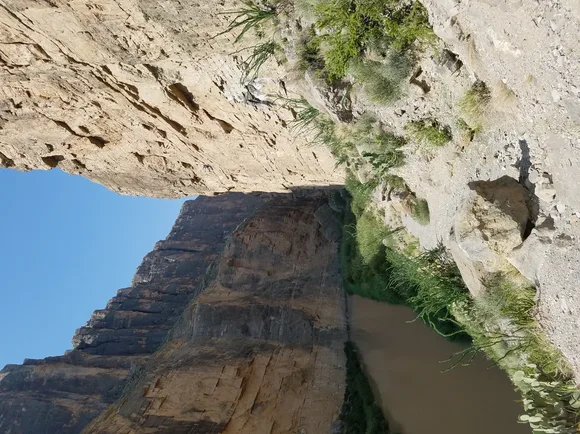
Santa Elena Canyon delivers the park's signature moment: vertical walls rising 1,500 feet from the river, the water so narrow in places you can touch both Texas and Mexico at once. The short trail into the canyon mouth fills with families by mid-morning, but rent a canoe and paddle upstream and you'll have the entire gorge to yourself. The Chisos Basin holds the best concentration of trails, from the moderate Window Trail that ends at a pour-off overlooking the desert below, to the strenuous climb up Emory Peak that tops out above 7,800 feet. May brings wildflowers to the desert floor and comfortable temperatures in the mountains, though afternoons can push into the low 90s at lower elevations.
Guadalupe Mountains National Park
Texas's highest peak / A fossil reef older than dinosaurs / Peak fall color arrives by mid-October
Guadalupe Peak rises to 8,751 feet as the defining feature of a park that doesn't waste time on gentle introductions. The most popular trail climbs 3,000 vertical feet in just over four miles, switchbacking up exposed limestone with views that expand across two states. This is a hiking park in the purest sense: no scenic drives, no visitor center overlooks, just trails that demand your attention and reward effort with alpine ecosystems that shouldn't exist in a desert.
McKittrick Canyon holds the only reliable fall color in West Texas, a narrow corridor of maples and oaks that turn gold against white limestone walls.
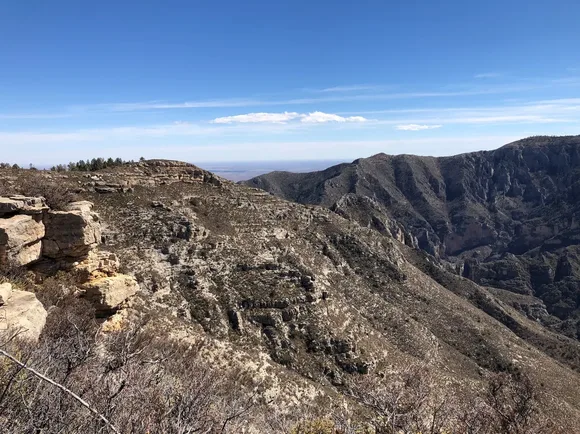
The canyon hike follows a spring-fed creek through a landscape that shifts from Chihuahuan Desert scrub to mixed woodland in less than a mile. Most visitors time their trip for mid-October when the bigtooth maples peak, but May brings its own appeal: comfortable temperatures, flowing water, and wildflowers without the autumn crowds. The high country stays cool enough for comfortable hiking even as the desert floor heats up, and the park's small size means you can summit Guadalupe Peak in the morning and explore Devil's Hall by afternoon. The lack of infrastructure keeps visitor numbers low; you won't find lodges or restaurants, just campgrounds and trailheads.
Getting There
Both parks orbit El Paso as the nearest major airport and supply point. Guadalupe Mountains sits 120 miles east on US-62, a straight shot through open desert that takes just over two hours. Big Bend requires commitment: 305 miles southeast through Alpine and Marathon, roughly five and a half hours of driving with the last 40 miles on park roads. You can't day-trip Big Bend from anywhere; plan for at least three nights to justify the drive. Guadalupe Mountains works as a long day trip from El Paso if you start early, though you'll miss the best light and the evening calm that settles over the high country.
The parks sit close enough on a map that combining them looks obvious, but the drive between them takes four hours minimum, looping south through Van Horn or north through Carlsbad. If you have a week, the circuit makes sense: fly into El Paso, tackle Guadalupe Mountains first, then drive to Big Bend for the bulk of your time. Less than five days and you'll spend more time driving than hiking.
Which Park in May
May marks the transition between comfortable spring weather and the brutal heat that defines summer in both parks. Big Bend's elevation range gives you options: the desert floor reaches the low 90s by midday, but the Chisos Basin stays 15 degrees cooler. Guadalupe Mountains holds the temperature advantage with its higher base elevation; even the main campground sits above 5,000 feet where afternoons rarely break 80 degrees. Both parks see almost no rain in May, and thunderstorms that do develop typically stay isolated over the highest peaks.
Wildflowers peak in April, but May still offers decent blooms at higher elevations. Big Bend's diversity shows up here: you might catch late-season prickly pear and claret cup in the desert while mountain slopes still hold bluebonnets and Indian paintbrush. Guadalupe Mountains concentrates its wildflowers in McKittrick Canyon, where moisture from the spring extends the bloom season beyond what the surrounding desert supports.
The Verdict
Choose Big Bend if you want variety and the freedom to shape each day around different landscapes. The park rewards curiosity: river trips, desert hikes, mountain trails, hot springs, and enough dirt roads to keep a high-clearance vehicle busy for days. You'll need time here, both to cover the distances and to settle into the park's rhythm. It's the better choice for families, bird watchers, and anyone who wants options beyond hiking.
Choose Guadalupe Mountains if you're here to hike hard and you prefer focus over sprawl. The trail system punches above its weight with quality routes that deliver alpine experiences without the crowds that pack Colorado's fourteeners. McKittrick Canyon alone justifies the trip, and you can summit Texas in a morning if you're willing to earn it. The park works for a long weekend, and the proximity to Carlsbad Caverns makes pairing them logical if you have four or five days total.