Everglades' Shark Valley closes as Chipmunk Fire burns 9,000+ acres — what to know before your visit
Shark Valley is closed, but the Everglades' best wildlife viewing happens at the southern entrances anyway
The Chipmunk Fire has closed Shark Valley, the Everglades' most accessible showcase of gators and wading birds, just as the park enters its quietest season. The tram road and observation tower remain off-limits until further notice, and smoke has drifted across the northern sections of the park since late July. If you're planning an August visit, you'll need to rework your itinerary around the southern entrances.
This isn't the disruption it might seem. Shark Valley gets the crowds because it's easy: a paved 15-mile loop where alligators line the canal like logs and tour trams do the navigating for you. But the Everglades sprawls across an area larger than Delaware, and most visitors never make it past the northern gateway. The Royal Palm area and Flamingo offer better wildlife encounters right now, without the smoke or the closures.
Everglades National Park
Larger than Delaware, smaller crowds than Acadia / Best viewing from December through April
The Everglades doesn't look like a national park at first glance. No granite walls, no waterfalls, no overlooks where you pull off and frame a postcard. It's a slow-moving river wrapped in sawgrass, mangrove tunnels, and mud flats that stretch to the horizon. You have to get out of the car and walk the boardwalks to understand what you're seeing: a subtropical wilderness where alligators outnumber hikers and wading birds treat the marshes like an all-you-can-eat buffet.
The Everglades rewards patience more than any other park in the system — stand still long enough and the wildlife comes to you.
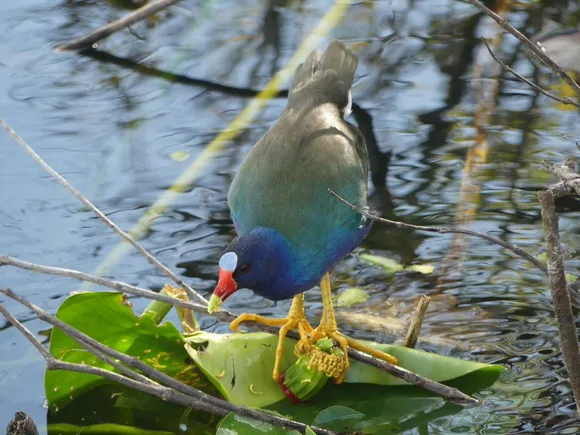
With Shark Valley closed, start at the Royal Palm area instead. The Anhinga Trail delivers the park's headline experience in less than a mile: alligators sunning on the banks, anhingas spearing fish, herons stalking through the shallows. The boardwalk puts you at eye level with the action, close enough to hear gators hiss when another male drifts into their territory. Go early, before 9 AM, and you'll have the trail nearly to yourself. By midday in August, the heat turns oppressive and the wildlife retreats into the shade.
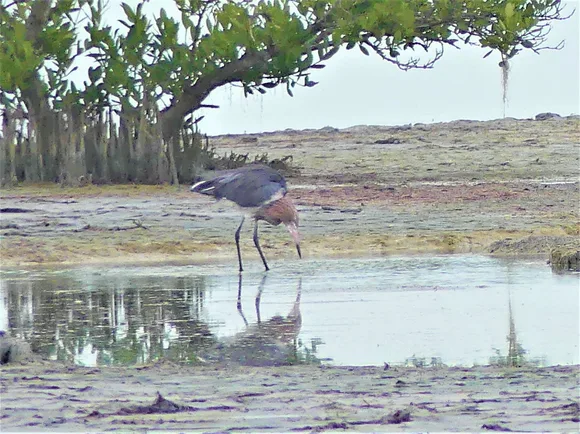
The Gumbo Limbo Trail loops through a hammock forest just across the parking lot, offering shade and a completely different ecosystem in less than half a mile. You'll trade wading birds for ferns, air plants, and the peeling red bark of gumbo limbo trees. It's a quick detour, but it shows you how much variation the park packs into a small area.
If you're willing to drive, the road to Flamingo cuts through 38 miles of sawgrass prairie and coastal prairie, ending at Florida Bay. The Eco Pond loop near Flamingo pulls in roseate spoonbills, white ibises, and wood storks during the dry season. In August, you're between migrations and the bird counts drop, but alligators stay active year-round. The drive itself works as a scenic experience: pull off at any of the roadside stops and you'll see the River of Grass stretching in every direction, flat and green and completely unlike anywhere else in the park system.
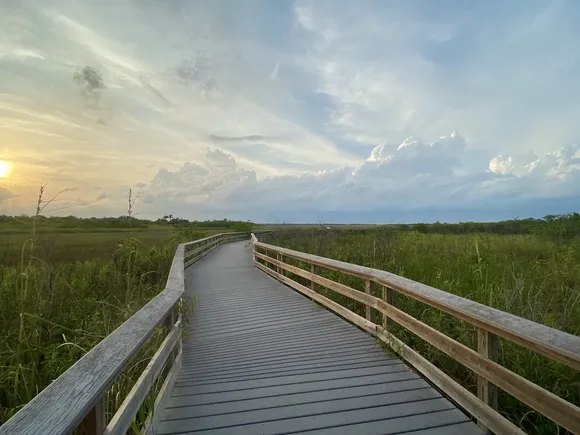
Kayaking the mangrove tunnels around Flamingo or the Ten Thousand Islands gives you access to the park's real backcountry. The Nine Mile Pond canoe trail threads through sawgrass and mangroves, narrow enough that branches scrape your hull and quiet enough to hear fish jumping. You'll share the water with alligators, but they're used to boats and generally ignore you unless you get too close to a nest. Rent from the Flamingo Marina if you don't have your own boat; the concessionaire runs half-day and full-day trips with all the gear you need.
August sits in the heart of wet season, which means afternoon thunderstorms, high humidity, and heat indices that push past 100F. This is why October ranks as the park's quietest month: most people wait for the dry season starting in November when temperatures drop into the 70s and mosquitoes thin out. But summer has its advantages. Crowds disappear, campsites open up without reservations, and the thunderstorms clear out by evening, leaving dramatic light over the marshes. If you can handle the heat and the bugs, you'll have the park nearly to yourself.
The Chipmunk Fire has burned through more than 9,000 acres in the northern section of the park, closing Shark Valley indefinitely and pushing smoke across the Tamiami Trail corridor. Fire is part of the Everglades' natural cycle: it clears out invasive species, resets the sawgrass, and opens up habitat for ground-nesting birds. But it also means limited access to the park's most popular entrance. Check the park's website or call the visitor center before you drive out. Closures shift daily depending on wind direction and containment progress.
The southern entrances remain open and unaffected by smoke. Royal Palm, Flamingo, and the Gulf Coast Visitor Center near Everglades City offer full access to trails, boat launches, and ranger programs. You'll miss the Shark Valley tram and observation tower, but you won't miss the wildlife. The park's best viewing happens at water level, not from a 50-foot platform.