Glacier vs Grand Teton: which park should you visit?
Glacier spreads its drama across three times the terrain. Grand Teton delivers vertical shock in a fraction of the space
Both parks deliver granite summits, alpine lakes, and the kind of backcountry that demands respect. The difference comes down to access and ambition. Glacier spreads its drama across three times the terrain, scattering crowds along a network of valleys that takes days to explore. Grand Teton concentrates everything into a smaller footprint, packing world-class climbing, postcard lakes, and the most abrupt mountain profile in the Lower 48 into a space you can drive across in an hour.
June tips the scales toward Glacier. Going-to-the-Sun Road typically opens in mid-June after months of plowing, revealing snowbanks taller than your car and wildflowers that carpet Logan Pass. Grand Teton shines brightest in May before the summer surge, but by June it's already crowded while Glacier is just waking up.
Glacier National Park
More trail miles than the entire state of Rhode Island / Twenty-six glaciers still carving the landscape
Going-to-the-Sun Road climbs 3,000 feet in 50 miles, threading between cliffs and waterfalls that pour directly onto the pavement. You'll stop at Logan Pass to watch mountain goats graze on snowmelt-soaked meadows while hikers trudge up to Hidden Lake Overlook. The Many Glacier valley pulls serious backpackers toward Grinnell Glacier and Iceberg Lake, where icebergs float in turquoise water through July. Lake McDonald anchors the west side with quiet shoreline and forests that feel like the Pacific Northwest.
Glacier doesn't reveal itself from a single viewpoint — you earn it valley by valley, trail by trail.
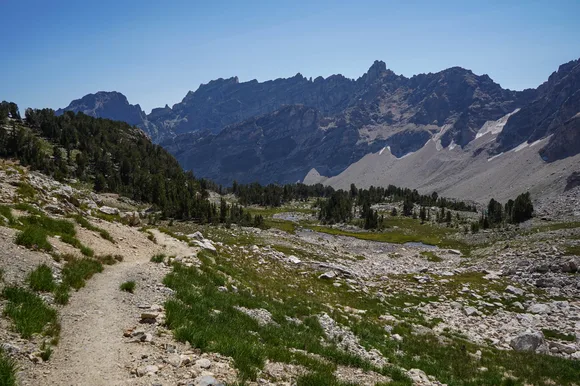
The sheer scale absorbs the crowds better than most parks this popular. Trails like Grinnell Glacier fill up by 8 AM, but routes like Belly River to Poia Lake stay empty even in peak season. Families cluster around Lake McDonald Lodge and the Apgar Village area, where kids can wade in shallow water and spot wildlife without committing to a ten-mile hike. The Junior Ranger program hands out badges at visitor centers, and ranger-led boat tours across Lake McDonald explain the geology without requiring stamina.
Grand Teton National Park
Thirteen peaks above 12,000 feet / Jackson Hole Airport sits inside park boundaries
The Tetons don't ease you in with foothills. They explode 7,000 feet straight up from the valley floor, a wall of granite that dominates every sightline in Jackson Hole. Jenny Lake reflects the Cathedral Group on calm mornings, and the shuttle boat across the lake cuts two miles off the hike to Cascade Canyon. String Lake offers flat, family-friendly shoreline walking, while the Laurance Rockefeller Preserve trades crowds for solitude on trails through aspen groves and wetlands.
Grand Teton delivers its drama immediately — no long approaches, no hidden valleys, just mountains that punch the sky from your car window.
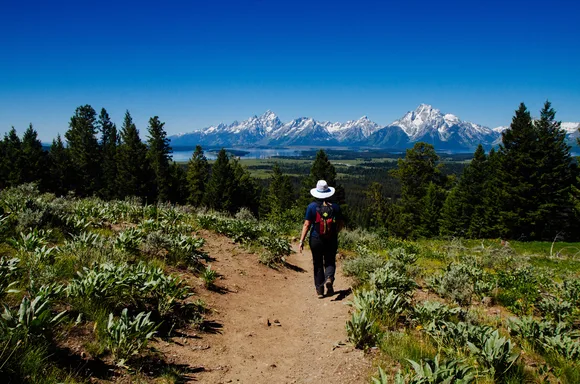
June brings runoff that swells creeks and fills waterfalls, but it also brings afternoon thunderstorms that chase climbers off the peaks by noon. The park feels busier than Glacier despite similar visitor numbers because everything funnels through a handful of trailheads. Jenny Lake, Cascade Canyon, and the Teton Crest Trail see shoulder-to-shoulder traffic by mid-morning. Kids gravitate toward the sandy beaches at Colter Bay and the easy loop around String Lake, where moose sightings are common enough to feel routine. The Craig Thomas Discovery and Visitor Center runs nature programs that explain why the Tetons lack foothills and how glaciers carved the canyons.
Getting There
Jackson Hole Airport delivers you to Grand Teton's doorstep faster than almost any national park in the system. You'll land inside park boundaries and reach Jenny Lake in 30 minutes. Glacier requires more commitment. Kalispell's regional airport sits an hour and a half from the west entrance, and you'll need to factor in another hour to reach Many Glacier or Two Medicine. Missoula offers more flight options but adds another hour of driving through Flathead Valley.
The Hiking
Glacier wins on sheer variety. The park maintains more than 700 miles of trail across ecosystems that range from cedar rainforest to alpine tundra. You can hike for a week without repeating terrain. Grand Teton's 200 miles pack more elevation gain per mile, with routes that climb straight up canyon walls to high-altitude lakes. If you want gentle valley walks, Glacier delivers. If you want to summit a 13,000-foot peak, Grand Teton's your park.
The Crowds
Grand Teton's compact size concentrates people at a few marquee spots. You'll wait for parking at Jenny Lake, shuffle through crowds on the Cascade Canyon Trail, and compete for campground reservations like you're buying concert tickets. Glacier spreads the load across more valleys and trailheads. Going-to-the-Sun Road gets packed, but drive to Bowman Lake or hike into the Belly River drainage and you'll wonder where everyone went.
The Verdict
Choose Glacier if you want space to roam and don't mind driving gravel roads to reach trailheads that most visitors skip. The park rewards exploration and patience, revealing itself slowly across valleys that take hours to reach. You'll need a full week to scratch the surface.
Choose Grand Teton if you want immediate alpine drama without the logistics. Everything sits within an hour's drive, the airport's right there, and you can knock out iconic hikes without multi-day backpacking trips. It's concentrated, accessible, and relentlessly vertical.