Grand Canyon vs Zion: which park should you visit?
Grand Canyon sprawls; Zion compresses. One offers space and solitude, the other packs drama into a tight canyon corridor
Both parks pull massive crowds and sit near the top of every national park bucket list, but they're built on fundamentally different scales. Grand Canyon sprawls across an area eight times larger than Zion, with over 750 miles of trails threading through side canyons and corridors most visitors never see. Zion compresses its drama into a tight canyon corridor where every trail feels like an event and every parking spot disappears by sunrise.
October is the sweet spot for both parks. Temperatures drop into the comfortable range, summer crowds thin, and the cottonwoods along the Virgin River and Colorado River turn gold. But the experience you'll have depends on whether you want immensity or intimacy.
Grand Canyon National Park
More trail miles than most states have highways / Crowds disperse into the expanse
The South Rim stretches for miles, and even on the busiest summer weekends, you can walk ten minutes east or west along the Rim Trail and find elbow room. Most visitors cluster at Mather Point and Bright Angel Trailhead, but the canyon's sheer size absorbs the crowds in a way that makes Zion's packed shuttle stops feel claustrophobic. You're staring into a chasm a mile deep and 277 miles long, carved through two billion years of geology. The scale doesn't register until you watch a raven drop into the void and realize it's shrinking to a speck before it's even halfway down.
The Grand Canyon doesn't reveal itself in a single glance; it unfolds in layers the longer you stand at the rim.
October brings daytime highs in the 60s and 70s at the South Rim, with cold mornings that chase away the last of the summer tourists. If you're hiking below the rim, start early. Bright Angel and South Kaibab trails drop you into a temperature inversion where it's 20 degrees warmer at the bottom than at the top. The North Rim closes in mid-October, so if you want the quieter, forested side of the canyon, aim for early in the month. South Rim stays open year-round, and you'll find more solitude in October than any other time except January.
Zion National Park
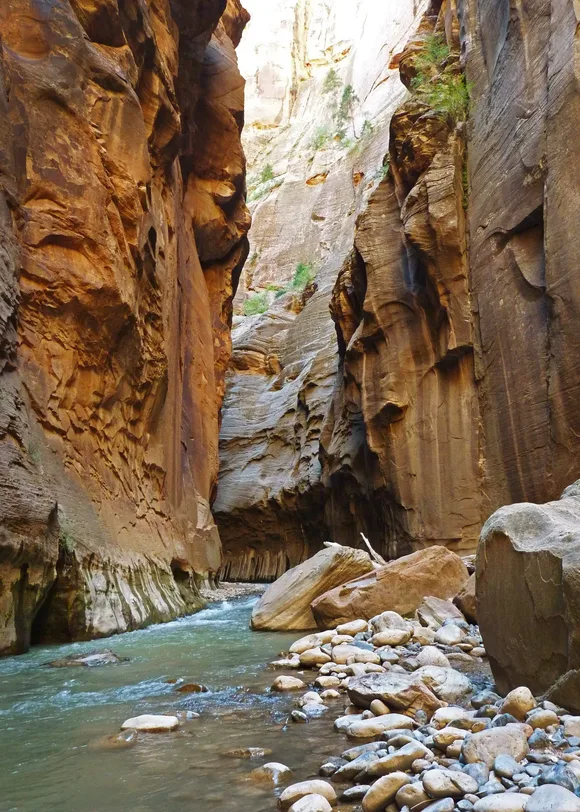
Red cliffs rise 2,000 feet above the Virgin River / Packed, even in shoulder season
Zion Canyon Scenic Drive funnels everyone into the same narrow corridor, and the shuttle system amplifies the feeling that you're visiting an attraction, not a wilderness. Angels Landing requires a permit lottery now because the trail became so congested that rangers worried about people getting pushed off the exposed switchbacks. The Narrows fills with shoulder-to-shoulder hikers wading upstream through slot canyon water that's often ankle-deep but occasionally waist-deep. The park draws more visitors than the population of Los Angeles, and almost all of them concentrate in a canyon smaller than many suburban neighborhoods.
Zion trades elbow room for verticality; you're always craning your neck at walls that block out the sky.

October shifts the balance slightly. Temperatures cool into the 70s during the day, and the Virgin River drops to its lowest flows, making the Narrows more of a wade than a swim. You'll still wait for shuttle buses and share the trail with crowds, but the suffocating heat of June and July is gone. The cottonwoods along the Pa'rus Trail turn gold, and if you hike early or late, you'll catch light raking across the Navajo sandstone in shades of orange and red that don't photograph accurately. The park's compact size means you can hit multiple trails in a single day, but you'll also feel the congestion more acutely than at any other major park.
Getting There
Grand Canyon sits 228 miles from Phoenix, a straight shot north on Interstate 17 and then Highway 180. The drive takes about four hours, and you'll cross through Flagstaff, where you can stock up on groceries and gear before the final push to the park. Zion is 160 miles from Las Vegas, roughly two and a half hours on Interstate 15, and the approach through the red rock country around St. George builds anticipation in a way the flat plateau leading to Grand Canyon doesn't.
Both parks are accessible year-round, but Zion's proximity to Las Vegas makes it easier to combine with other southwestern parks like Bryce Canyon or a detour through Valley of Fire. Grand Canyon's isolation works in your favor if you want to avoid the Vegas crowds and focus on a single destination.
Hiking
Grand Canyon gives you more options and more escape routes. The Rim Trail offers 12.8 miles of mostly paved walking with constant canyon views, and you can drop below the rim on Bright Angel or South Kaibab without committing to a rim-to-rim trek. Hermit Trail and Grandview Trail pull you into side canyons where you'll see more mule deer than people. The park has over 600 trails, and the deeper you go, the quieter it gets.
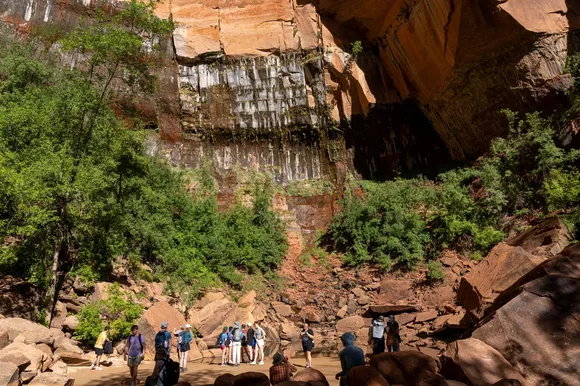
Zion's 65 trails are more focused and more famous. Angels Landing is a bucket-list scramble with chains bolted into the final exposed ridge, and The Narrows is a slot canyon wade that feels like hiking through a cathedral. Observation Point delivers views that rival Angels Landing without the permit lottery, but the approach from East Mesa requires a long drive on dirt roads. Emerald Pools and Canyon Overlook are short, family-friendly hikes that still deliver the red rock drama. Zion's trails are engineered experiences; Grand Canyon's trails are backcountry commitments.
The Verdict
Choose Grand Canyon if you want space, solitude, and the kind of geological spectacle that takes days to fully process. The park's size gives you breathing room even during peak season, and October is one of the best months to visit. You'll find cooler temperatures, thinner crowds, and light that makes the layered rock walls glow at sunrise and sunset.
Choose Zion if you want concentrated drama, iconic trails, and the ability to hit multiple highlights in a long weekend. The crowds are real, but the park's compact size means you can experience more variety in less time. October is also Zion's sweet spot, with comfortable temperatures and fall color along the Virgin River. Just plan for congestion and book your shuttle tickets early.