Great Smoky Mountains vs Shenandoah: which park should you visit?
One draws crowds that rival Los Angeles. The other spreads visitors thin along a 105-mile ridgeline. Which fits your style?
Great Smoky Mountains and Shenandoah sit on opposite ends of the Appalachian corridor, separated by a few hundred miles and a universe of difference in how you'll spend your time. The Smokies draw crowds that rival the population of Los Angeles every year, while Shenandoah spreads its visitors thin along a 105-mile ridgeline that feels designed for solitude. Both parks shine in April, when wildflowers carpet the forest floor and the heat hasn't yet turned every ascent into a sweat lodge.
The choice comes down to what you're willing to tolerate. If you want variety and don't mind sharing the trail, the Smokies deliver more waterfalls, wildlife, and terrain in a single weekend than most parks manage in a week. If you want breathing room and a scenic drive that doesn't turn into a parking lot, Shenandoah's Blue Ridge sprawl offers escape without the elbow-to-elbow hiking.
Great Smoky Mountains National Park
America's most-visited park / More trail miles than Connecticut has state roads
The Smokies absorb crowds better than any park in the system, but that doesn't mean you'll have the place to yourself. Cades Cove turns into an eleven-mile traffic jam by 10 AM on weekends, and the trailhead for Laurel Falls fills before breakfast. You're here because the park delivers: eight hundred miles of trails threading through old-growth forest, black bears that outnumber most small towns, and enough waterfalls to keep waterfall chasers busy for a month.
The Smokies don't hide their popularity — they lean into it, offering something for everyone and daring you to find a corner you don't like.
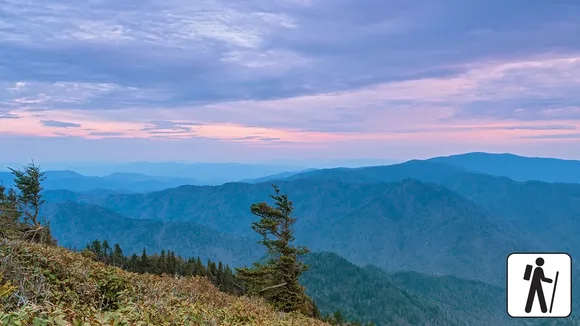
April is the sweet spot. Wildflowers blanket the lower elevations while the higher trails still hold traces of winter, and the humidity hasn't yet turned every hike into a sauna. Alum Cave Trail to Mount LeConte climbs through a tunnel of rhododendron before breaking out onto a rock ledge where cables guide you past a hundred-foot drop. Rainbow Falls lives up to its name in afternoon light, and Abrams Falls delivers a swimming hole worth the five-mile round trip. The park's sheer size means you can dodge crowds if you're willing to drive past the marquee stops. Trailheads east of Newfound Gap see a fraction of the traffic that clogs the western loop.
Shenandoah National Park
105 miles of ridgeline driving / Crowds that vanish once you leave the overlooks
Skyline Drive strings together seventy-five overlooks like beads on a thread, each one offering a snapshot of the Blue Ridge falling away into Virginia farmland. Most visitors never leave their cars, which means the trails stay remarkably empty even when the parking lots fill. Dark Hollow Falls drops you into a mountain hollow within a mile, and Stony Man Trail climbs to the park's second-highest peak in less than two. Old Rag Mountain is the exception: a granite scramble that pulls weekend warriors from Washington, D.C., and turns the circuit trail into a conga line by noon.
Shenandoah rewards the lazy and the ambitious equally — drive-up views for one, backcountry silence for the other.

April brings wildflowers without the summer haze that turns distant ridges into gray smudges. The park sits close enough to D.C. that you can leave after work on Friday and pitch a tent by dinner, but far enough that light pollution fades once you're past the northern entrance. Hawksbill Summit Trail offers big views for modest effort, and Limberlost Trail runs flat and accessible through old-growth hemlock. Overall Run Falls requires more commitment but delivers the park's tallest cascade, a six-and-a-half-mile round trip that keeps the crowds at bay. The park's relatively compact size means you can sample multiple ecosystems in a single day without spending half your time behind the wheel.

Getting There
Knoxville sits forty miles from the Smokies, close enough that you can fly in and reach a trailhead within an hour. The park straddles the Tennessee-North Carolina border with entrances on both sides, and you'll spend most of your time navigating two-lane roads that wind through mountain towns before depositing you at a visitor center. Shenandoah lies seventy-five miles from Washington, D.C., an easy drive that turns into a weekend escape for the entire mid-Atlantic. Dulles Airport sits ninety miles from the northern entrance, and Skyline Drive runs the park's entire length, eliminating the need to backtrack.
Hiking and Terrain
The Smokies throw everything at you: steep climbs, creek crossings, boulder scrambles, and enough elevation change to turn a moderate hike into a workout. Trails range from paved strolls to backcountry slogs that require overnight permits and bear canisters. Shenandoah's trails tend toward shorter loops and out-and-backs, with plenty of options for families and casual hikers. The rock scrambles on Old Rag and Marys Rock add challenge without requiring multi-day commitment. Both parks feature waterfalls, but the Smokies have more of them, and they flow harder in April when snowmelt feeds every stream.
Crowds and Timing
The Smokies pack more people into a weekend than most parks see in a season. Cades Cove, Laurel Falls, and Clingmans Dome turn into shoulder-to-shoulder experiences on peak days, and parking lots fill by mid-morning. Shenandoah spreads its visitors along Skyline Drive, and you'll find empty trails within minutes of leaving your car. October brings leaf-peepers to both parks, turning every overlook into a photo op and every campground into a reservation battle. April offers the best balance: mild weather, blooming wildflowers, and crowds that haven't yet hit summer levels.
The Verdict
Choose Great Smoky Mountains if you want variety and don't mind sharing the experience. The park delivers more trails, more wildlife, and more terrain types than Shenandoah, but you'll pay for it in traffic and trailhead jockeying. Choose Shenandoah if you value ease of access and breathing room. The park's proximity to D.C. makes it a weekend escape, and Skyline Drive turns sightseeing into a lazy afternoon cruise. Both parks reward April visitors with wildflowers and weather that makes every mile feel effortless.