Joshua Tree vs Death Valley: which park should you visit?
Joshua Tree packs granite drama into weekend trips; Death Valley sprawls into emptiness that takes days to grasp
Joshua Tree and Death Valley sit close enough on the map that you could visit both in one trip, but they ask different things of you. One is a boulder playground with twisted yuccas and climbing routes that draw weekenders from Los Angeles. The other is a vast, baking expanse of salt and silence where the landscape feels planetary. October cools both parks into their sweet spot, but the experience you're after will tell you which one to choose.
Both parks share the Mojave Desert and October's temperate window, but Joshua Tree packs its granite drama into an area smaller than Rhode Island while Death Valley sprawls across territory larger than Connecticut. You'll drive farther between stops at Death Valley, hike shorter distances at Joshua Tree, and find that crowds behave differently when a park can actually absorb them.
Joshua Tree National Park
Boulder fields and yucca forests two hours from LA / Draws more visitors than the population of Houston
Joshua Tree feels like a rock garden designed for wandering. The park's seventy-eight trails weave through granite formations that split and stack in ways that make you want to scramble, and the namesake yuccas — twisted, spiky, oddly charismatic — fill every flat space between boulders. Hidden Valley Trail loops through a natural amphitheater where cowboys supposedly stashed stolen cattle, and the one-mile circuit stays packed on October weekends. Skull Rock Trail gives you the Instagram shot everyone's after, while Barker Dam delivers a rare pocket of water that draws bighorn sheep at dawn.
The park's granite bones were forged underground and exposed by erosion, leaving behind a landscape that looks like nature's climbing gym.
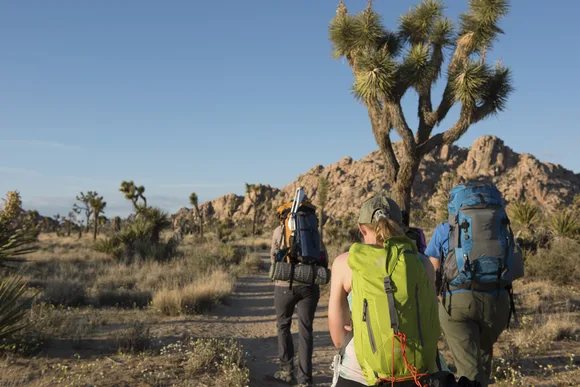
October brings daytime temperatures in the mid-80s and cool nights that make camping comfortable, but you're not alone in noticing. The park pulls nearly three million visitors annually, most of them concentrated in the triangle between the West Entrance, Hidden Valley, and Keys View. Park at Barker Dam or Ryan Mountain trailheads before 8 AM or accept that you'll be circling for a spot. The saving grace is trail length: most routes run under three miles, so even crowded trailheads empty out fast once people start walking. Rock climbers own the morning light on formations like Intersection Rock, and by afternoon the boulders are too hot to touch.
Death Valley National Park
Lowest point in North America and peaks above 11,000 feet / Space enough to lose the crowds
Death Valley earns its name in summer when ground temperatures at Badwater Basin crack 200 degrees, but October resets the park into something almost gentle. Daytime highs hover in the low 90s, cool enough to hike Golden Canyon without carrying a gallon of water, and the vast scale of the valley starts to make sense when you're not just surviving it. Zabriskie Point's eroded badlands glow gold at sunrise, Mesquite Flat Sand Dunes ripple under morning shadows, and the salt polygons at Badwater stretch toward the horizon like cracked porcelain. The park covers more ground than Delaware and Rhode Island combined, and that space does what Joshua Tree's compact geography can't: it swallows visitors whole.
Death Valley doesn't give you postcard moments so much as force you to recalibrate what a landscape can be.
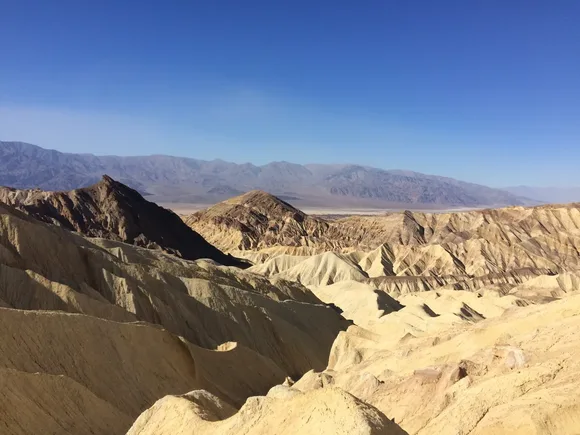
The drive between stops matters here in ways it doesn't at Joshua Tree. Badwater Basin to Scotty's Castle is a two-hour haul, and cell service vanishes for most of it. Artists Palette requires a one-way loop road that adds miles, and Racetrack Playa — where rocks leave trails across the mud — sits at the end of a twenty-seven-mile dirt road that chews up rental car undercarriages. But fewer visitors and longer distances mean solitude comes easier. You'll share Zabriskie Point's overlook at dawn, but walk half a mile down Golden Canyon and you're alone. The park's twenty-six trails log far fewer miles than Joshua Tree's network, but routes like Telescope Peak reward the effort with 11,000-foot views that span the basin floor to the Sierra Nevada.
Getting There and Around
Joshua Tree sits 140 miles east of Los Angeles, reachable in under three hours if you avoid Friday afternoon traffic on the 10. Death Valley's nearest city is Las Vegas, 120 miles southeast, but the drive takes closer to two and a half hours once you account for the climb out of Pahrump and the descent into the valley. Both parks offer year-round access, but October marks the sweet spot when heat relents and winter storms haven't yet closed higher elevations.
Joshua Tree's compact size means you can see the highlights in a day: drive the loop from the West Entrance through Hidden Valley to Keys View, hike Barker Dam, scramble at Skull Rock, and still make it back to LA for dinner. Death Valley demands more commitment. The drive from Furnace Creek to Dante's View alone eats an hour, and if you're serious about seeing Racetrack Playa or the Eureka Dunes, you're looking at multi-day itineraries with serious dirt road time.
Hiking and Terrain
Joshua Tree's trails favor short loops and scrambles through boulder fields. Hidden Valley's one-mile circuit takes twenty minutes if you walk it straight, but most people linger to watch climbers work the cracks or explore the side passages between rocks. Ryan Mountain's three-mile round trip climbs 1,000 feet to a summit view that spans both desert ecosystems, and the granite underfoot stays solid even when trails turn sandy. The park's terrain invites exploration off-trail: boulder hopping, slot threading, and route finding through rock mazes that don't appear on any map.
Death Valley's hikes lean longer and hotter, even in October. Golden Canyon's six-mile loop through badlands and up to Zabriskie Point gains 800 feet through terrain that offers zero shade, and the Mesquite Flat Dunes let you wander as far as your legs allow with no marked trail at all. Telescope Peak's fourteen-mile round trip climbs from the valley floor to alpine forest, but October snow can close the upper sections without warning. The payoff for Death Valley's effort is emptiness: trails here see a fraction of Joshua Tree's traffic, and once you're a mile from any trailhead, you're likely alone.
The Verdict
Choose Joshua Tree if you want a weekend escape with minimal driving between stops, easy access to climbing and bouldering, and trails that deliver quick hits of desert scenery. The park works for families with young kids who won't sit through long car rides, and its proximity to Los Angeles makes it the better option if you're flying in for a short trip. October weekends will be crowded, but the experience still rewards early mornings and willingness to walk past the first overlook.
Choose Death Valley if you're after scale and solitude, don't mind long drives on empty roads, and want to see terrain that feels genuinely alien. The park punishes poor planning — water, fuel, and distance all matter here — but October offers the rare window when Death Valley's extremes soften into something almost welcoming. You'll cover more miles and see fewer people, and the landscape will stick with you longer.