Kilauea erupts again: how to watch episode 47 at Hawaii Volcanoes this week
Kilauea's 47th eruption is lighting up the summit crater. Here's how to see lava fountains from the rim this week
Kilauea started erupting again at 2:00 AM Hawaiian time on May 19, marking the 47th episode since the summit collapsed in 2018. The lava fountains are visible from crater rim overlooks, and you don't need a permit, a guide, or even a strenuous hike to see them. This is one of the few places on Earth where you can watch molten rock fountain into the air from behind a safety railing while eating a sandwich from your cooler.
Episode 47 is playing out inside Halema'uma'u Crater, the collapsed summit pit that dominates Kilauea Caldera. Park rangers report visible glow after dark, fountaining along fissures on the crater floor, and a rapidly growing lava lake. The eruption could last days, weeks, or months. Kilauea doesn't work on a schedule.
Hawaiʻi Volcanoes National Park
Two active volcanoes, one accessible by paved road / Eruptions happen when they happen
The overlooks along Crater Rim Trail put you 500 feet above the crater floor, close enough to see the lava fountain and the heat shimmer rising from fresh flows. During daylight you'll catch the orange glow of molten rock and the gray-black crust forming as it cools. After dark the entire caldera lights up, and the fountains turn into something that looks like special effects but smells like sulfur and scorched earth. Bring layers: the summit sits at 4,000 feet, and temperatures drop into the 50s after sunset even in May.
Kilauea doesn't erupt for tourists, but when it does, the park becomes a front-row seat to geology in real time.
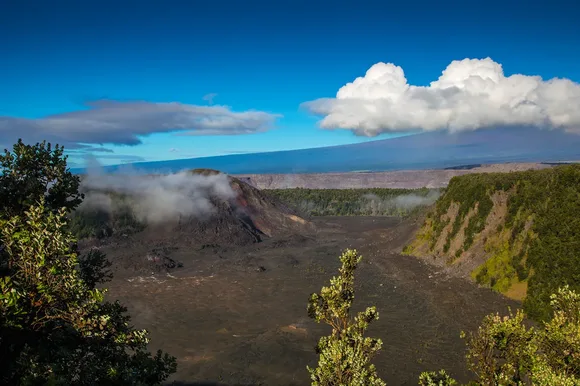
The best viewing happens from Kilauea Overlook, Wahinekapu (Steaming Bluff), and Keanakākoʻi Crater, all accessible by car or a short walk from Crater Rim Drive. The National Park Service keeps a live webcam feed on the park website if you want to check conditions before you drive up, and rangers staff the visitor center with updates on visibility, air quality, and road closures. Episode 47 is producing volcanic smog (vog) that drifts downwind depending on trade winds, so if you have respiratory issues, check the air quality index before heading to the summit.
If the summit is socked in with vog or clouds, drop down Chain of Craters Road to see older lava flows and steam vents along the coast. Thurston Lava Tube stays open regardless of summit activity, and the Kīlauea Iki Trail crosses a 1959 lava lake that still steams through cracks in the floor. Both are worth your time even if you came specifically for the eruption.
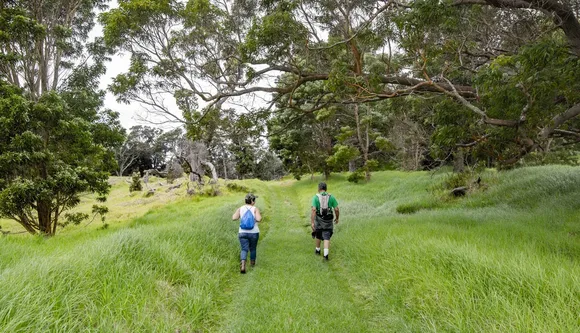
May is one of the better months to visit: crowds are lighter than the winter peak, and temperatures on the summit stay comfortable for hiking. The park draws fewer visitors than Acadia or Rocky Mountain, but during an active eruption the parking lots fill by midday. Arrive before 9 AM or after 7 PM to avoid the rush, and plan for at least half a tank of gas. The nearest station in Volcano Village is 30 miles from the coast, and there's nothing between the summit and the ocean.
Episode 47 follows the pattern Kilauea has held since 2020: intermittent summit eruptions inside Halema'uma'u, with lava confined to the crater floor. This isn't the 2018 eruption that destroyed Kapoho and lower Puna, and it isn't the decades-long Pu'u 'Ō'ō eruption that poured lava into the ocean. The lava stays inside the caldera, which means you can watch it without worrying about road closures or evacuations. It also means the show is visible from multiple overlooks without a strenuous hike or a helicopter tour.

Kilauea's eruptions are monitored by the USGS Hawaiian Volcano Observatory, which posts real-time updates on seismic activity, gas emissions, and lava lake levels. The park's ranger-led programs include evening talks on volcanic science and after-dark guided walks to the crater rim when conditions allow. Check the park website or stop by the visitor center for the current schedule. Rangers know more than the news, and they'll tell you which overlooks are worth your time based on wind direction and fountain activity.
The eruption will end when it ends, and Kilauea will go quiet again until the next episode. If you're planning a trip to the Big Island this month, the summit is worth the drive. If you're already on the island, clear your schedule and head up tonight. Lava doesn't wait for convenient timing.