Kīlauea's 46th eruption episode forecast this week at Hawaiʻi Volcanoes National Park
Kīlauea's 46th eruption episode begins this week, offering visitors rare access to active lava flows within park boundaries
Kīlauea Volcano is expected to begin its 46th eruption episode this week, according to forecasting from the Hawaiian Volcano Observatory. The eruption will take place within Halema'uma'u Crater, the summit caldera that has been the site of nearly continuous volcanic activity since December 2020. For visitors planning May trips to Hawaiʻi Volcanoes National Park, this means a rare opportunity to witness active lava flows from safe viewing areas within the park.
The forecast comes after weeks of heightened seismic activity and inflation at Kīlauea's summit. Episode 45 ended in mid-April, and the pattern of activity suggests Episode 46 will begin within days. Unlike the 2018 eruption that destroyed hundreds of homes in lower Puna, this activity remains confined to the summit caldera inside park boundaries, where scientists can monitor it closely and rangers can manage visitor access.
Hawaiʻi Volcanoes National Park
Two active volcanoes in one park / Draws more visitors than the entire state of Montana
The park sits on the flanks of two of the world's most active volcanoes, and right now Kīlauea is putting on a show. When lava flows are visible, rangers open viewing areas along Crater Rim Trail and at designated pullouts where you can watch molten rock fountain from vents in Halema'uma'u. The glow is visible after dark from multiple viewpoints, turning the steam plume above the crater into an orange spotlight against the night sky. This isn't the rivers of lava that once poured into the ocean at the end of Chain of Craters Road — those flows stopped in 2018 — but it's the most accessible volcanic activity you'll find in the United States.
You're watching the Earth build itself in real time, adding new land one lava fountain at a time.
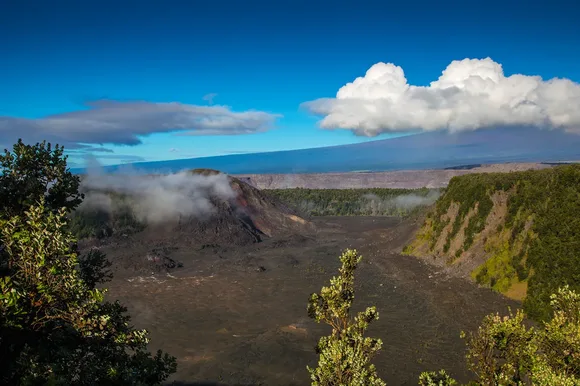
May sits at the edge of the park's quietest season, before summer crowds arrive in June and July. Temperatures hover in the low 70s during the day, with cooler conditions at higher elevations near the summit. Rain is common but usually arrives in brief afternoon showers rather than the all-day soakers of winter. The park stays open around the clock during active eruptions, and some of the most dramatic viewing happens after sunset when the lava glow reflects off the volcanic gases above the crater.
Beyond the active eruption, the park offers terrain that ranges from rainforest to alpine desert. Kīlauea Iki Trail drops into a crater that erupted in 1959 and now presents a solidified lava lake you can walk across. Steam vents puncture the crust where rainwater seeps through cracks and hits superheated rock below. Thurston Lava Tube takes you through a cave formed when the outer shell of a lava river cooled while molten rock continued flowing underneath. The tube stays around 60 degrees year-round, and native ferns drape the entrance where mist from the rainforest canopy drifts through.
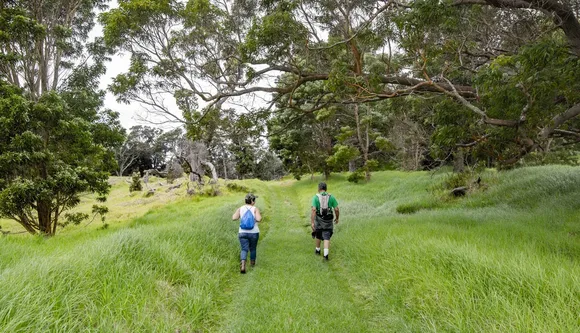
Chain of Craters Road descends more than 3,700 feet over 19 miles, passing through lava flows from different decades. You can see how the landscape ages: raw black rock from 2018 gives way to fields from the 1970s where pioneer plants have taken root, then older flows where native forest is reestablishing itself. The road ends abruptly where the 2003 flow buried the pavement, leaving a wall of hardened lava across what used to be the highway to the coast.
Families gravitate toward the easier trails near the visitor center. The walk to Thurston Lava Tube covers less than half a mile on paved paths, and kids can touch century-old lava formations at the Devastation Trail boardwalk. Rangers lead daily talks at the Jaggar Museum overlook and evening programs that explain how Hawaiian volcanoes differ from the explosive peaks of the Pacific Northwest. The Junior Ranger program includes volcano-specific activities like identifying different types of lava rock and learning Hawaiian volcanic terms.

Backcountry permits let you camp in the Ka'ū Desert, where Mauna Loa rises to the south and Kīlauea's summit glows to the north. The terrain looks Martian: red and brown cinder fields with almost no vegetation, punctuated by older lava flows that create natural shelters from the wind. The Mauna Loa Summit Trail gains more than 6,600 feet over its length, climbing from tropical forest through alpine shrubland to the barren summit caldera. Most people take three to four days for the round trip, but you can day-hike the lower sections to get a sense of how dramatically ecosystems shift with elevation.
Weather varies more by elevation than by season. The coast stays warm and humid year-round, while the summit areas can drop below freezing at night even in summer. The park spans multiple climate zones from sea level to more than 13,000 feet on Mauna Loa. You'll pack a rain jacket for morning hikes through the rainforest and sun protection for afternoon walks across open lava fields. Trade winds usually clear volcanic gases away from visitor areas, but when winds shift you'll smell sulfur and see haze warnings posted at trailheads.
Episode 46 will likely behave like recent eruptions: initial fountaining that builds a lava lake within Halema'uma'u, followed by weeks or months of sustained activity as magma continues feeding the system from below. The Hawaiian Volcano Observatory provides real-time updates through the park website, and rangers adjust viewing access based on current conditions. Unlike Yellowstone or Mount Rainier, where volcanic activity means evacuation, Kīlauea's eruptions are typically predictable enough that you can plan a trip around them.
The park's 30-mile proximity to Hilo makes day trips feasible, though most visitors stay in Volcano Village just outside the park entrance or at one of the two campgrounds inside park boundaries. Nāmakanipaio Campground sits in a eucalyptus grove at 4,000 feet elevation, while Kulanaokuaiki Campground offers a more remote experience in the coastal section. Both stay open during eruptions unless lava activity threatens infrastructure, which hasn't happened since the caldera collapse of 2018 reshaped the summit area.