Kīlauea's Episode 49 erupts now: how to watch lava fountains at Hawaiʻi Volcanoes this week
Kīlauea's Episode 49 erupts now with lava fountains visible from Crater Rim overlooks. Here's how to watch and where to stand
Kīlauea's Episode 49 eruption began on June 16, 2025, sending lava fountains and glowing rivers back into the summit caldera after months of quiet. The fountains reached heights taller than a ten-story building in the first hours, visible from Crater Rim overlooks and the Jaggar Museum area. If you've been waiting for an active eruption at Hawaiʻi Volcanoes National Park, this is your window.
The timing matters. June sits in the park's shoulder season, when visitor numbers drop and the weather stays mild. You'll have clearer views of the lava glow at night without fighting for parking, and daytime temperatures hover in the low 70s instead of the oppressive heat that settles over Kona in summer. The eruption could last days or months; Kīlauea's recent episodes have ranged from brief bursts to sustained activity spanning a year.
Hawaiʻi Volcanoes National Park
Two active volcanoes across an area larger than Los Angeles / Draws more visitors than live in Honolulu
Kīlauea Caldera is the center of the action. The lava lake fills the Halemaʻumaʻu Crater within the larger caldera, and the best views come from overlooks along Crater Rim Trail. Steaming Bluff and Keanakākoʻi Crater Overlook put you close enough to see the molten orange surface, especially after dark when the glow reflects off the volcanic gases rising from the vent. Uēkahuna gives you the widest perspective, a sweeping view across the entire caldera that shows the scale of what's happening below. The park stays open 24 hours during eruptions, and the nighttime crowds gather thick along the rim between 7 and 10 PM.
You don't watch a Kīlauea eruption from a distance; you stand at the edge of a crater and feel the heat rise through the soles of your shoes.
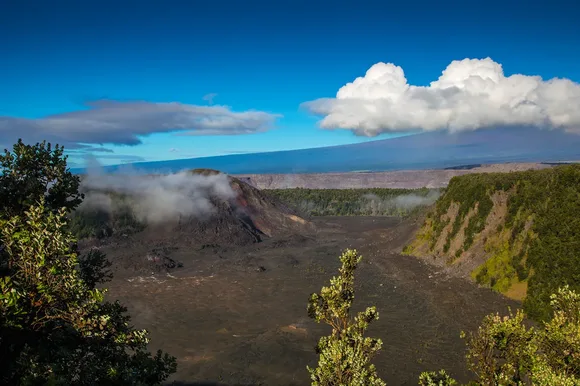
Chain of Craters Road takes you from the summit down to the coast, cutting through lava fields that range from fresh black glass to older flows colonized by ferns and ʻōhiʻa trees. The road doesn't reach the current eruption site, but it shows you what Kīlauea has done over the past few decades: buried forests, reshaped coastlines, and created new land where the lava met the ocean. Thurston Lava Tube offers a break from the heat, a short walk through a tunnel carved by molten rock hundreds of years ago. The tube stays cool and damp year-round, lit by electric lights that show off the rippled ceiling where lava once flowed.
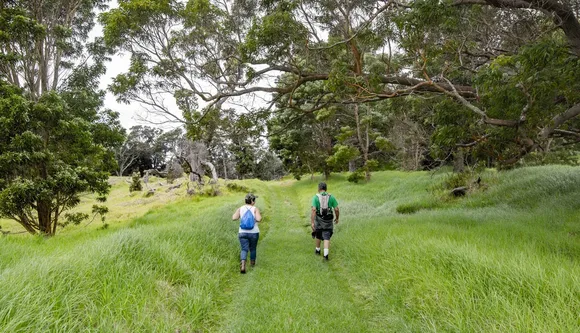
Kīlauea Iki Trail drops into a crater that erupted in 1959, sending lava fountains higher than the Eiffel Tower. The four-mile loop descends through rainforest, crosses the hardened lava lake floor, and climbs back out through dense fern growth. Steam vents still hiss from cracks in the crater floor, and the surface crunches underfoot where the rock cooled into jagged formations. This trail gives you a sense of scale: the crater you're walking across was a boiling lake of lava just 65 years ago, and Halemaʻumaʻu is doing the same thing right now.
The park's size absorbs most of the crowds, even during an active eruption. Mauna Loa looms in the distance, the world's largest active volcano and a separate attraction entirely. The summit trail climbs over 6,000 feet across barren lava fields and alpine desert, a multi-day backpacking route that sees a fraction of the traffic at Kīlauea. Mauna Ulu Trail takes you across a 1970s lava flow, where you can walk right up to the vent that fed rivers of molten rock down to the sea. The terrain shifts every few hundred feet: smooth pāhoehoe, jagged ʻaʻā, and collapsed lava tubes that drop into darkness.

Kids respond to the immediacy of an eruption in ways that most park experiences can't match. Ranger programs at the Kīlauea Visitor Center explain the science without dumbing it down, using real-time seismograph readings and thermal cameras. The Junior Ranger program includes eruption-specific activities during active episodes, and the short walks to overlooks work for families with strollers. Bring layers: summit temperatures drop into the 50s at night, and the wind off the caldera cuts through thin jackets.
The park's tropical location means year-round access, but June hits a sweet spot. April and May see the fewest visitors overall, but June keeps the crowds manageable while offering longer daylight hours to explore beyond the caldera. The vog (volcanic smog) can thicken depending on wind direction, so check air quality reports if you have respiratory issues. December draws the biggest crowds, when cruise ships dock in Hilo and tour buses line up at overlooks.
Hilo sits 30 miles northeast, a working town with grocery stores, gas stations, and accommodations that cost half what you'll pay in Kona. The drive from Kona takes two hours through ranchland and coffee farms, crossing the island's interior. Most visitors fly into Kona and make the park a day trip, but staying in Hilo or Volcano Village puts you close enough to catch the lava glow at dawn when the air is clearest and the parking lots are empty.