Kīlauea's Episode 50 breaks all-time record: how to watch 1,000-foot lava fountains at Hawaiʻi Volcanoes
Kīlauea's Episode 50 just set the record for tallest lava fountains in modern history. Here's how to watch from the rim
Kīlauea's Episode 50 eruption, which began January 27, 2025, just set a record that rewrites the textbook on modern Hawaiian volcanism. On May 30, lava fountains from the main vent reached 1,000 feet, the tallest measured at Kīlauea since the USGS began keeping detailed records in 1952. The previous record holder, a 1959 eruption at Kīlauea Iki, topped out around 580 feet.
This isn't a distant volcano you'll need binoculars to see. Halemaʻumaʻu Crater sits within walking distance of the Hawaiʻi Volcanoes National Park Visitor Center, and the fountains are visible from multiple overlooks along Crater Rim Drive. If you've been waiting for the right moment to visit an active eruption, June offers ideal conditions: clear skies, mild temperatures in the low 70s, and an eruption showing no signs of slowing down.
Hawaiʻi Volcanoes National Park
Two active volcanoes across an area larger than Phoenix / 30 miles from Hilo
The park encompasses two of the world's most active volcanoes, Kīlauea and Mauna Loa, across terrain that shifts from tropical rainforest to barren lava desert in the span of a morning drive. Episode 50 has transformed Halemaʻumaʻu Crater into a lava lake covering about the same area as the National Mall in Washington, D.C., with fountains that occasionally surge higher than the Eiffel Tower. You can watch from Kīlauea Overlook during the day, but the real show starts after dark when the glow illuminates the volcanic gas plume and paints the surrounding landscape in shades of orange and red.
Watching 1,000-foot lava fountains from a paved overlook less than a mile away feels like standing at the edge of planetary creation.
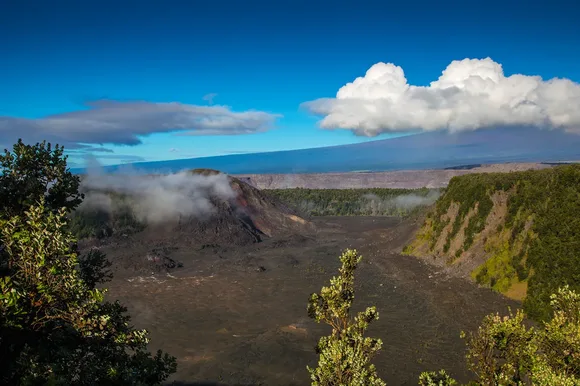
The eruption has drawn crowds, but the park's footprint absorbs them better than almost any other major attraction in the national park system. Arrive at Kīlauea Overlook before 8 AM or after 4 PM to claim a spot along the rail. The afternoon shift change is your best bet: tour groups depart, day visitors head to dinner, and you'll have room to set up a tripod. For a different perspective, drive Chain of Craters Road to the southern coast where you can see the volcanic gas plume from 19 miles away, backlit by sunset over the Pacific.
June sits in the park's shoulder season, which means fewer visitors than the winter peak and better weather than the rainier spring months. Daytime temperatures hover around 72°F at the summit, though it can feel colder when the trade winds pick up. You'll want layers: a light jacket for early morning viewing and something breathable for midday hikes. Rain showers pass quickly this time of year, rarely lasting more than 20 minutes.
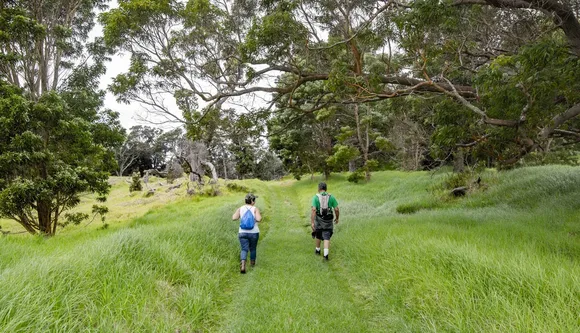
Beyond the eruption, the park offers 232 miles of trails across landscapes that range from the Thurston Lava Tube's fern-draped entrance to the moonscape of the Mauna Ulu Trail. Kīlauea Iki Trail drops into a crater that erupted in 1959, the same event that held the previous fountain height record. You'll walk across a solidified lava lake that still steams in places, surrounded by walls of cooled basalt and forest reclaiming the edges. The four-mile loop takes about two hours and delivers a visceral sense of scale that photos can't capture.
For families, the park checks every box without feeling like it's trying too hard. Kids can walk through the Thurston Lava Tube without any scrambling or tight squeezes, explore tide pools along Chain of Craters Road where green sea turtles rest on black sand beaches, and earn a Junior Ranger badge that actually requires some effort. The ranger programs here focus on volcanology and Hawaiian culture, with presenters who know the difference between pahoehoe and ʻaʻā lava and can explain why Pele matters to Native Hawaiian traditions.

Episode 50's longevity is the real story. Most Kīlauea eruptions last days to weeks; this one has been active for more than four months and counting. The USGS Hawaiian Volcano Observatory issues daily updates on fountain heights, lava lake levels, and volcanic gas emissions. Check their website before you visit, not for safety reasons (the park closes areas when necessary), but because eruption intensity varies. Some days bring 800-foot fountains and vigorous spattering; others settle into steady effusion with lower fountains around 300 feet. Both are worth seeing, but if you're flying from the mainland and have flexibility in your dates, aim for periods when the USGS reports increased fountain activity.
The park stays open 24 hours, and nighttime viewing is unrestricted as long as you stay behind barriers. Crater Rim Drive remains open to the overlooks, though parking fills quickly after 7 PM when the glow becomes most visible. Consider walking from the Visitor Center: it's a mile each way on a paved path, but you'll skip the parking scramble entirely. The walk back under the stars, with the red glow behind you and the Milky Way overhead, adds a layer to the experience that driving misses.