Kīlauea's Episode 53 fires 500-foot fountains for nearly 10 hours — what to know before your Hawaii Volcanoes visit
Kīlauea's Episode 53 fired 500-foot fountains for nearly 10 hours. Here's what to know before your Hawaii Volcanoes visit
Kīlauea's Episode 53 eruption started just after 2 AM on August 22, 2025, and fired lava fountains higher than a 50-story building for nearly ten hours. By the time the fountains subsided that afternoon, the floor of Halemaʻumaʻu Crater had risen roughly 30 feet, adding yet another layer to the caldera that has been rebuilding itself since the 2018 collapse. If you're planning a visit to Hawaiʻi Volcanoes National Park in the coming weeks, here's what you need to know about seeing an active eruption and navigating a landscape that's still writing its own geology.
The park remains open, but the eruption changes everything about how you experience it. Viewing areas fill before dawn, road closures shift without warning, and the air quality can swing from clear to hazardous within an hour depending on wind direction. This isn't a disaster; it's the reason the park exists. But it does require a different kind of planning than your typical national park visit.
Hawaiʻi Volcanoes National Park
Two active volcanoes rewriting the island / Crowds surge during eruptions
The park covers an area larger than Chicago, stretching from the summit of Mauna Loa down to black sand beaches where lava once poured into the Pacific. Most visitors focus on the Kīlauea Caldera area, where Crater Rim Drive and a network of short trails offer access to active vents, steam bluffs, and the Halemaʻumaʻu Crater itself. During Episode 53, the lava lake inside Halemaʻumaʻu has been visible from multiple overlooks along the rim, glowing orange after dark and sending up a plume that's visible from Hilo on clear nights. The National Park Service has kept Devastation Trail and parts of Crater Rim Trail open for viewing, though closures shift as gas emissions and seismic activity dictate.
You're not watching a volcano erupt from a safe distance; you're standing on the volcano itself.
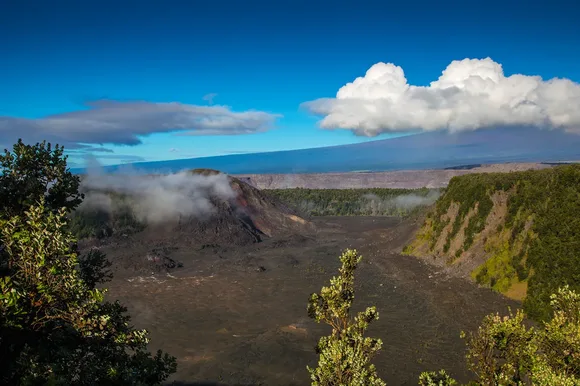
Chain of Craters Road remains one of the best scenic drives in the national park system, dropping over 3,700 feet in elevation as it winds past pit craters, ancient petroglyphs, and solidified lava flows from eruptions as recent as 2018. The road ends abruptly where lava crossed it decades ago, and you can walk out onto the black rock to see where the island is still being built. Thurston Lava Tube offers a brief, paved walk through a 500-year-old tunnel carved by flowing lava, and it's one of the few experiences in the park that's completely unaffected by current eruptions. The Kīlauea Iki Trail, which descends into a crater that erupted in 1959, lets you walk across a solidified lava lake that's still steaming in places.
Eruptions draw crowds, and Episode 53 is no exception. Parking at popular overlooks like Devastation and Kīlauea Overlook fills by 4 AM when glow is visible, and the park has implemented timed entry for some viewing areas during peak activity. If you're visiting specifically to see the eruption, plan to arrive before dawn or after 8 PM when day visitors clear out. The glow is most visible in darkness, but daytime viewing still offers steam plumes, the surreal landscape of the caldera, and the chance to see fountaining if the eruption pulses back to life.
The park is genuinely kid-friendly, even during an eruption. Thurston Lava Tube is short and flat, with handrails and lights inside the tunnel. The Sulphur Banks Trail is an easy boardwalk where you can see steam vents and smell the volcanic gases without any elevation gain. Tide pools at the end of Chain of Craters Road are full of sea turtles and reef fish, and the walk out onto recent lava flows feels like exploring another planet. The Junior Ranger program includes an eruption activity booklet, and ranger talks at the Jaggar Museum site often focus on current volcanic activity. Just be realistic about air quality; if your kids have asthma or respiratory sensitivities, have a backup plan for days when vog settles over the caldera.

Weather at the summit is mild year-round, with highs in the low 70s and lows in the mid-50s. You're at 4,000 feet elevation, so it's cooler and foggier than the coast, and rain can roll in without warning. Bring layers, even in August. The park is open year-round, and every season works, though April tends to be the quietest month if you're trying to avoid crowds. December is the busiest, but eruptions override seasonal patterns; when Kīlauea is active, people show up regardless of the calendar.
Most visitors fly into Kona, which is a two-hour drive through lava fields and ranch country, or Hilo, which is 30 minutes from the park entrance. Hilo is closer, but Kona has more direct flights from the mainland. You'll need a car; there's no shuttle, and rideshare coverage is spotty once you leave Hilo. Plan for at least a full day in the park, longer if the eruption is ongoing and you want to see both day and night viewing. Two campgrounds offer tent and RV sites, and both fill quickly during eruptions; book as soon as reservations open if you want to stay inside the park.
Episode 53 may pause, intensify, or shift to a new vent by the time you read this. That's the nature of Kīlauea, which has been erupting almost continuously in one form or another since 1983. The park website updates eruption status daily, and the USGS Hawaiian Volcano Observatory publishes real-time seismic data and webcam feeds. If the fountains stop before you arrive, you'll still see the glow of the lava lake, the fresh rock on the caldera floor, and a landscape that's more geologically active than anywhere else you can legally stand in the United States.